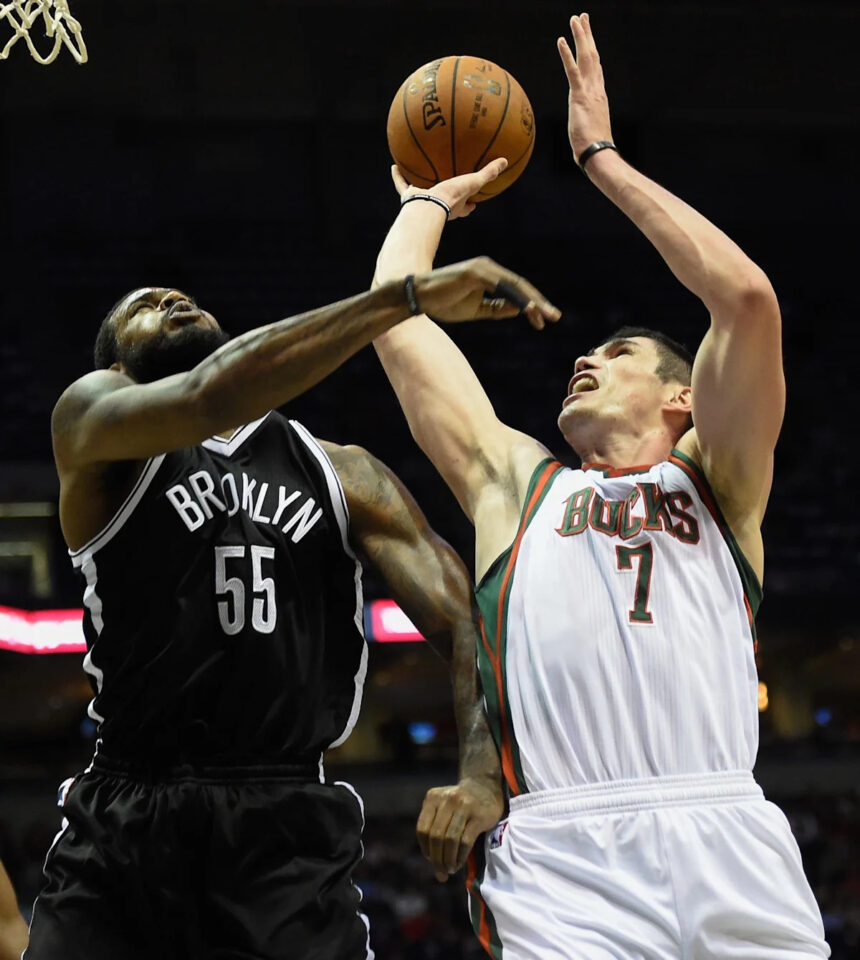
The No. 55 in Brooklyn Nets History: The Brief, Unforgettable Stint of Earl Clark
The Brooklyn Nets franchise is a tapestry woven from over 600 players across more than five decades, each thread a jersey number telling a story. From the ABA’s New Jersey Americans to the modern Barclays Center era, 52 numbers have been worn, carrying legacies of legends, role players, and fleeting moments alike. In our ongoing series chronicling this rich sartorial history, we arrive at a number often reserved for big men and unique characters: No. 55. While the digits have been worn by eight individuals in franchise history, one tenure stands out for its poignant hometown narrative and final-chapter resonance. This is the story of Earl Clark, the Plainfield, New Jersey native who donned the Brooklyn black-and-white for the final 10 games of his NBA journey.
From Lottery Pick to League Journeyman: The Road to Brooklyn
Before the No. 55 jersey found its way onto his back in Brooklyn, Earl Clark’s career was a study in unrealized potential and nomadic survival. A standout at the University of Louisville, Clark’s versatile 6’10” frame made him a coveted prospect. The Phoenix Suns selected him with the 14th overall pick in the 2009 NBA Draft, envisioning a dynamic forward for the future. However, like many players drafted into specific systems, Clark struggled to find a consistent role in the league’s ever-shifting landscape.
His journey became a tour of NBA cities: from Phoenix to Orlando, then to the bright lights of the Los Angeles Lakers, followed by stops in Cleveland and a brief return to his tri-state roots with the New York Knicks. At each stop, flashes of his talent—a smooth jumper, defensive switchability, rebounding bursts—would appear, but sustained opportunity often did not. By the 2014-15 season, Clark was fighting to stay in the league, a former lottery pick now seeking a foothold on a roster’s end. The Brooklyn Nets, navigating their own period of transition with an aging, expensive core, offered that chance.
The Hometown Finale: 10 Games in Black and White
When Earl Clark signed with the Brooklyn Nets in April 2015, it was more than a standard end-of-season roster addition. It was a homecoming. For a kid from Plainfield, suiting up for the team representing his home region carried profound weight, even at the tail end of a career. The No. 55 jersey for the Brooklyn Nets, last worn by Andray Blatche, now belonged to Clark, symbolizing both a last shot and a personal milestone.
His tenure was brief—just 10 games—and statistically modest, averaging 2.7 points and 1.9 rebounds in limited minutes. But to view it through only that lens misses the point entirely. For Clark, these games were the culmination of a lifelong basketball odyssey. Each minute on the Barclays Center floor was played for the pride of his community, a final testament to the kid who made it to the NBA. His performance was not about filling a box score; it was about professional perseverance and earning the right to wear an NBA jersey in front of his hometown crowd, a privilege afforded to very few.
- Hometown Hero Narrative: Clark’s signing was a powerful local story, connecting the franchise directly to New Jersey’s rich basketball soil.
- Veteran Presence in Transition: He joined a Nets team led by veterans like Deron Williams and Brook Lopez, providing practice depth during a late-season push.
- The Jersey’s Legacy: Clark’s stint added a layer of human interest to the No. 55, a number often associated with more lengthy or physically imposing tenures like those of Jim McIlvaine or Keith Van Horn.
Expert Analysis: The Significance of the “Final Chapter” Player
In the grand narrative of a franchise, players like Earl Clark are essential chapters, often overlooked in all-time lists but vital to understanding the league’s ecosystem. Clark’s tenure in Brooklyn exemplifies the “final chapter” archetype—a player whose legacy with a team isn’t built on statistics, but on symbolic closure. For the Nets, signing Clark was a low-risk move for roster depth. For Clark, it was the fulfillment of a circular career journey.
From an analytical standpoint, his brief time in Brooklyn highlights several NBA truths: the immense difficulty of sustaining a career, the value of veteran minimum contracts for team culture, and the powerful marketing and community resonance of hometown players. The Nets, by providing this landing spot, engaged in a subtle but meaningful piece of community relations. They acknowledged that a franchise’s history isn’t just made by superstars, but also by the players who connect it, however briefly, to the local communities that support it.
Predictions: The Future of No. 55 and Honoring Franchise Depth
Looking forward, the No. 55 jersey in Brooklyn likely awaits its next claimant, who will bring a new story. It may be worn by a young project big man or another veteran seeking resurgence. The prediction here is less about the next player and more about how franchises like the Nets will continue to curate their vast history.
As the NBA leans further into legacy and narrative, there is growing value in honoring the full spectrum of players who have contributed to a team’s identity. We may see more digital and media content—similar to this series—that dives deep into the numbers and the men who wore them, celebrating not just the icons but the journeymen like Earl Clark. This comprehensive storytelling strengthens fan connection and provides a richer, more human understanding of the team’s journey through the decades.
Conclusion: A Number’s Story is a Human Story
The history of the Brooklyn Nets’ No. 55 is more than a list of names. In Earl Clark’s chapter, it is a story of coming home. His 10-game stint in 2015 encapsulates the dreams of every local kid who ever shot a basketball on a New Jersey playground, hoping one day to represent their home on the biggest stage. While his name may not dominate the franchise record books, his connection to the soil upon which the organization’s earliest roots were planted is indelible.
As we continue to unravel the stories behind each jersey number, we are reminded that a franchise’s legacy is built by hundreds of individuals, each with a unique path. Earl Clark’s path led him, in the end, to wear the Nets’ colors, closing his NBA loop with a quiet dignity that resonates far beyond the stat sheet. In the tapestry of Brooklyn Nets history, the thread of No. 55, and the chapter written by Clark, remains a vital and uniquely human patch.
Source: Based on news from Yahoo Sports.