The BlueCo Catastrophe: How Chelsea’s Owners Built a Monument to Chaos
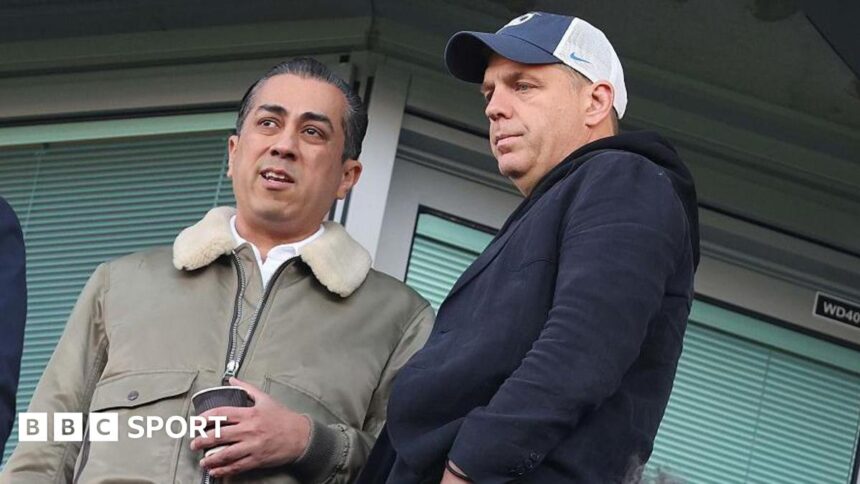
The sacking of a head coach is rarely a surprise in modern football. But the dismissal of Liam Rosenior by Chelsea after a mere 106 days in charge wasn’t just another managerial casualty; it was the unveiling of a monument. Not a statue of a club legend, but a towering, grotesque edifice to dysfunction, short-termism, and profound sporting illiteracy. Under the stewardship of co-owners Behdad Eghbali and Todd Boehly, Chelsea Football Club has been transformed from a ruthless winning machine into a hapless case study in how to dismantle a giant, brick by expensive brick.
A Flawed Blueprint: The Multi-Club Model Misfires
When the BlueCo consortium, spearheaded by Eghbali and Boehly, took control, they arrived with a modern football blueprint. Central to this vision was the multi-club model, a network of teams designed to share resources, develop talent, and create a seamless pipeline of players and coaches. The purchase of French club Strasbourg was the first major piece of this puzzle. The idea was sound in theory, but the execution has been nothing short of disastrous.
The appointment of Liam Rosenior was meant to be the blueprint’s shining validation. Promoted from within the network after a solid stint at Strasbourg, he was the human symbol of BlueCo’s integrated future. Yet, this move exposed the strategy’s fatal flaw: a profound misunderstanding of scale and pressure. Chelsea is not Strasbourg. The Premier League is not Ligue 1. The blinding glare of the Stamford Bridge spotlight is of a different magnitude altogether.
This was a move akin to asking a learner to take his driving test at the wheel of a Ferrari on the Monaco Grand Prix circuit. Rosenior, a promising 41-year-old coach, was inevitably out of his depth at this unwieldy, hyper-scrutinized football beast. The owners mistaged a developmental step for a finished product, with catastrophic results for both the individual and the club. The multi-club model isn’t broken; it’s being operated by people who seem to have no idea what they are building.
The Anatomy of Dysfunction: A Club Without a Core
To understand the chaos, one must look beyond the dugout carousel. The sacking of Rosenior, and Enzo Maresca before him, are merely symptoms of a deeper, systemic disease. Since the takeover, Chelsea’s strategy has been a bewildering paradox of extreme spending and a complete absence of a coherent footballing identity.
- Scattergun Recruitment: Over a billion pounds spent on a squad that resembles a fantasy football experiment—prolific in quantity, incoherent in quality, and devoid of any apparent tactical profile.
- Contract Carnage: The infamous long-term contracts have created an immovable, bloated squad, stripping players of competitive urgency and hamstringing future managerial flexibility.
- Cultural Erosion: The club’s hard-edged winning mentality, cultivated over two decades, has been replaced by a transactional, project-based atmosphere where patience is nonexistent and the axe falls with metronomic regularity.
The result is a squad with no spine, a club with no memory, and a fanbase in open revolt. The owners have constructed a squad so vast and mismatched that it is essentially unmanageable, ensuring that any coach—veteran or novice—is set up to fail from day one.
Fan Unrest and the Erosion of Legacy
The most damning indictment of the Eghbali-Boehly regime is the sound now echoing around Stamford Bridge: not of roaring support, but of disillusioned silence and vocal protest. Chelsea supporters, once accustomed to defining eras by trophies, now measure time in managers per season and embarrassing defeats. The bond between club and community, already strained by the prior regime’s controversies, has been severed.
The decision to sack Liam Rosenior after such a short tenure is seen not as a tough decision, but as an admission of their own catastrophic error in appointing him in the first place. Fans are not mourning Rosenior; they are mourning the death of their club’s credibility. They watch as their beloved Chelsea becomes a laughingstock, a cautionary tale in boardroom hubris, where the proud legacy of legends is buried under spreadsheets and PR spin about “project timelines” and “data-driven processes.”
This disconnect is perhaps the owners’ greatest failure. They have treated Chelsea as a financial asset and a technological proving ground, forgetting it is first and foremost a emotional institution for millions. They have built a monument, alright—but it’s a monument to their own ignorance of the sport’s soul.
What Next? Predictions for a Club at a Crossroads
As the search for yet another head coach begins, the path forward looks perilous. The club’s trajectory under BlueCo suggests more of the same chaotic cycles, but the stakes are now existential.
First, the managerial hunt will likely target a bigger “name,” a desperate attempt to placate fans and bring short-term credibility. However, no elite manager with their reputation intact will enter this structure without cast-iron guarantees of control and time—conditions the current ownership has shown no capacity to grant.
Second, the financial reality will begin to bite. Without the lucrative revenue of Champions League football, and with the looming specter of Profit and Sustainability Regulations (PSR), the club may be forced into a fire-sale of its few valuable assets, further depleting an already unbalanced squad.
Finally, and most critically, the only hope for a reversal of this decline is a fundamental philosophical shift at the ownership level. This means:
- Appointing a proven, authoritative sporting director with full control over football operations.
- Empowering the next manager with a clear, multi-year mandate to build a team, not just manage a roster.
- Radically streamlining the squad to create a cohesive, hungry unit with a defined style of play.
Without this, the predictions are grim: mid-table mediocrity, continued fan alienation, and the slow, painful transformation of a Premier League powerhouse into an eternal “project.”
Conclusion: A Monument of Their Own Making
The sacking of Liam Rosenior is not the cause of Chelsea’s crisis; it is the latest, gleaming stone placed upon the grotesque monument to chaos that Behdad Eghbali, Todd Boehly, and BlueCo have meticulously built. They have constructed a club where strategy is an illusion, patience is a myth, and stability is a forgotten relic. They have taken a Ferrari and, through a combination of reckless driving and poor maintenance, crashed it into the barriers.
Stamford Bridge now stands not as a fortress, but as a mausoleum for rational football decisions. The only way to avoid it becoming a permanent tomb for the club’s elite status is for the owners to do something they have shown little appetite for: to step back, admit their failures, and let true football people dismantle their monument of madness, stone by painful stone. The alternative is a legacy defined not by titles, but by utter, unmitigated decline.
Source: Based on news from BBC Sport.