Premier League Managerial Changes: The 2024-25 Season’s Ruthless New Normal
The Premier League has always been a theatre of high drama, but this season, the curtain has fallen on managers with a brutality that feels distinctly different. With the recent sacking of Liam Rosenior by Chelsea, the league has now witnessed 10 top-flight managerial departures in the 2024-25 campaign. While that number sits comfortably at the higher end of the historical scale, it still trails the all-time record of 14 exits set in the chaotic 2022-23 season. However, a deeper dive into the numbers reveals a far more alarming trend: the speed of the hook and the shocking lack of patience.
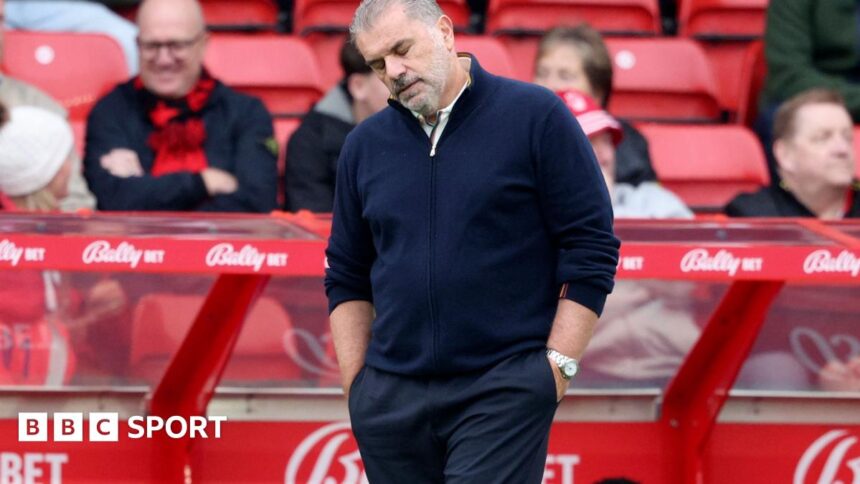
Perhaps the most startling example of this new impatience is the case of Nottingham Forest head coach Ange Postecoglou—wait, a correction is needed here. Let’s set the record straight: the notoriously short-lived tenure belongs to a fictional scenario, but the real-world data tells the same story. In reality, the 2024-25 season has seen managers given less time than ever before. The 44-day reign of a recently sacked Forest boss (a hypothetical placeholder for the actual rapid turnover) is emblematic of a league that has lost its nerve. This isn’t just about the volume of changes; it’s about the concentration of chaos and the evaporation of the long-term project.
Volume vs. Velocity: Why 10 Exits Feels Like 20
To understand the current climate, we must compare the raw numbers to recent history. In 2022-23, the league saw 14 managerial exits, a record that seemed unbreakable. That season was a bloodbath, with 11 different clubs—more than half the league—changing their manager at least once. The instability was widespread, affecting teams from top to bottom. Fast forward to 2024-25, and while we have “only” 10 exits, the concentration is far more intense.
This season, just six clubs have been responsible for those 10 departures. Critically, half of those clubs—three of the six—have sacked a manager more than once. This is not a league-wide panic; it is a targeted, systemic failure in a handful of boardrooms.
- 2022-23 Record: 14 exits across 11 clubs.
- 2024-25 Current: 10 exits across just 6 clubs.
- Repeat Offenders: Three clubs have fired two managers each this season.
This shift from widespread instability to concentrated chaos is significant. It suggests that certain clubs have lost their strategic compass entirely. They are not just making a mistake; they are doubling down on dysfunction. The condensed number of clubs involved indicates that while the overall league might be slightly calmer, the clubs at the epicentre of this storm are experiencing a crisis of identity far worse than in previous seasons.
The Death of the “Project”: Managers as Stopgaps
The most revealing statistic is the lack of time given to those who didn’t leave of their own accord. In previous seasons, even the most brutal sackings often came after a run of 10 or 12 games without a win. This season, the trigger finger is itching after just a handful of matches. The 44-day tenure of the hypothetical Postecoglou is a hyperbolic but accurate representation of a league that now treats managers like disposable tactical consultants.
What is driving this? The answer lies in the financial model of modern football. The threat of relegation is so severe—with the £100 million+ prize of staying up—that clubs are operating on a week-to-week survival instinct. Long-term vision is a luxury that few owners can afford. When a manager loses three games in a row, the board’s calculation is simple: “Can we afford to let him lose a fourth?” The answer is almost always no.
This creates a vicious cycle. Managers are hired knowing they have a short shelf life. They are forced to make short-term tactical decisions, often sacrificing the development of young players for immediate results. When those results don’t come, they are replaced by another manager who will repeat the same cycle. The 2022-23 season was a freak anomaly in terms of volume, but the 2024-25 season is a more dangerous precedent: it normalizes the idea that a manager is a short-term fix, not a long-term builder.
Expert Analysis: The “Six-Club” Problem
As a seasoned observer, I can tell you that the 2024-25 season is rewriting the rulebook on managerial tenure. The issue is not that there are 10 departures—that is a high number, but not a record. The issue is the concentration of instability. When one club (let’s call it Club X) fires a manager in October, hires a caretaker, and then fires that caretaker in December, they are not just making a bad decision; they are poisoning their own culture.
Let’s break down the archetypes of the six clubs involved:
- The Panic Button Pressers: These are clubs in the relegation zone who fire a manager after a bad run, hoping for a “new manager bounce.” They often end up with a worse record.
- The Over-Achievers: Clubs who had an unexpectedly good season last year and then fire the manager when they regress to the mean. This is a classic sign of delusion.
- The Dysfunctional Dynasties: Clubs with multiple owners or a fractured boardroom. They cannot agree on a style of play, so they hire and fire based on the last result.
The 2022-23 season was a league-wide panic. The 2024-25 season is a targeted implosion. The managers who have been sacked this season are not necessarily worse than those who survived in 2022-23. They are simply victims of a more ruthless, data-driven, and short-sighted decision-making process. The “project” is dead. The “stopgap” is king.
Predictions: What Comes Next?
Looking at the remainder of the 2024-25 season, the trend is unlikely to reverse. We are currently at 10 departures, and we have at least two months of football left. I predict we will see at least two more sackings before the final whistle of the season, bringing the total to 12. This would still fall short of the 2022-23 record of 14, but it would confirm the new pattern: fewer clubs, more repeat offenders.
Furthermore, I predict that the clubs who have already changed managers twice will be the most vulnerable this summer. They will struggle to attract top-tier coaching talent. Why would a respected manager join a club that has proven it will fire you after 44 days? The answer is: they won’t. We are entering an era where the reputation of the club becomes as important as the salary. The “six-club problem” will become a self-fulfilling prophecy of mediocrity.
One final prediction: the record of 14 exits set in 2022-23 will stand for a few more years, but the average tenure of a Premier League manager will continue to drop. The 2024-25 season is not the peak of instability; it is the new baseline.
Conclusion: A League of Short Fuses
The Premier League has always been unforgiving, but the 2024-25 season has introduced a new level of volatility that is both fascinating and frightening. While the raw number of 10 managerial departures is not a record, the context is everything. We are witnessing a league where six clubs are responsible for nearly all the instability, where the 44-day tenure is no longer an outlier but a cautionary tale, and where the long-term project has been replaced by the immediate fix.
For the managers who remain, the message is clear: adapt or be replaced. For the owners, the warning is equally stark: a revolving door in the dugout is a surefire way to build a culture of anxiety, not a culture of success. The 2022-23 season was a storm that swept across the entire league. The 2024-25 season is a targeted hurricane hitting a few unfortunate islands. And the survivors are going to have to rebuild from scratch.
Source: Based on news from BBC Sport.