Brendan Sorsby’s Gambling Addiction: The Untold Story Behind the Transfer Portal Shockwave
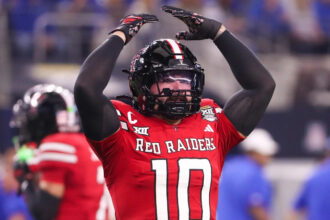
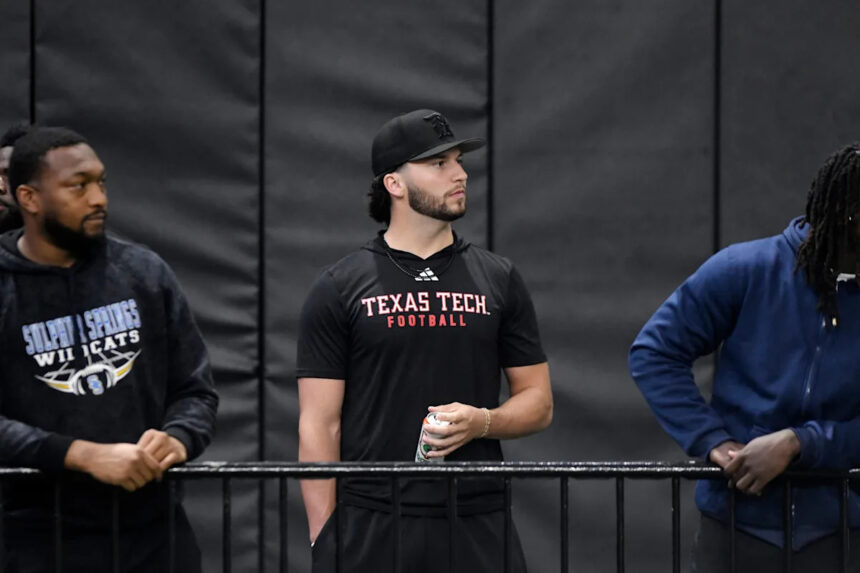
LUBBOCK, Texas — In a stunning development that has sent shockwaves through the college football landscape, Texas Tech quarterback Brendan Sorsby has voluntarily stepped away from the game. The Red Raiders’ prized transfer portal acquisition announced on Monday that he is taking an indefinite leave of absence to enter a residential treatment program for a gambling addiction.
The news, released jointly by Texas Tech and Sorsby’s camp, is a rare and sobering moment in a sport often dominated by NIL dollars and transfer portal drama. It reveals a human crisis beneath the surface of a high-stakes career. For Sorsby, a player who was once the center of a bitter legal battle over a $1 million buyout, this is not a pause in his career—it is a fight for his life.
“Texas Tech is committed to supporting Brendan through his recovery process and to ensure his long-term health and well-being,” the school stated. This statement, while clinical, masks the gravity of what is unfolding. Sorsby is not just a quarterback; he is a symbol of the modern athlete caught in a whirlwind of money, pressure, and personal demons.
The Fall from Grace: From Bearcat Star to Red Raider Liability
To understand the magnitude of this story, we must rewind to the winter of 2025. Sorsby was one of the biggest names in the transfer portal, a coveted dual-threat signal-caller who had shown flashes of brilliance at Cincinnati. When he announced his transfer to Texas Tech on January 4, it was hailed as a coup for head coach Joey McGuire. But the celebration was short-lived.
Behind the scenes, a legal storm was brewing. On February 26, the University of Cincinnati filed a lawsuit against Sorsby, alleging a breach of his Name, Image, and Likeness (NIL) contract. According to court documents, Sorsby signed an NIL agreement in July 2025 covering the 2025 and 2026 seasons. The contract included a staggering $1 million buyout clause, payable within 30 days of his transfer.
Sorsby’s decision to enter the portal on December 15 and join Texas Tech three weeks later triggered that clause. The lawsuit painted a picture of a player who, in the eyes of the university, had broken a binding financial promise. But the legal battle was only the tip of the iceberg. Sources close to the situation now suggest that the pressure of this financial entanglement may have exacerbated Sorsby’s underlying struggle with gambling.
The Gambling Addiction: A Hidden Epidemic in College Sports
Gambling addiction is a silent predator in the world of athletics. While the NCAA has strict rules against sports wagering for players, the proliferation of legalized sports betting apps has made it easier than ever for young athletes to fall into a dangerous cycle. Sorsby’s case is a stark reminder that addiction does not discriminate—it can bring down a star quarterback just as easily as it can a casual fan.
According to the American Psychiatric Association, gambling disorder affects roughly 1% of the U.S. population, but rates are significantly higher among male athletes who are exposed to high-stakes environments. The combination of sudden wealth from NIL deals, free time during the offseason, and a competitive personality creates a perfect storm. Sorsby, by entering a residential treatment program, is taking a step that many athletes avoid out of fear of stigma or career repercussions.
Texas Tech’s decision to support him publicly is commendable. It signals a shift in how programs handle mental health and addiction. Instead of burying the issue, they are treating it as a medical crisis. “This is bigger than football,” one anonymous Big 12 coach told me. “Brendan is making the hardest play of his life—admitting he needs help.”
Expert Analysis: What This Means for Texas Tech’s 2026 Season
The immediate impact of Sorsby’s absence is a massive blow to Texas Tech’s offensive plans. The Red Raiders were banking on Sorsby to be their starting quarterback, a player who could elevate a team that finished 7-5 in 2025. With spring practice underway, the coaching staff must now pivot.
Let’s break down the quarterback room without Sorsby:
- Current Depth Chart: The top candidate to replace Sorsby is likely sophomore Cam Dickerson, a former three-star recruit with limited game experience. He has a strong arm but lacks the mobility Sorsby brought.
- Transfer Portal Options: The spring portal window is closed, but Texas Tech could explore graduate transfers or junior college prospects. However, finding a quarterback of Sorsby’s caliber in April is nearly impossible.
- True Freshman Risk: The Red Raiders signed a four-star quarterback in the 2026 class, but throwing a true freshman into the fire in the Big 12 is a recipe for inconsistency.
Prediction: Texas Tech will likely run a conservative, run-heavy offense in 2026, leaning on their strong defensive line and a committee of running backs. The passing game will be simplified, relying on quick reads and short routes. This is not a death sentence for the program, but it lowers their ceiling from a potential 9-win season to a 6- or 7-win campaign.
The Legal Labyrinth: Will the Lawsuit Derail His Recovery?
While Sorsby focuses on his health, the legal battle with Cincinnati looms. The lawsuit demands the $1 million buyout plus legal fees. For a college athlete, even one with NIL earnings, that is a crushing financial burden. However, it is possible that the legal proceedings could be paused or settled quietly while Sorsby is in treatment.
“Courts are generally sympathetic to individuals undergoing treatment for addiction,” says sports law expert Dr. Rachel Kim. “Cincinnati may face public relations backlash if they aggressively pursue a lawsuit against a player seeking help for a medical condition.”
There is also the question of NCAA eligibility. Gambling violations—especially those involving sports betting—can lead to suspensions or even permanent ineligibility. However, because Sorsby is voluntarily seeking treatment and not facing a ban from the NCAA, his return to the field is not automatically blocked. The NCAA has recently softened its stance on mental health issues, offering waivers for players in recovery.
The Human Element: A Quarterback’s Fight Beyond the Field
Behind the headlines, the lawsuit, and the transfer portal drama, there is a 21-year-old man struggling with a powerful addiction. Brendan Sorsby was not just a football player; he was a student, a teammate, and a son. His decision to step away from the sport he loves to enter a residential treatment program is an act of immense courage.
In a press release, Sorsby’s family requested privacy, saying, “Brendan is committed to his recovery and grateful for the support of Texas Tech, his coaches, and his teammates. He asks for understanding as he focuses on his health.”
This story is a cautionary tale for every young athlete who thinks they are invincible. The same competitive drive that makes a great quarterback can also fuel destructive behaviors. The NIL era has given players financial power, but it has also introduced new pressures and temptations that many are not equipped to handle.
What Comes Next for Sorsby?
The timeline for his return is unknown. Residential treatment programs for gambling addiction typically last 30 to 90 days, followed by outpatient care. If Sorsby completes the program by late summer, he could theoretically rejoin the team for fall camp. But that is a big “if.” Recovery is not linear, and relapses are common.
If he does return, Sorsby will face a new set of challenges: rebuilding trust with his coaches, managing his finances without the crutch of gambling, and dealing with the media scrutiny that will follow him for the rest of his career. He will need a strong support system—and Texas Tech appears ready to provide it.
Final Prediction: I believe Brendan Sorsby will not play a single snap in 2026. His recovery must come first. If he returns to football in 2027, it will be as a backup or at a smaller program where the pressure is reduced. This is not a failure of talent—it is a triumph of self-preservation.
Conclusion: A Wake-Up Call for College Football
The Brendan Sorsby story is more than a sports headline. It is a mirror held up to the college football industry, reflecting the dark side of the transfer portal, NIL money, and the relentless pursuit of success. We celebrate athletes for their highlight-reel plays, but we often forget they are human beings with vulnerabilities.
Texas Tech deserves credit for handling this with compassion. Cincinnati should consider the optics of their lawsuit. And every program in America should take note: gambling addiction is a growing crisis among young athletes, and it is time to invest in mental health resources as seriously as we invest in strength coaches and nutritionists.
For Brendan Sorsby, the game is on pause. That is okay. The most important win of his life is happening off the field, one day at a time, in a treatment facility far from the roar of the crowd. When—and if—he returns, he will be more than a quarterback. He will be a survivor.
Stay tuned to AP Sports for updates on Sorsby’s recovery and Texas Tech’s quarterback situation as the 2026 season approaches.
Source: Based on news from Yahoo Sports.