Ex-Alabama DL Luther Davis Pleads Guilty in $20M NFL Impersonation Fraud Scheme
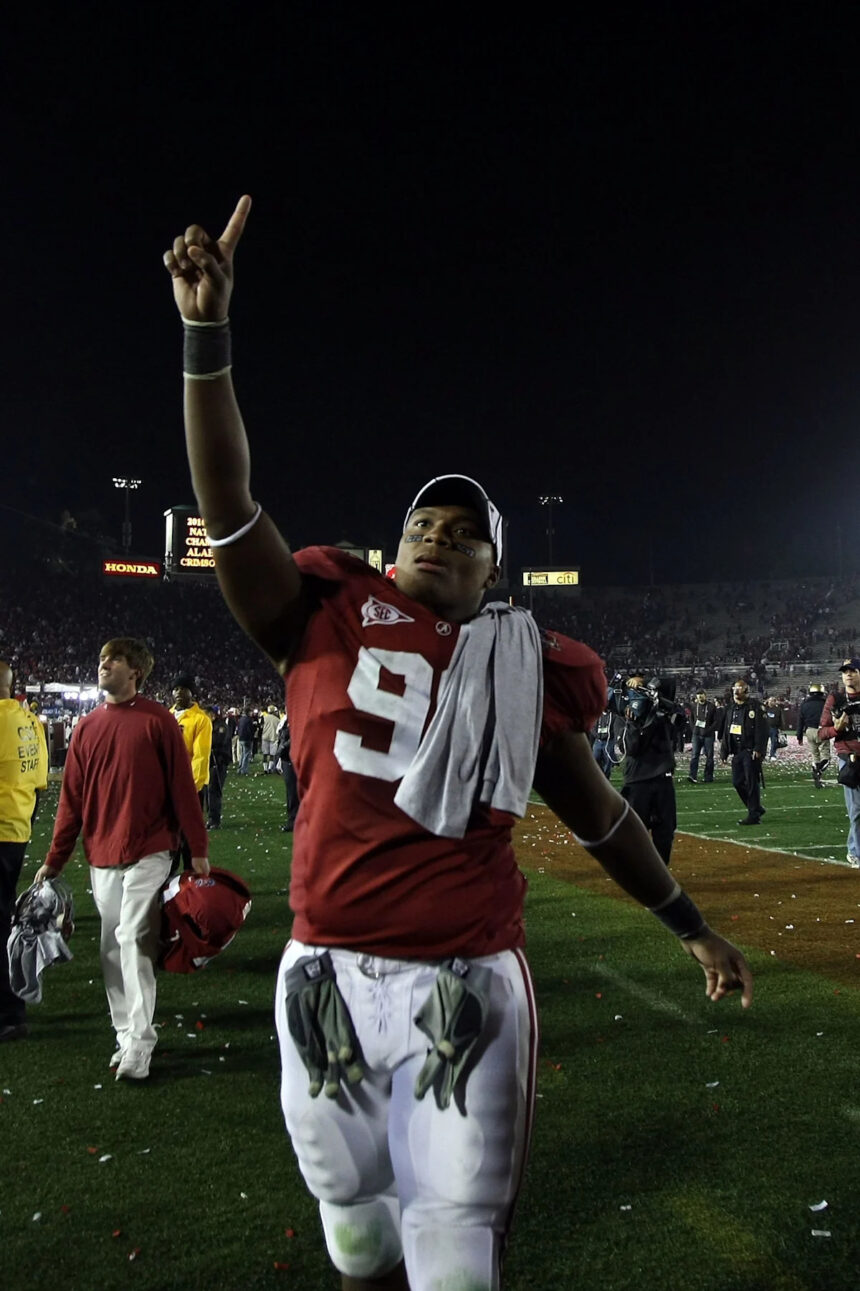
In a story that reads more like a Hollywood script than a federal indictment, a former Alabama national champion defensive lineman has admitted to masterminding an audacious, multi-million dollar fraud scheme that saw him and an accomplice impersonate NFL stars—complete with wigs, makeup, and forged documents. Luther Davis, who helped the Crimson Tide capture the 2009-2010 BCS national title, pleaded guilty on Monday, April 27, to federal charges of wire fraud and aggravated identity theft, marking a stunning fall from grace for a player once destined for gridiron glory.
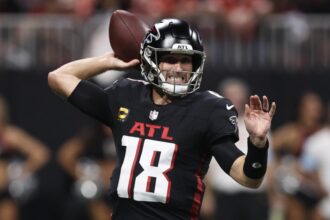
The U.S. Attorney’s Office for the Northern District of Georgia confirmed that Davis, 37, and his co-conspirator, 29-year-old CJ Evins, bilked lenders out of nearly $20 million by pretending to be high-profile NFL players. The scheme, which ran from May 2023 to October 2024, targeted athletes like Atlanta Falcons quarterback Michael Penix Jr., Cleveland Browns tight end David Njoku, and New York Giants safety Xavier McKinney. This case is not just a cautionary tale about identity theft—it is a deep dive into how far some will go to cash in on the credibility of professional sports.
The Disguises and the Deception: How the Scheme Worked
According to federal prosecutors, the fraud was meticulously choreographed. Davis and Evins did not simply steal names; they stole entire identities. The duo registered companies with names that closely mirrored the athletes’ actual businesses or endorsement entities. They then opened bank accounts using fraudulent driver’s licenses and fabricated documentation, all designed to make lenders believe they were dealing with real NFL players.
But the most shocking element was the physical deception. When loan closings required video calls or in-person appearances, Davis and Evins donned elaborate disguises. Court documents and reports from The Guardian reveal that the pair used wigs, makeup, and prosthetic devices to alter their appearances, successfully passing themselves off as the athletes during high-stakes financial transactions. They signed loan documents in the players’ names, often while wearing masks or other facial coverings to obscure their true identities.
U.S. Attorney Theodore S. Hertzberg emphasized the audacity of the operation in a public statement: “Davis and Evins convinced lenders they were NFL players, obtained millions of dollars in fraudulent loans, and used the proceeds of their crimes to purchase real estate and luxury items. This scheme highlights that anyone can be a target of identity theft, and my office will vigorously investigate and prosecute swindlers who steal identities to defraud others.”
- Key Players Impersonated: Michael Penix Jr. (QB, Atlanta Falcons), David Njoku (TE, Cleveland Browns), Xavier McKinney (S, New York Giants).
- Duration of Scheme: May 2023 to October 2024.
- Total Losses: Nearly $20 million in fraudulent loans.
- Methods Used: Fake driver’s licenses, bogus company registrations, video call disguises with wigs and makeup.
From Crimson Tide Glory to Federal Indictment
Luther Davis’s story is one of dramatic contrast. He was a defensive lineman for the University of Alabama from 2007 to 2010, playing under head coach Nick Saban during the program’s resurgence. Davis was a member of the 2009-2010 national championship team, a squad that featured future NFL stars like Mark Ingram II, Julio Jones, and Rolando McClain. After going undrafted in 2011, Davis had brief stints with the New Orleans Saints and the Montreal Alouettes of the CFL, but his professional football career never took off.
Now, at 37, Davis faces a different kind of sentence. He pleaded guilty to one count of wire fraud and one count of aggravated identity theft. The wire fraud charge alone carries a maximum penalty of 20 years in prison, while the aggravated identity theft charge mandates a consecutive two-year prison term. Co-conspirator CJ Evins has also been charged and is awaiting trial or a plea agreement.
For Alabama fans, the news is a sobering reminder that success on the field does not guarantee integrity off it. Davis was part of a championship legacy, but his actions have tarnished that memory. The case also raises questions about how easily a former athlete—with no current NFL affiliation—could exploit the trust that comes with a well-known name.
Expert Analysis: Why This Fraud Worked—And Why It Failed
As a sports journalist who has covered the intersection of athlete finances and fraud for over a decade, I can tell you that this case is both shocking and predictable. The NFL player impersonation scheme succeeded for three reasons: trust, speed, and the aura of wealth.
First, lenders are often eager to approve loans for professional athletes. NFL players are perceived as low-risk borrowers because of their guaranteed contracts and endorsement income. Davis and Evins exploited this bias. By using the names of active stars, they bypassed many traditional credit checks.
Second, the scheme moved fast. The pair secured millions within 18 months. They did not wait for slow, bureaucratic loan approvals. Instead, they targeted private lenders and alternative financing firms that prioritize speed over due diligence.
Third, the disguises were surprisingly effective. In a world where Zoom calls and remote closings have become the norm, facial recognition is often lax. A well-placed wig and a fake ID were enough to fool loan officers who had never met the real Michael Penix Jr. or David Njoku.
But the scheme ultimately failed because of greed and sloppy paper trails. Federal investigators noted that Davis and Evins used the loan proceeds to purchase luxury real estate and high-end items—tangible assets that are easy to trace. Once the real NFL players discovered loans taken out in their names, they alerted their agents and legal teams, triggering a federal probe. The U.S. Attorney’s Office in Georgia, which has a strong track record of prosecuting financial crimes, quickly unraveled the web of fake identities.
My prediction: Davis will likely face a sentence of 10 to 15 years, given the scale of the fraud and the use of identity theft. Evins could face a similar fate, depending on his level of cooperation. The lenders, meanwhile, will be forced to tighten their verification processes, likely requiring biometric checks or in-person meetings with known representatives of the athletes.
What This Means for NFL Players, Lenders, and the Future of Athlete Identity Protection
This case sends a chilling message to the sports world: your name is a commodity, and someone might be selling it. For active NFL players, the Davis-Evins scheme is a wake-up call. Many athletes already struggle with financial exploitation from family members, agents, and hangers-on. But this is a new frontier—a stranger wearing a wig and a fake ID can walk into a bank and borrow millions in your name.
Players must now take proactive steps to protect their identities. This includes monitoring their credit reports monthly, freezing their credit with all three major bureaus, and working only with verified financial institutions. The NFL Players Association (NFLPA) should also implement a centralized identity monitoring service for all active and former players, something that is currently lacking.
For lenders, the lesson is clear: trust but verify. No loan should be approved without a live, in-person verification of the borrower’s identity—especially when the borrower claims to be a public figure. The use of video calls with disguises being accepted as valid identification is a glaring security hole that must be closed. Expect to see more financial institutions adopt multi-factor authentication, including fingerprint or facial recognition software, before releasing funds.
Finally, this case underscores the long-term consequences of white-collar crime. Luther Davis was a young man with a national championship ring and a future. Now, he is a convicted felon facing decades in prison. His co-conspirator, CJ Evins, is 29 years old and looking at a similar fate. The luxury cars and houses they purchased with stolen money will be seized. The reputation they tried to steal from real athletes is now destroyed.
Conclusion: A Cautionary Tale of Fame, Fraud, and Fallout
The story of Luther Davis is not just about a former Alabama star who went bad. It is about the fragility of trust in a world that runs on digital identities and fast money. Davis and Evins exploited the very system that is designed to help athletes manage their wealth. They used wigs and fake documents to steal nearly $20 million, but in the end, they could not outrun the paper trail or the federal agents who followed it.
As the legal process moves forward, one thing is certain: the NFL and its players will be more vigilant than ever. The league’s reputation for financial security has taken a hit, but it will recover. For Davis, the road ahead is far less certain. He will trade his Alabama championship rings for a prison uniform, a stark reminder that in the game of life, the biggest gamble is not on the field—it is in the choices you make when no one is watching.
Key Takeaway: If you are an athlete, freeze your credit. If you are a lender, verify every face. And if you are a former national champion thinking about a life of crime—remember that the feds are watching, and the only thing harder than blocking a Nick Saban defense is escaping a federal indictment.
Source: Based on news from Yahoo Sports.