A Record-Breaking Semi-Final: The Antidote to Modern Football?
Every once in a while, a match comes along that strips away the layers of analytics, tactical rigidity, and defensive pragmatism that have come to define the modern game. It reminds us, in the most visceral way possible, why football is still, and always will be, referred to as the beautiful game. Paris Saint-Germain’s breathtaking 5-4 Champions League semi-final first-leg victory over Bayern Munich was exactly that: a glorious, chaotic, and utterly compelling antidote to the calculated sterility that often plagues elite football.
This was not a match for the purists who obsess over xG models or defensive structures. It was a match for those who remember a time when attacking verve and sheer willpower could decide a contest. The Stade de la Meinau witnessed history—the highest scoring semi-final in the competition since Eintracht Frankfurt beat Rangers 6-3 in the 1959-60 European Cup. And let’s be clear: this will live long in the memory, not for its tactical genius or calculated gameplans, but for two sides with remarkable attacking quality who simply threw everything at each other in the hope of securing a place in next month’s final in Budapest.
The Death of Pragmatism: Why This Match Mattered
In an era where set-pieces have become king, where a well-timed defensive block is celebrated with the same fervor as a goal, and where the long throw-in has made a bizarre comeback, PSG vs. Bayern was a refreshing slap in the face. It was a reminder that scoring more goals than your opponent remains the most fundamental and thrilling key to success. The game was devoid of the cautious, low-block chess matches that dominate the group stages. Instead, it was a high-octane, end-to-end slugfest where both managers, Luis Enrique and Vincent Kompany, abandoned caution.
The numbers tell a story, but they don’t capture the emotion. Nine goals. Two penalties. A hat-trick. A late winner. And a defensive collapse from Bayern that was as shocking as it was entertaining. This was football played on the edge of a knife, where every attack felt like it could be the last. It was the kind of match that makes you question why we ever allowed the sport to become so obsessed with possession for possession’s sake.
- Record-breaking scoring: Nine goals in a Champions League semi-final is unprecedented in the modern era.
- No tactical safety net: Both teams pushed forward relentlessly, ignoring the risk of counter-attacks.
- Emotional rollercoaster: The lead changed hands multiple times, keeping fans on the edge of their seats until the final whistle.
Expert Analysis: Where the Game Was Won and Lost
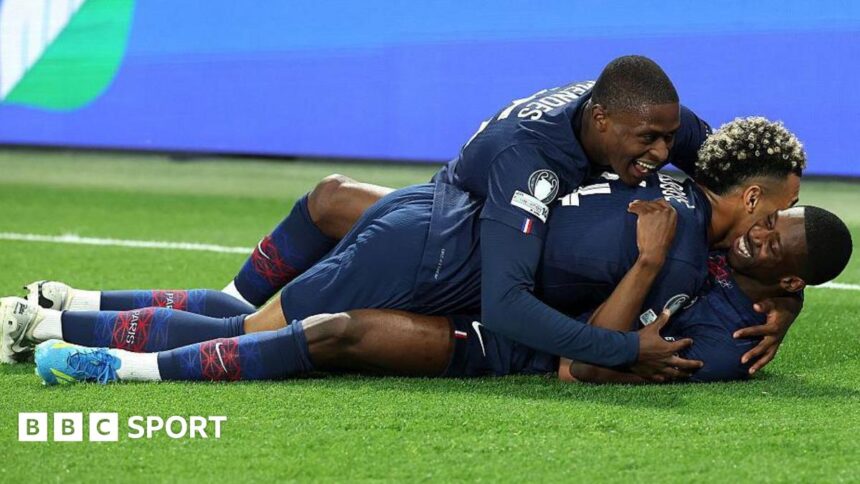
From a tactical standpoint, this match was a nightmare for analysts but a dream for neutral fans. PSG’s victory was not built on a revolutionary system. It was built on the sheer brilliance of individuals like Ousmane Dembélé and Kylian Mbappé, who exploited Bayern’s high defensive line with devastating effect. Dembélé, in particular, was unplayable, scoring twice and causing chaos every time he ran at the Bayern backline. His movement was a masterclass in attacking spontaneity.
Bayern, for their part, were their own worst enemies. Defensive lapses from Dayot Upamecano and Kim Min-jae gifted PSG three of their five goals. Yet, the Bavarians never stopped fighting. Harry Kane’s two penalties and a brilliant strike from Leroy Sané kept them in the tie. The problem was that Bayern’s midfield, without a true defensive anchor, was overrun. They tried to press high, but PSG’s speed on the break was simply too much to handle.
The match was a classic example of chaos theory in football. When both teams refuse to compromise on their attacking principles, the result is a spectacle that defies prediction. The key moment came in the 86th minute, when Randal Kolo Muani pounced on a loose ball in the box to make it 5-3. Bayern pulled one back through a stoppage-time header from Matthijs de Ligt, but the damage was done. PSG had the advantage, but the tie is far from over.
Predictions for the Second Leg: Can Bayern Stage a Comeback?
The second leg at the Allianz Arena promises to be another classic. Bayern Munich will be desperate to overturn a one-goal deficit on home soil, but they face a monumental challenge. PSG have shown they can score at will, and with Mbappé and Dembélé running at a fragile Bayern defense, the visitors will fancy their chances of adding to their tally.
However, Bayern’s home record in the Champions League is formidable. They have the firepower to score three or four goals, especially if Kane is in form. The key for Vincent Kompany will be to tighten up defensively without sacrificing attacking intent. He cannot afford another defensive meltdown. For PSG, Luis Enrique must resist the temptation to sit back and protect the lead. That would be a fatal mistake. They need to stay aggressive and exploit the space Bayern will leave behind.
My prediction: Bayern will win the second leg 3-2, forcing extra time. The tie will be decided by a moment of individual brilliance—likely from Mbappé or Kane. I expect PSG to edge through to the final on aggregate, but not without a massive scare. The total goals across both legs could well surpass 15, further cementing this semi-final as one of the greatest in history.
- Bayern’s advantage: Home crowd, Kane’s finishing, and a need to press from the start.
- PSG’s advantage: Pace on the counter, a two-goal cushion (effectively), and a psychological edge.
- Key battle: Bayern’s midfield vs. PSG’s transition game. If Bayern can control the center, they win.
A Strong Conclusion: The Beautiful Game Lives On
In a footballing world increasingly dominated by data, video analysis, and risk-averse tactics, PSG vs. Bayern was a glorious anomaly. It was a reminder that the beautiful game is not about perfect execution of a system, but about human emotion, risk-taking, and the sheer joy of scoring goals. This match was the antidote to modern football—a celebration of attacking intent that made us all fall in love with the sport in the first place.
Yes, the second leg will be tight. Yes, there will be tactical adjustments. But the memory of that 5-4 first leg will endure. It will be replayed in highlight reels for decades. It will be the match that parents tell their children about when they ask why football is called the beautiful game. And if the second leg delivers even half the drama, we are in for a treat.
Football, at its best, is not about control. It’s about chaos. It’s about nine goals, a hat-trick, and a winner in the 86th minute. It’s about two teams refusing to blink. And it’s about the simple, undeniable truth that the best way to win is to score more goals than the other team. Long live this semi-final. Long live the beautiful game.
Source: Based on news from BBC Sport.