Ravens Roll the Dice: Why the Signings of Diego Pavia and Joe Fagnano Are Smarter Than They Look
In a league where the draft is often treated as gospel, the Baltimore Ravens just pulled a quiet heist. On Tuesday, the Ravens officially inked Heisman Trophy runner-up Diego Pavia and ex-UConn signal-caller Joe Fagnano to three-year undrafted free agent contracts. On the surface, this looks like standard roster filler. But for a team that already houses two-time MVP Lamar Jackson and reliable backup Tyler Huntley, these moves signal something deeper: a deliberate, forward-thinking bet on raw talent and system fit.
Let’s be clear—neither Pavia nor Fagnano is walking into Baltimore expecting to unseat Jackson. But in a quarterback market where teams overpay for mediocre veterans, the Ravens are stockpiling high-upside, low-cost assets. And the story of how a Heisman runner-up fell completely off the draft board is one that deserves a closer look.
The Heisman Runner-Up Anomaly: Diego Pavia’s Unprecedented Slide
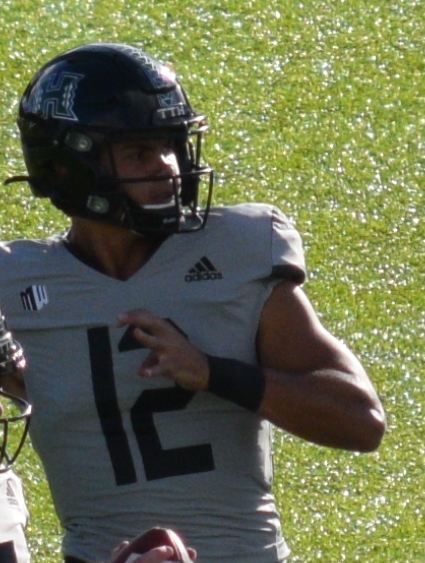
Diego Pavia’s journey to the NFL is a masterclass in resilience—and a cautionary tale about how the league undervalues production over measurables. The 24-year-old dual-threat quarterback lit up the college football landscape last season at Vanderbilt, finishing second in Heisman voting behind Colorado’s Shedeur Sanders. His stat line is borderline absurd: 3,539 passing yards, 29 touchdowns, 862 rushing yards, and 10 additional scores on the ground. He threw just eight interceptions across a grueling SEC schedule.
Yet, when the 2025 NFL Draft concluded, Pavia’s name was never called. He became the first Heisman finalist to go undrafted since 2014 (Northern Illinois’ Jordan Lynch) and the first Heisman runner-up to be unselected since Iowa’s Brad Banks in 2003. That’s a 22-year drought broken by a player who torched Alabama’s defense and nearly beat Georgia on the road.
Why the fall? Scouts will tell you it’s about arm strength limitations and a slightly elongated release. But the Ravens, historically, don’t care about cookie-cutter prototypes. They care about winners. Pavia is a winner. His ability to extend plays with his legs and deliver accurate throws on the move mirrors the very skills that made Jackson a generational talent. The difference? Jackson was a first-round pick. Pavia is a free agent fighting for a practice squad spot.
Expert Analysis: “Pavia is a system quarterback in the truest sense—but Baltimore’s system is the perfect fit,” says former NFL scout and current analyst Mark Dulgerian. “He’s not going to beat you with a 70-yard bomb from the pocket. But in read-option concepts, RPOs, and bootlegs, he’s lethal. The Ravens can develop him as a long-term No. 2 or even a trade asset.”
Joe Fagnano: The UConn Product With NFL-Caliber Arm Talent
While Pavia grabs the headlines, Joe Fagnano is the quiet steal of this signing class. The former UConn Husky brings a different skill set to the quarterback room. At 6-foot-3 and 225 pounds, Fagnano possesses a strong, NFL-ready arm and a quick release that allows him to fit throws into tight windows. His college career was marred by inconsistency—partly due to a shaky offensive line and a lack of weapons in Storrs—but his physical tools are undeniable.
In his final season at UConn, Fagnano threw for 2,847 yards and 21 touchdowns against 10 interceptions, while also showing surprising mobility with 340 rushing yards. He’s not the dynamic runner that Pavia is, but he’s a pocket passer with the ability to slide and scramble when necessary. That makes him an intriguing developmental piece for a coaching staff that loves to tailor its offense to the quarterback’s strengths.
Both players were initially invited to the team’s rookie mini-camp later this week. Now, they have guaranteed spots on the 90-man roster. That’s a massive vote of confidence from general manager Eric DeCosta and head coach John Harbaugh. The roster will eventually be pared to 53 before the regular season, but these deals buy precious evaluation time.
What This Means for Baltimore’s Quarterback Room
The Ravens’ quarterback depth chart is currently headlined by Lamar Jackson, a two-time NFL MVP who just signed a record-breaking extension. Behind him is Tyler Huntley, a Pro Bowl alternate who has proven he can win games as a spot starter. Adding Pavia and Fagnano doesn’t threaten either player’s job security—but it does create a fascinating competition for the third and fourth spots.
Here’s the reality: The Ravens typically carry three quarterbacks on the active roster. Huntley is locked in as the backup. That leaves Pavia and Fagnano battling for the No. 3 role, with the loser likely headed to the practice squad. But don’t underestimate the value of a practice squad quarterback in Baltimore. The Ravens have a history of developing quarterbacks—think Tyler Huntley himself, or even the brief emergence of Anthony Brown in 2022.
Key predictions for the 2025 season:
- Diego Pavia makes the 53-man roster as the emergency QB and special teams contributor. His athleticism allows him to serve as a scout-team weapon during practice, mimicking mobile quarterbacks like Josh Allen or Justin Fields.
- Joe Fagnano lands on the practice squad. He needs a year of NFL weight training and system mastery, but his arm talent is too good to let walk.
- At least one of these quarterbacks will be traded within two years. NFL teams are always desperate for quarterback depth, and a well-coached backup from Baltimore holds premium value.
Why the Ravens Are Winning the Undrafted Free Agent Game
Baltimore has long been the league’s gold standard for identifying undrafted talent. Linebacker Patrick Onwuasor, guard John Urschel, and defensive end Brent Urban all started their careers as UDFAs in Baltimore. The Ravens don’t just sign undrafted players—they develop them into contributors. This quarterback signing spree is a direct extension of that philosophy.
Consider the economics: A veteran backup quarterback with starting experience costs $3-5 million per year. Pavia and Fagnano combined will earn less than $1 million in 2025. If one of them develops into a reliable No. 2, the Ravens save millions in cap space. If both fail, the team loses nothing but a roster slot that was likely going to a camp arm anyway.
There’s also the trade deadline factor. Every year, a team loses its starting quarterback to injury and scrambles for a replacement. The Ravens could easily flip one of these young arms for a mid-round draft pick in 2026. It’s the same strategy that netted them a fourth-rounder for Trace McSorley a few years ago.
Final Analysis: A Low-Risk, High-Reward Masterstroke
Let’s not overhype this—Diego Pavia and Joe Fagnano are not the future of the Ravens franchise. That future is still Lamar Jackson, healthy and hungry. But what these signings represent is a culture of preparation. The Ravens are building a quarterback room that is deep, versatile, and cheap. In a salary-cap league, that’s a competitive advantage.
Pavia’s Heisman-level production and Fagnano’s raw arm talent give Baltimore two distinct developmental paths. One could become a gadget-play specialist; the other could become a traditional backup. Either way, the Ravens are betting on themselves to coach these players up.
The bottom line: Don’t sleep on these signings. When the Ravens are hoisting the Lombardi Trophy next February, and the discussion turns to their depth, remember the Tuesday in April when they quietly added two quarterbacks who were too good to be ignored—and too smart to let slip away.
Source: Based on news from Deadspin.
Image: CC licensed via commons.wikimedia.org