


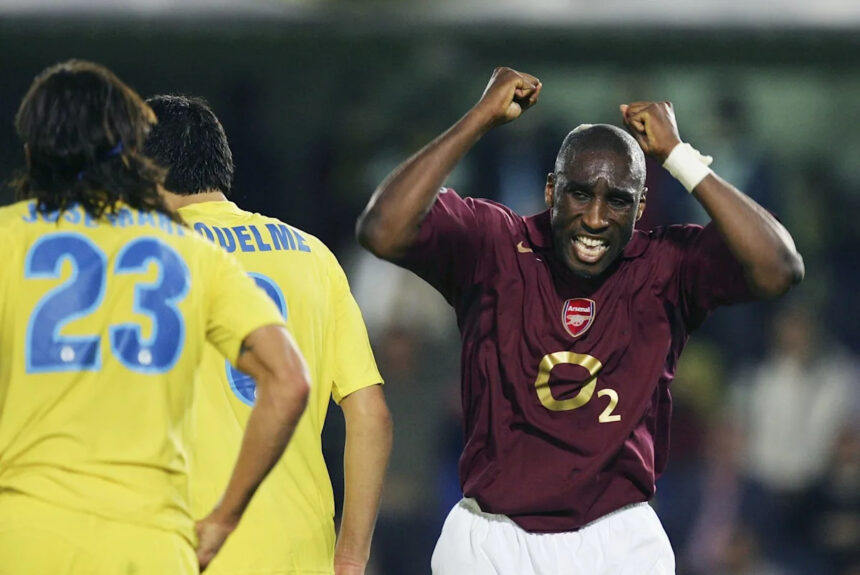
Arsenal’s Champions League Semi-Final History: A Legacy of Heartbreak and Hope
For the first time in their illustrious history, Arsenal have reached the Champions League semi-finals in back-to-back seasons. Under the meticulous guidance of Mikel Arteta, the Gunners are no longer just participants in Europe’s elite competition; they are becoming a genuine force. Tonight, they face a stern test against Diego Simeone’s Atletico Madrid in the first leg of their semi-final tie. It is a clash of tactical philosophies—Arteta’s fluid possession versus Simeone’s rugged, defensive resilience.
But before the ball rolls at the Metropolitano, it is worth remembering the weight of history. This is only the fourth Champions League semi-final in Arsenal’s history. Each previous appearance has been a story of its own—some glorious, some painful. Here, we revisit each of those dramatic two-legged ties that shaped the club’s European identity.
The Golden Run: Arsenal vs Villarreal (2005/06)
The 2005/06 season remains the benchmark for Arsenal’s Champions League ambitions. It was the year of the “Invincibles” hangover, yet it produced the club’s only final appearance. The semi-final opponent was Villarreal, a club making their first-ever appearance at this stage. Managed by Manuel Pellegrini, the Yellow Submarine were a dangerous mix of flair and grit, boasting a certain Juan Román Riquelme as their conductor.
First Leg: Arsenal 1-0 Villarreal
At Highbury’s final season of European football, the atmosphere was electric. Arsenal, still adapting to life without Patrick Vieira, relied on a moment of individual brilliance. Kolo Touré’s surging run from deep won a penalty, which Thierry Henry coolly slotted home in the 41st minute. The 1-0 scoreline was slender, but Arsenal’s defense—led by the imperious Sol Campbell—kept a clean sheet. It was a classic Arsène Wenger performance: controlled, patient, and lethal on the counter.
Second Leg: Villarreal 0-0 Arsenal
The Estadio El Madrigal was a cauldron of noise. Villarreal pressed relentlessly, and Arsenal’s backline was under siege. The defining moment came in the 88th minute. A penalty was awarded to Villarreal after a handball by Mathieu Flamini. Up stepped Riquelme, the team’s talisman. His shot was weak and central, and Jens Lehmann—the German goalkeeper—dived low to his right to make a stunning save. The final whistle blew, and Arsenal were through to the final in Paris.
Key Takeaways from 2005/06:
- Arsenal’s defensive solidity was the foundation. They kept 10 consecutive clean sheets in the competition that season, a record that still stands.
- The experience of playing a Spanish side with a strong midfield set a blueprint for dealing with technical opponents.
- Lehmann’s penalty save is arguably the most iconic moment in Arsenal’s Champions League history.
The Heartbreak: Arsenal vs Manchester United (2008/09)
Three years later, Arsenal returned to the semi-finals, but this time it was an all-English affair against Sir Alex Ferguson’s Manchester United. The Gunners were young and dynamic, led by Cesc Fàbregas, but they faced a United side at the peak of their powers, featuring Cristiano Ronaldo, Wayne Rooney, and Carlos Tevez.
First Leg: Manchester United 1-0 Arsenal
Old Trafford was hostile. United dominated the first half, and the only goal came from a set-piece. John O’Shea, of all people, turned in a corner after a scramble. Arsenal grew into the game in the second half, but Edwin van der Sar was rarely troubled. The 1-0 loss was damaging, but the tie was far from over.
Second Leg: Arsenal 1-3 Manchester United
The Emirates Stadium was buzzing. Arsenal needed a goal, and they got it early. A brilliant move saw Fàbregas feed Robin van Persie, who curled a stunning shot past van der Sar. The stadium erupted. But the joy was short-lived. United responded with ruthless efficiency. Ronaldo scored a thunderous free-kick, and then a deflected shot from the same player made it 2-1. Park Ji-Sung sealed the win late on. Arsenal’s youth and naivety were exposed by United’s clinical edge.
Key Takeaways from 2008/09:
- Arsenal’s lack of experience in big moments cost them. They couldn’t handle the pressure after taking the lead.
- The set-piece vulnerability was a recurring theme—a weakness that Arteta has since addressed.
- This defeat underscored the need for a more pragmatic approach in knockout football, something Wenger rarely embraced.
The Near Miss: Arsenal vs Bayern Munich (2023/24)
Fast forward 15 years. Arsenal were back in the semi-finals for the first time since 2009. Under Mikel Arteta, they had become a disciplined, high-pressing machine. Their opponent? The European royalty of Bayern Munich, led by Harry Kane—a former Tottenham star—and a revitalized Thomas Tuchel. This tie was billed as the ultimate test of Arsenal’s new identity.
First Leg: Bayern Munich 2-2 Arsenal
The Allianz Arena was daunting. Arsenal started brilliantly, with Bukayo Saka scoring a stunning opener after a quick counter-attack. But Bayern responded. Kane equalized from the penalty spot after a William Saliba handball. Serge Gnabry then put Bayern ahead with a clinical finish. Arsenal looked rattled, but they showed resilience. Leandro Trossard came off the bench to score a crucial away goal, making it 2-2. The tie was perfectly poised.
Second Leg: Arsenal 1-0 Bayern Munich
The Emirates was a fortress. Arsenal needed a clean sheet, and they delivered. The game was tense, with both sides creating chances. The breakthrough came in the 63rd minute. A corner was cleared, but Martin Ødegaard picked up the loose ball, drove into the box, and saw his deflected shot loop over Manuel Neuer. It was scrappy, but it was enough. Arsenal defended with their lives. David Raya made a stunning save from a Kane header in stoppage time. The final whistle sparked wild celebrations. Arsenal were through to the final, where they would ultimately lose to Real Madrid.
Key Takeaways from 2023/24:
- Arteta’s tactical flexibility was on full display. They could dominate possession or defend deep as needed.
- The mental resilience of this squad is miles ahead of previous generations. They don’t panic.
- This tie proved that Arsenal can beat elite European clubs without relying on a single superstar.
Expert Analysis: What This History Tells Us About 2024/25
So, what can we learn from Arsenal’s previous semi-final adventures as they prepare to face Atletico Madrid? First, history shows that defensive discipline is non-negotiable. In 2006, it was a clean sheet that got them through. In 2009, a lack of it cost them. In 2024, they kept a clean sheet at home to reach the final. Against Atletico, who are masters of grinding out 1-0 wins, Arsenal cannot afford to be wasteful in front of goal.
Second, the importance of the first leg cannot be overstated. In 2006, a 1-0 home win was enough. In 2009, they lost the first leg 1-0 and never recovered. Atletico will try to suffocate the game in the first leg at home. Arteta must ensure his team avoids a heavy defeat, as an away goal could be decisive.
Third, this current Arsenal squad has a psychological edge that previous iterations lacked. They have been in the trenches. They have beaten Manchester City, Liverpool, and Real Madrid in recent knockout ties. The fear factor is gone. Players like Saka, Ødegaard, and Declan Rice have experience in high-stakes environments.
My prediction? This will be a tight, tactical affair. Atletico will sit deep, looking for a counter-attack or a set-piece. Arsenal must be patient. I see a 1-1 draw in Madrid, setting up a dramatic second leg at the Emirates. There, Arsenal’s home form and crowd support should see them through, 2-0.
Conclusion: A New Chapter Beckons
Arsenal’s Champions League semi-final history is a tapestry of glorious saves, cruel defeats, and triumphant breakthroughs. From Jens Lehmann’s penalty save in 2006 to Martin Ødegaard’s deflected winner in 2024, the journey has been long and winding. Now, under Mikel Arteta, the club is writing a new chapter—one defined by tactical intelligence, collective strength, and a relentless desire to win.
Atletico Madrid will be a formidable opponent, but this Arsenal team is built for these moments. They are no longer the naive side of 2009 or the defensive fortress of 2006. They are a modern, balanced unit capable of adapting to any challenge. The semi-final stage is familiar territory now. The next step is to turn history into destiny.
Buckle up, Gooners. The journey continues tonight.
Source: Based on news from Yahoo Sports.


![Bayern Munich 1-1 PSG [5-6 agg]: Dembélé confirms Parisian progression to Champions League final](https://yetiscore.com/wp-content/uploads/2026/05/sports-1778102352-330x220.jpg)