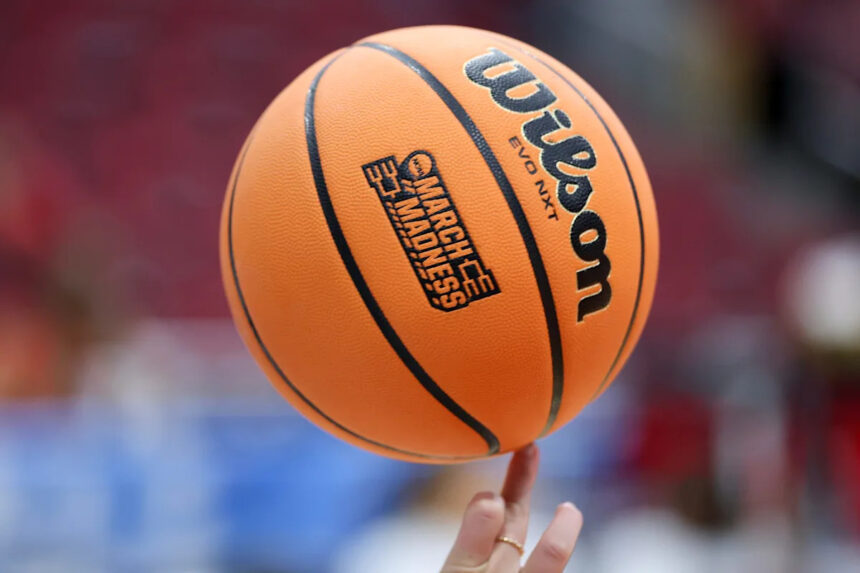
What NCAA Tournament Expansion to 76 Teams Means for Iowa Basketball
The news hit the college basketball world like a cold snap in February: the NCAA Tournament is expanding. Again. Like it or not—and let’s be honest, the vast majority of college fans don’t like it—the field that was once a pristine 64, then bloated to 68, is now ballooning to 76 teams for March Madness. The decision, driven by television contracts and the insatiable hunger for more inventory, is set to reshape the landscape of the sport. But while the national outcry focuses on the dilution of the regular season, a more specific question emerges for fans of the Iowa Hawkeyes: What does this actually mean for Fran McCaffery’s program?
Let’s get the mechanics out of the way first. The expansion will increase the games on Tuesday and Wednesday of the first week of March Madness to six each day. That means 24 teams will be playing in those 12 “First Four” style games. The bracket will then revert to its traditional 64-team format beginning on Thursday. So, we aren’t talking about a 76-team bracket; we are talking about a 64-team bracket with a bigger, messier preamble. For Iowa, this is not just a footnote. It is a potential lifeline, a new trap door, and a strategic puzzle all rolled into one.
The Big Question: Power Five Safety Net or Mid-Major Justice?
Before we dive into the Hawkeyes specifically, we have to address the elephant in the room. Who gets these four extra at-large bids? Questions remain. Are these additional spots going to go to more middle-of-the-pack power conference teams that finish .500 or barely above with a sub-par record in conference play? Or is the NCAA going to create more access for top mid-major programs that may stumble in the conference tournament?
College basketball fans are pleading for the latter. The romantic in all of us wants to see a 26-win Drake team or a dominant Saint Mary’s squad get in without sweating the bubble. But we know the almighty dollar runs the NCAA, and if they can sneak in a handful of power conference teams for one more game, that rules the day. The math is simple: a game between a 9-9 SEC team and a 10-8 Big Ten team draws exponentially more viewers than a game featuring a mid-major champion from a conference you’ve never heard of.
For Iowa, this is a double-edged sword. The Hawkeyes play in the Big Ten, a conference that is already treated with velvet gloves by the selection committee. If the NCAA uses these four new slots to prop up the middle class of the power conferences, Iowa’s margin for error just got a little thicker. If they use them to reward the mid-majors, the Hawkeyes’ path to the tournament remains the same: win enough games in the brutal Big Ten schedule to stand out.
How Iowa Basketball Benefits from a Softer Bubble
Let’s be real about the Fran McCaffery era. It has been a rollercoaster of high-octane offense and defensive lapses. The Hawkeyes have made the NCAA Tournament in five of the last six seasons, but they have also spent plenty of Selection Sundays sweating. In 2023, Iowa was a 12-seed, barely in the field. In other years, they’ve been on the wrong side of the bubble or in the “First Four” conversation.
Expansion to 76 teams directly lowers the cut line. Think of it this way: currently, the last four at-large teams are playing in Dayton. With 76 teams, the last eight at-large teams will be playing on Tuesday and Wednesday. This is a massive shift in the bubble calculus.
- More forgiveness for non-conference stumbles: Iowa has a habit of losing a head-scratcher in November. A loss to a mid-tier team in the Maui Invitational or a home loss to a low-major program used to be a resume killer. Now? It’s a blemish that can be overcome more easily. The expanded field means the committee will be scraping the bottom of the barrel, and a 19-13 Iowa team with a top-50 NET ranking will look like a blue blood compared to the alternatives.
- Big Ten record becomes less critical: In the current system, going 10-10 in the Big Ten is often the magic number. With expansion, a 9-11 conference record might be enough, especially if the Hawkeyes beat a couple of ranked teams. The extra four slots effectively create a “second bubble” that includes teams with losing records in league play. For a program that lives and dies by the three-point shot and can beat anyone on a given night, this is a safety net.
- The “First Four” becomes a familiar destination: Instead of sweating whether Iowa is a 10-seed or an 11-seed, the Hawkeyes could find themselves as a 12-seed in the expanded Tuesday/Wednesday slate. While playing an extra game in Dayton is not ideal, it is infinitely better than sitting at home watching the NIT. For a team that often starts slow in tournament play, that extra “play-in” game could serve as a warm-up, allowing the team to get its shooting legs under it before facing a 5-seed.
The Hidden Trap: What if Expansion Hurts Iowa?
It’s not all sunshine and bracketology gifts. There is a darker scenario for the Hawkeyes. The expansion could actually increase the pressure on a program like Iowa to avoid the middle of the pack.
Here’s the paradox: if the NCAA gives these four new slots to mid-major champions who lost their conference tournament, the power conference bubble becomes more crowded, not less. Why? Because those mid-major teams now take up spots that previously went to power conference teams. The committee might feel less guilty leaving a 9-9 Big Ten team out if they can point to a 28-win Loyola Chicago team that deserves a shot.
For Iowa, this means the “eye test” becomes even more important. You cannot just coast on a .500 conference record. You need quality wins. The Hawkeyes are known for their high-powered offense, but they are also known for defensive lapses that lead to ugly losses. If the committee has to choose between a 19-win Iowa team that lost to Penn State and Nebraska, or a 25-win mid-major team that beat a couple of power conference teams, the mid-major might finally get the nod.
Furthermore, there is the fatigue factor. If Iowa is forced into the Tuesday play-in game, they would have to win three games in six days just to reach the Sweet 16. That is a brutal ask for a team that typically relies on a short rotation. The depth of the Hawkeyes would be tested immediately. One bad shooting night on Tuesday and the season is over before the main bracket even starts. The pressure to be a “lock” for the Thursday bracket will be immense.
Expert Analysis: The Fran McCaffery Factor and Recruiting
Let’s look at this from a coaching perspective. Fran McCaffery has built his reputation on an up-tempo, guard-oriented style that is tailor-made for the modern NCAA Tournament. He recruits players who can score in bunches. The expansion to 76 teams directly benefits his recruiting pitch.
“Come to Iowa, and you will play in the tournament.” That is a powerful statement. With 76 teams, the odds of a power conference program like Iowa missing the tournament drop significantly. McCaffery can now sell a prospect on the guarantee of a March Madness appearance, even if the team hits a rough patch. This is a massive advantage over mid-major programs that must win their conference tournament or pray for a miracle.
However, there is a flip side. The expansion could devalue the regular season for the Hawkeyes. If you know you can get in with a 9-11 Big Ten record, why kill yourself in January? This is a dangerous mindset. Teams that play with an edge in December and January are the ones that make runs in March. If the Hawkeyes start treating the regular season as a mere formality, they will enter the tournament cold and unprepared for the intensity of a single-elimination format.
My prediction? The NCAA will use these four slots to balance the scales. They will give two spots to power conference teams (like an Iowa team that finishes 10th in the Big Ten) and two spots to high-major mid-majors that just missed the auto-bid. This is the compromise that keeps the television partners happy while paying lip service to the “little guys.”
Conclusion: A New Era of Security and Risk for Iowa
So, what does the NCAA Tournament expansion to 76 teams mean for Iowa basketball? It’s simple: it is a net positive for the program’s floor, but a potential trap for its ceiling.
The Hawkeyes will almost never miss the tournament again. The bubble has effectively been erased for middle-of-the-pack power conference teams. That is a huge win for Fran McCaffery and his staff. It provides stability, helps recruiting, and ensures that Carver-Hawkeye Arena remains relevant in March.
But the danger lies in complacency. If Iowa is content to be a “First Four” team every year, the program will stagnate. The goal should still be to compete for a Big Ten title and a top-four seed. The expansion is a safety net, not a goal. The true test for the Hawkeyes will be whether they use this extra breathing room to take risks—schedule tougher non-conference games, develop young players, and push for higher seeding—or whether they simply coast into the expanded field and hope for a lucky bounce.
For now, Iowa fans can breathe a little easier. The math works in their favor. But remember: the NCAA Tournament is about survival. And with 76 teams, the margin for error is just big enough to keep you alive, but just small enough to keep you from greatness. The Hawkeyes must walk that line carefully.
Source: Based on news from Yahoo Sports.