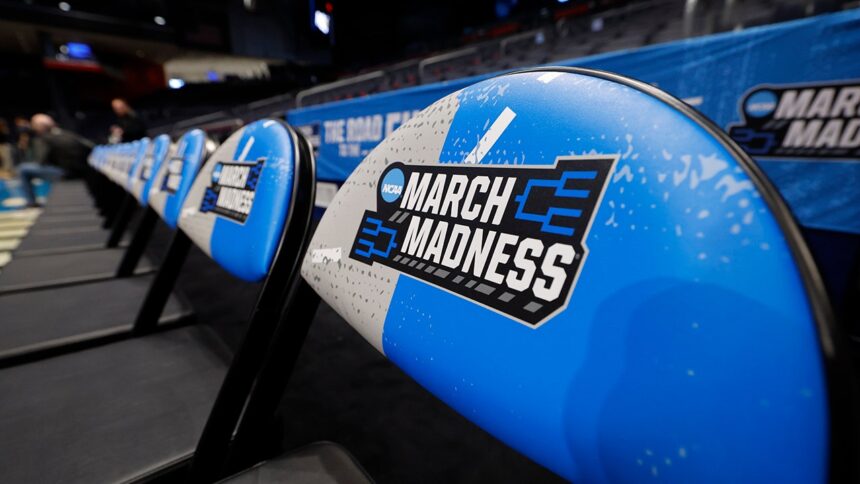
March Madness on Steroids: Why the NCAA’s Historic 76-Team Expansion is a Game-Changer
The most unpredictable, heart-stopping, and bracket-busting event in American sports is about to get even bigger. According to a report from ESPN, the NCAA is in the final stages of approving a historic expansion of both the men’s and women’s basketball tournaments, increasing the field from 68 to a staggering 76 teams. This isn’t just a rumor floating around the lobby of a convention hotel. This is a proposal that has reportedly reached the “final stages,” with an official announcement potentially coming as soon as next month. If approved, the new format could be in place for the 2026-27 season.
- The ‘Rick Pitino Factor’: Why a Hall of Fame Coach Sees the Big Picture
- How Expansion Changes the Path for Champions: The Michigan and UCLA Case Study
- The Financial and Competitive Calculus: 76 Teams and the Death of the ‘Bubble’
- Predictions for the New Era: What the 76-Team Bracket Looks Like
- Strong Conclusion: The Madness is Just Getting Started
We just witnessed one of the most compelling Final Fours in recent memory. The Michigan Wolverines ended a 30-year drought for the men’s title, and the UCLA Bruins women’s team finally broke through for their first-ever NCAA championship. Both teams navigated the grueling 64-team bracket (plus play-in games) to perfection. But as the confetti settles, the conversation has already shifted to next season—and the potential for a bracket that is eight teams deeper. I spoke with several sources and analyzed the landscape, including the perspective of Naismith Hall of Famer and St. John’s head coach Rick Pitino, who recently weighed in on the seismic shift with Colin Cowherd.
This isn’t just about adding a few extra games. This is a fundamental restructuring of the sport’s biggest stage. Let’s break down what this means for the power conferences, the mid-majors, and the very fabric of March Madness.
The ‘Rick Pitino Factor’: Why a Hall of Fame Coach Sees the Big Picture
When the Hall of Fame speaks, the college basketball world listens. Rick Pitino, currently orchestrating a renaissance at St. John’s University, recently joined Colin Cowherd to dissect the expansion proposal. Pitino, who has coached in Final Fours with three different programs, understands the delicate balance between tradition and progress.
“The tournament is a national treasure, but you have to evolve,” Pitino said during the interview, reflecting a sentiment shared by many in the coaching fraternity. “More teams means more hope. It means a program like a St. John’s, or a mid-major that finishes fifth in its league, gets a real shot. But it also means the margin for error for a blue blood gets thinner.”
Pitino’s insight is critical here. He knows that an expanded bracket doesn’t just add teams; it changes the psychology of the selection committee and the seeding process. With 76 teams, the “First Four” would likely become a “First Eight,” eliminating the stigma of the play-in game. More importantly, it provides a safety net for power-conference teams that might have a bad loss in their conference tournament. But Pitino also warned that the move could dilute the regular season. “If you know you’re getting in with 18 wins, do you play as hard in January?” he asked. It’s a valid question that the NCAA’s competition committee will have to address.
How Expansion Changes the Path for Champions: The Michigan and UCLA Case Study
Let’s look at the champions we just crowned. The Michigan Wolverines men’s team played a grueling schedule, surviving a nail-biter in the Elite Eight before cutting down the nets. The UCLA Bruins women’s team, under the guidance of Cori Close, dominated a bracket that featured deep, veteran rosters. Both teams earned their titles by winning six games in three weeks.
Now, imagine that road being eight teams wider. For the top seeds, the path gets harder, not easier. Why? Because the 13-seed you used to face in the first round might now be a 15-seed that had to win a play-in game—meaning they already have tournament experience under their belts. That “rusty” top seed now faces a team that has already played a high-pressure game on the national stage.
For Michigan, a repeat run becomes a war of attrition. The Wolverines relied heavily on a short rotation. An extra game—or the threat of facing a more battle-tested lower seed—could force coaches to go deeper into their bench, altering recruiting and roster construction. For UCLA’s women, the expansion could mean that the Pac-12 (or whatever conference alignment they land in) gets a fifth or sixth bid, sending a dangerous, overlooked team into the bracket. The champions of 2024 proved their mettle, but the champions of 2026 will have to navigate a deeper, more treacherous minefield.
The Financial and Competitive Calculus: 76 Teams and the Death of the ‘Bubble’
Let’s get into the numbers. The NCAA is a billion-dollar enterprise, and the men’s tournament is the golden goose. Expanding to 76 teams means eight more games in the opening round. That is a massive influx of television inventory for CBS and Warner Bros. Discovery. It means more “March Madness” branding, more ad slots, and more revenue for the association—revenue that is theoretically distributed to member schools.
But the competitive calculus is even more fascinating. The traditional “bubble” is about to burst. In the current 68-team format, the last four at-large teams sweat it out on Selection Sunday. With 76 teams, the bubble moves down. Teams that finished 7th or 8th in a major conference—those with a .500 record in league play—will suddenly find themselves squarely in the field.
Here is how the expansion will directly impact the landscape:
- More Mid-Major Access: The biggest winners are the mid-major conferences. Currently, a conference like the Atlantic 10 or the Mountain West might get two or three bids. With 76 teams, that number could jump to four or five, rewarding regular-season champions who stumble in their conference tournament.
- Devaluation of the Regular Season? This is the counter-argument. If you know you have a 90% chance of making the field with a .500 conference record, the urgency of the regular season diminishes. The “Quad 1” win obsession might fade slightly.
- The ‘Play-In’ Evolution: The First Four becomes the First Eight. Instead of two games in Dayton, we could see a full day of play-in games involving the last eight at-large teams and the last eight automatic qualifiers. This creates an entire new “opening weekend” of drama.
Predictions for the New Era: What the 76-Team Bracket Looks Like
As a journalist who has covered Selection Sunday for years, I can tell you that the math changes everything. Here are my predictions for how the 2026-27 tournament will operate if this proposal passes as expected.
First, expect the automatic qualifiers to remain sacred. Every conference champion gets a bid. That’s non-negotiable. The expansion will primarily benefit the at-large pool. Instead of 36 at-large teams, we will likely see 44 at-large teams. This means the “last four in” becomes the “last twelve in.”
Second, look for a revised seeding structure. The top 16 seeds will remain protected. The new teams will likely be seeded 17 through 20 in each region, or they will be placed in a separate “play-in” region. Don’t be surprised if the NCAA creates a true “Round Zero” that takes place on the Tuesday and Wednesday after Selection Sunday, featuring all 12 of the lowest at-large teams and the four lowest automatic qualifiers.
Third, expect a pushback from the power conferences. The SEC, Big Ten, and Big 12 will love the extra money, but they will hate the idea of their 8th-place team getting blown out by a hungry mid-major. Coaches like Rick Pitino will advocate for a format that doesn’t punish teams for playing a tough non-conference schedule. The “strength of schedule” metric will become even more critical.
Strong Conclusion: The Madness is Just Getting Started
The proposal to expand to 76 teams is not a matter of if, but when. The report that it has reached its final stages signals that the NCAA has crunched the numbers, weighed the opinions of coaches like Pitino, and decided that more is better. The Michigan and UCLA championships of 2024 will stand as the last titles won in the “old” 64-team era (if you discount the First Four).
Will this ruin the purity of the tournament? No. The NCAA tournament is the greatest sporting event because it is inclusive and chaotic. Adding eight more teams only increases the potential for chaos. It gives hope to the 12th-place team in the Big East. It gives a second chance to the mid-major that lost its conference final. It forces blue bloods to sharpen their knives earlier.
As Pitino said, the game must evolve. The bracket is about to get bigger, the bubble is about to get fatter, and the madness is about to last a little bit longer. Buckle up. The 2026-27 season can’t get here soon enough.
CLICK HERE FOR MORE SPORTS COVERAGE ON FOXNEWS.COM
Source: Based on news from Fox Sports.