MCC Defends Umpires in Angkrish Raghuvanshi Obstructing the Field Dismissal: A Split-Second Decision That Rewrote the IPL 2026 Narrative
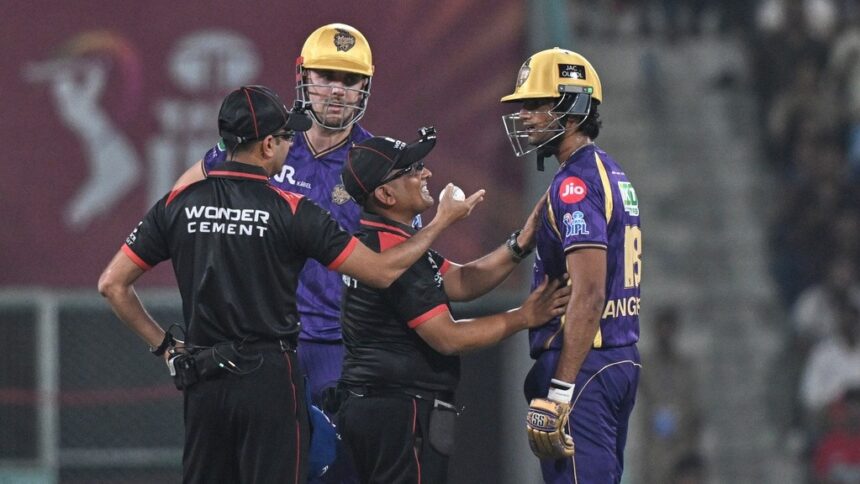
The roar of the crowd at the Ekana Stadium in Lucknow was not for a six, nor for a wicket. It was for a moment of pure, unscripted controversy that has split the cricketing world. When Kolkata Knight Riders’ young sensation Angkrish Raghuvanshi was given out Obstructing the Field against the Lucknow Super Giants on Sunday, April 26, 2026, the very fabric of the game’s laws was thrust into a white-hot spotlight. Within hours, the Marylebone Cricket Club (MCC), the guardian of the Laws of Cricket, stepped into the fray, issuing a robust defense of the umpires’ call. But was it a clear case of wilful obstruction, or a tragic case of instinctual reaction? Let’s break down the law, the play, and the future of running between the wickets in the IPL.
The Incident: A Split-Second That Changed the Game
It was the 14th over of the Kolkata Knight Riders’ chase. Raghuvanshi, looking in sublime touch on 42 off 31 balls, pushed the ball to the off-side and set off for a quick single. As he sprinted down the pitch, LSG’s fielder, deep in the ring, unleashed a powerful throw aimed at the striker’s end. What happened next was a blur. Raghuvanshi, seemingly in full flight, veered sharply to his left, crossing the line of the pitch, directly into the path of the ball. The ball struck his back leg. The umpires conferred, and the finger went up.
The decision was instantaneous, but the debate was not. Social media exploded. Former players, pundits, and fans were divided. Some argued the batter was simply trying to avoid the ball, an involuntary reflex. Others insisted it was a clear, calculated move to wilfully block the throw. The on-field umpires, backed by the third umpire, ruled that Raghuvanshi had changed his running line deliberately, thus obstructing the field. The KKR camp was visibly frustrated, but the die was cast.
MCC’s Verdict: Why the Law is Clear (and Unforgiving)
In a statement released late Sunday, the MCC did not mince words. The club defended the umpires’ decision unequivocally, stating it aligns with long-standing laws that penalise wilful changes of running direction. The MCC clarified that a batter who wilfully changes direction while running, especially onto or across the pitch, is deemed to be obstructing the field. This is not a new rule; it is a foundational interpretation of Law 37.
The MCC referenced a critical text: Tom Smith’s Cricket Umpiring and Scoring, the official interpretation of the Laws. “There has long been an interpretation on this exact matter,” the MCC statement read. “Where a batter is running as the throw comes in, and they deviate from their original running line—particularly if they move onto or across the protected area of the pitch—the umpire is entitled to judge that as a wilful act of obstruction.”
This is the crux of the matter. The law does not require the batter to intentionally hit the ball. It requires the umpire to decide if the change of direction was deliberate. In Raghuvanshi’s case, the replays showed a distinct, non-linear movement. He did not simply stop or slow down; he veered. The MCC’s defense makes it clear: the umpires applied the letter of the law, not the spirit of a hypothetical grey area.
Key Takeaways from the MCC’s Stance:
- Wilful Change: The act must be a deliberate deviation from the running line, not an accidental stumble.
- Pitch Protection: Moving onto the pitch (the dangerous area) is a major red flag, as it can also lead to a penalty under Law 41.
- Precedent: The MCC insists this interpretation has been “accepted for many years,” citing Tom Smith’s manual as the definitive guide.
- No Room for Instinct: The law does not distinguish between a “reflex” and a “decision” if the physical act of changing direction is wilful.
Expert Analysis: The Fine Line Between Instinct and Intent
As a sports journalist who has covered the IPL for over a decade, I have seen this law invoked perhaps once every two seasons. It is rare because the evidence must be overwhelming. Here, the evidence was compelling. Let’s look at the three pillars of the decision:
1. The Line of the Run: Raghuvanshi was running a straight line between the popping creases. The throw was aimed at the stumps at the striker’s end. To avoid the ball, a batter typically slows down or ducks. Raghuvanshi did neither. He accelerated and moved laterally. This is the hallmark of a wilful act.
2. The Ball’s Trajectory: The throw was not a wild, off-target missile. It was a direct hit attempt. The ball would have comfortably missed Raghuvanshi if he had continued his original line. His movement put him directly in its path. This is the “blocking” element.
3. The Umpire’s Perspective: The on-field umpire had a perfect side-on view. He saw the batter’s head turn, his body shift, and his path change. In real time, it looked unnatural. The third umpire’s slow-motion replays only confirmed the suspicion.
Former England captain and MCC law committee member Michael Vaughan weighed in on the broadcast: “If you move your feet to get in the way, you’re out. It’s that simple. It’s not about whether you meant to be hit. It’s about whether you meant to change your run. He did. The MCC is right to back the umpires. If we let this slide, we open the door to every batter diving across the pitch to save their wicket.”
However, dissenters argue that the game is moving too fast for such rigid application. “In a split second, a batter’s brain tells them to avoid the ball,” said a former KKR batting coach. “Is that wilful obstruction or survival instinct? The law is too harsh.”
Predictions: How This Ruling Will Reshape the IPL
This incident is not just a footnote in a league match; it is a watershed moment for running between the wickets. Here are my predictions for how the IPL and global cricket will adapt:
1. The Death of the “Dodge”: Batters will now think twice before veering off their line. We will see a sharp increase in batters simply stopping or diving straight (head-first) to avoid throws. The lateral shuffle to get in the way will become a high-risk, zero-reward strategy.
2. Fielders Will Target the Batter: This ruling gives fielders a psychological weapon. If a throw is slightly off-target, fielders will aim at the batter’s running line, hoping the batter panics and moves into the ball. It is a cynical game, but it is now within the laws.
3. Umpire Training Will Intensify: The MCC’s public defense sets a new precedent. Umpires will be trained to look for the “wilful change” with greater scrutiny. Expect more referrals to the third umpire for obstruction calls, especially in high-stakes knockout matches.
4. KKR’s Tactical Shift: For the Kolkata Knight Riders, this loss could be a catalyst. They will drill their batters on running lines. Expect a more conservative approach to singles when fielders are in the ring. The “risk vs. reward” calculation for a quick single has just changed.
5. The Law Might Be Reviewed: While the MCC defended the call, the controversy may prompt a review of the wording. The key phrase “wilful change of direction” is subjective. In the off-season, we may see a clarification that distinguishes between a reflexive flinch and a calculated block. But for now, the hammer has fallen.
A Strong Conclusion: The Law is the Law, But the Spirit is the Question
The MCC’s defense of the umpires in the Angkrish Raghuvanshi dismissal is legally sound, historically consistent, and procedurally correct. The Law of Obstructing the Field exists to prevent batters from gaining an unfair advantage by physically interfering with the fielding side. On Sunday night, the umpires judged that Raghuvanshi crossed that line.
But the cricketing world is left with a lingering unease. Is the game better for this decision? Or have we sacrificed the beautiful chaos of instinctual cricket on the altar of rigid law? The MCC has drawn a line in the sand. They have told every batter: Run straight, or risk walking back.
For Raghuvanshi, it is a bitter lesson learned in front of a packed stadium. For the KKR camp, it is a moment that may define their season. And for the IPL, it is a reminder that the Laws of Cricket are not suggestions—they are the final word. Whether you agree with the call or not, the MCC has spoken. The debate will rage on, but the scorecard will forever read: Angkrish Raghuvanshi – Obstructing the Field.
The next time a batter darts across the pitch, remember this night in Lucknow. The umpires are watching. And the MCC is watching them.
Source: Based on news from India Today Sport.