Moyes Disappointed to Only Take Point Against Man City: A Point Gained or Two Points Lost?
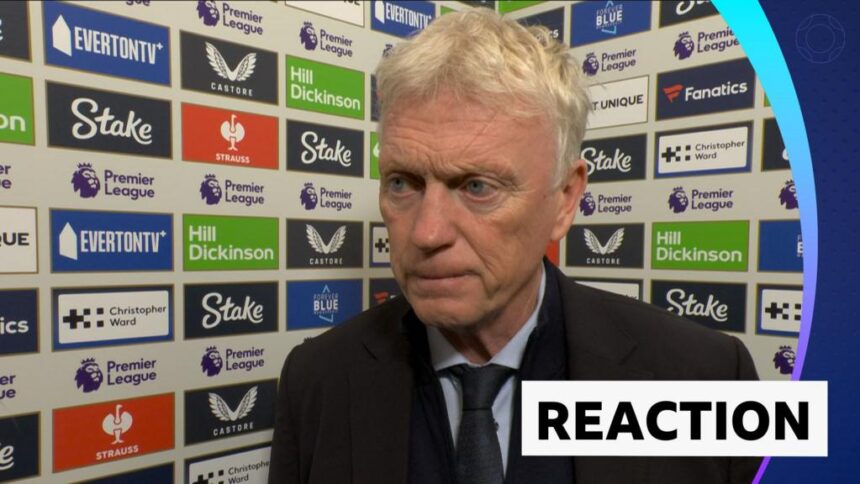
In a match that encapsulated the chaotic beauty of the Premier League, David Moyes cut a frustrated figure at Goodison Park. The Everton manager watched his side throw away a two-goal lead against Manchester City, ultimately settling for a 3-3 draw. While many would celebrate a point against the reigning champions, Moyes was unequivocal in his post-match assessment: he is “really disappointed” to come away with only one point. This sentiment, born from a performance of grit, tactical discipline, and late heartbreak, raises a fascinating question for the Toffees: is this a sign of progress, or a missed opportunity that could define their season?
- The Tactical Masterclass That Almost Was: Everton’s High-Press Game
- The Late Collapse: Where Did It Go Wrong for Moyes’ Men?
- Analysis: Is a Draw Against City a Good Result or a Wasted Opportunity?
- Predictions: What This Result Means for Both Clubs’ Seasons
- Strong Conclusion: The Fine Margins of Premier League Glory
The draw, secured by a dramatic Jeremy Doku equaliser in the dying moments, left a bitter taste in the mouth of the Everton faithful. For 80 minutes, they had outplayed, out-fought, and out-thought Pep Guardiola’s machine. But football, as Moyes knows better than most, is a game of fine margins. This article dissects the tactical battle, the emotional aftermath, and what this result means for both clubs moving forward.
The Tactical Masterclass That Almost Was: Everton’s High-Press Game
From the opening whistle, it was clear that Moyes had devised a plan to disrupt Manchester City’s rhythm. The typical narrative of a David vs. Goliath matchup in the Premier League often sees the underdog park the bus. Not today. Everton came out with a ferocious high press, targeting City’s defensive line with aggressive triggers. The key was suffocating Rodri, City’s metronome, and forcing errors from the backline.
The statistics from the first hour are telling. Everton registered more high turnovers in the final third than any other team against City this season. The first goal came directly from this pressure. A hurried pass from John Stones was intercepted, and the ball was quickly worked to Dominic Calvert-Lewin, who finished with aplomb. The second goal, a stunning strike from outside the box, was a byproduct of City being unable to settle into their possession-based game.
Moyes’ tactical tweak was simple yet effective: man-marking in midfield. By assigning a dedicated player to shadow Kevin De Bruyne and another to track Bernardo Silva, Everton neutralized City’s creative hub. This left City’s full-backs isolated, forcing them into long-range passes that Everton’s centre-backs, Jarrad Branthwaite and James Tarkowski, gobbled up with ease. It was a masterclass in game management—until it wasn’t.
The Late Collapse: Where Did It Go Wrong for Moyes’ Men?
Football is a game of momentum, and Manchester City, even when off-colour, possess the ability to turn a match on its head in seconds. The turning point came in the 70th minute. A lapse in concentration from Seamus Coleman allowed a cross to come in, which was met by Erling Haaland for a simple tap-in. Suddenly, the Goodison Park roar turned into a murmur of anxiety.
Moyes admitted post-match that his team’s game management in the final 20 minutes was poor. The decision to drop deeper, rather than continue pressing, invited pressure. City, sensing blood, threw bodies forward. The second goal for the visitors was a classic Guardiola set-piece routine, exposing a mismatch in the box. Then came the killer blow: Doku’s late strike from the edge of the area, which took a wicked deflection off a defender’s heel, leaving Jordan Pickford rooted to the spot.
- Defensive fatigue: Everton’s press required immense energy. By the 75th minute, the tank was empty.
- Substitution impact: Moyes’ changes to shore up the defense removed the attacking outlet, allowing City to pin them back.
- Individual errors: A misjudged header and a poor clearance directly led to two of City’s goals.
“I’m really disappointed,” Moyes said in the press conference. “To be 3-1 up against a team like Manchester City, you have to see it through. We made mistakes that we don’t normally make. It feels like a defeat.” This raw honesty highlights the fine line between a heroic result and a heartbreaking one.
Analysis: Is a Draw Against City a Good Result or a Wasted Opportunity?
Context is everything in football. On paper, a point against Manchester City is a fantastic result for any team outside the top six. However, the manner of the draw changes the narrative entirely. For Everton, a team fighting for a top-half finish and European qualification, this feels like two points dropped. They had the champions on the ropes. They had a two-goal cushion. They were in complete control.
From a tactical perspective, Moyes will be encouraged. His game plan worked for 70 minutes. The high press and compact defensive shape are repeatable strategies against top sides. However, the inability to see out the game raises questions about squad depth and mental resilience. When City brought on Jérémy Doku and Phil Foden from the bench, Everton had no equivalent game-changers to counter.
For Manchester City, this is a point that keeps their title hopes alive. Guardiola will praise his team’s character, but internally, he will be furious at being outplayed for such a long period. The defensive vulnerabilities are a growing concern. City have now conceded three or more goals in three of their last five away league games. This is not the rock-solid defence of previous title-winning campaigns.
Predictions: What This Result Means for Both Clubs’ Seasons
Everton’s Trajectory: Moyes has instilled a belief that this team can compete with anyone. If they can replicate this intensity against mid-table sides, a top-eight finish is realistic. The key will be consistency. Can they follow up a draw with City with a win against a lower-ranked opponent? I predict they will finish 8th or 9th, provided they invest in a creative midfielder in the next window. The draw against City is a moral victory, but it must be a springboard, not a peak.
Manchester City’s Title Chase: Guardiola’s side is showing cracks, but they are still the most talented squad in the league. The point keeps them within touching distance of the leaders. However, if they continue to concede three goals per game against organised teams, their run of titles will end. I predict they will tighten up defensively in the coming weeks and finish 2nd or 3rd, missing out on the title by a narrow margin due to these defensive lapses.
Strong Conclusion: The Fine Margins of Premier League Glory
David Moyes’ disappointment is a testament to how far Everton have come under his stewardship. To be genuinely upset about drawing with Manchester City is a luxury that few managers outside the elite can afford. It speaks to a new standard at Goodison Park—a standard of expecting to beat the best.
Yet, the Premier League is a brutal teacher. It punishes lapses in concentration with ruthless efficiency. For Everton, this match will be studied as a case study in how to dominate a top side, but also as a cautionary tale of how not to close out a game. The fans will remember the fight, the passion, and the near-upset. But Moyes will remember the points that slipped through his fingers.
As the season progresses, this 3-3 draw could be the defining moment for both clubs. For City, a wake-up call. For Everton, a painful lesson in the art of winning ugly. One thing is certain: in the high-stakes world of Premier League football, a point is sometimes not enough. And David Moyes, with his furrowed brow and honest words, knows that better than anyone.
This content is not available in your location. For full match statistics and video highlights, read our dedicated match report: READ MORE: Everton 3-3 Manchester City.
Source: Based on news from BBC Sport.