The League is the Dream – But Is This Arsenal’s Moment in Europe?
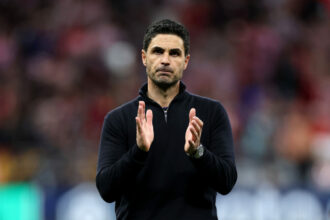
For two decades, the ghost of Barcelona 2006 has haunted the marble halls of the Emirates Stadium. The image of Jens Lehmann trudging off the pitch in Paris, of a 1-0 lead dissolving into a 2-1 defeat, has been a scar on the club’s modern identity. Now, after 19 long years, Mikel Arteta has led Arsenal back to the Champions League final. The destination is Budapest. The opponent is yet to be determined. And the question hanging over North London is a deliciously complicated one: can Arsenal finally win the big one in Europe, even while the Premier League title remains the primary obsession?
It might seem odd to suggest an English club reaching a Champions League final has been in danger of going under the radar – but that has almost been the case for Arsenal this year. Such has been the immense pressure piled upon Mikel Arteta’s side to end their 22-year wait for a Premier League title, their remarkable unbeaten run to the European showpiece in Budapest has arguably not got the credit it deserves. While pundits debated the midfield balance of Manchester City and the resurgence of Liverpool, the Gunners have quietly, ruthlessly, navigated the most difficult club competition on the planet without a single defeat.
The Under-the-Radar Giants: How Arsenal Silenced Europe
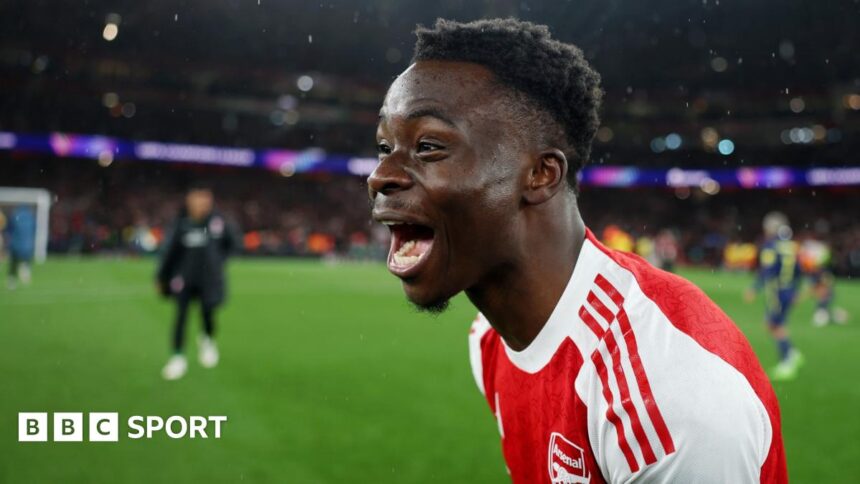
Let’s be brutally honest: this Arsenal team does not yet have the same aura of invincibility that defined the 2003/04 Invincibles or the Pep Guardiola-era Barcelona. They are not the favorites in every tie. But that is precisely why their run to the final is so impressive. Bukayo Saka’s first-half tap-in gave the Gunners a 1-0 win over Atletico Madrid in Tuesday’s semi-final second leg, securing a 2-1 aggregate victory. It was a game of grit, not genius. A game where Arsenal defended with the discipline of a Diego Simeone side, not the free-flowing artists they aspire to be.
In truth, while their display at the Emirates Stadium was not necessarily vintage, some of Arsenal’s best performances of the season have come in Europe. Consider the evidence:
- Group Stage Dominance: A 4-0 dismantling of PSV Eindhoven, a tactical masterclass against Sevilla away, and a 6-0 thrashing of Lens that announced their arrival as genuine contenders.
- Knockout Resilience: A 2-2 draw at the Allianz Arena against Bayern Munich, where they absorbed pressure and struck on the counter-attack with devastating precision.
- Semi-Final Steel: Holding Atletico Madrid to a single goal over two legs, with William Saliba and Gabriel Magalhães forming a defensive partnership that has conceded just three goals in the entire knockout phase.
This is not the Arsenal of old, the one that would “wobble” under a high press. This is a team that has learned to suffer, to grind, and to win ugly. And in European football, that is often the difference between a semi-finalist and a champion.
The Premier League Paradox: Title Chase vs. European Glory
Here is the central tension of Arsenal’s season. The club’s identity is built on the Premier League. The “Arsenal Way” is synonymous with English football’s top flight. The fanbase craves a league title more than anything – a 22-year drought is an eternity for a club of this stature. Every dropped point in the league feels like a crisis. Every tactical tweak from Arteta is dissected for its impact on the title race.
This has created a curious dynamic. While the Champions League final is a monumental achievement, it is almost viewed by some as a “bonus” – a wonderful distraction from the primary mission. But that is a dangerous mindset. In football history, moments like these are rare. You do not simply “get back” to a Champions League final. Ask Liverpool fans who waited 11 years between Istanbul and Kyiv. Ask Tottenham fans who have never seen one.
Arteta, however, has expertly managed this paradox. He has rotated his squad with surgical precision, resting Martin Ødegaard and Declan Rice in domestic cup ties while fielding his strongest XI in Europe. The result? A team that is fresher in the final third of the season than any of their rivals. The league form has dipped slightly – draws against Aston Villa and West Ham – but the European form has been relentless. It is almost as if the team has two gears: a Premier League gear for grinding out results, and a Champions League gear for producing moments of magic.
Key Battlefields: What Arsenal Must Master in Budapest
So, what will it take for Arsenal to lift the trophy on June 1st? The final will be played at the Puskás Aréna in Budapest, a neutral venue that will feel like a cauldron. Based on current form and potential opponents (likely Real Madrid or Inter Milan), here are the three decisive factors:
1. The Saka-Saliba Axis
Arsenal’s two most important players this season have been Bukayo Saka and William Saliba. Saka provides the width, the creativity, and the clutch goals (like the tap-in against Atletico). Saliba provides the defensive bedrock. If Saka is double-teamed, can Gabriel Martinelli or Leandro Trossard exploit the space? If Saliba is drawn out of position, can Gabriel cover? This axis is the spine of Arteta’s system.
2. The Midfield Engine Room
Declan Rice has been Arsenal’s best signing in a decade. His ability to break up play and drive forward is tailor-made for a one-off final. But he needs support from Kai Havertz, who has found a new lease on life as a false nine. If Havertz can drop deep and link play, it frees up Ødegaard to thread passes through the lines. The midfield battle will be won or lost on transitions – Arsenal must avoid being caught in possession against a team like Real Madrid, who punish mistakes instantly.
3. The Mental Edge
This is the intangible. Arsenal have not lost a Champions League game all season. That undefeated streak is a psychological weapon. However, they have not faced a team with the pedigree of Real Madrid in a final. The experience of players like Jude Bellingham or Luka Modrić (if they reach the final) is immense. Arsenal’s young core – Saka, Saliba, Ødegaard – must not be overwhelmed by the occasion. Arteta’s job is to make them feel like they belong. Based on their composure against Atletico, they do.
Prediction: A New Dawn for the Gunners?
Let’s not mince words: Arsenal are not the favorites. If Real Madrid reach the final, they will carry the weight of 14 European Cups and a mystique that defies logic. But this Arsenal team has a quiet, stubborn belief that is rare. They are not flashy. They are not arrogant. They are ruthlessly efficient.
I predict a tight, tense final. A 1-1 draw that goes to extra time. And then, a moment of magic from Bukayo Saka – a curling shot from the edge of the box that beats the goalkeeper. Arsenal win 2-1. The league dream will have to wait another season, but the European dream will be realized. This is not just a moment; it is the beginning of a new era.
The league remains the ultimate goal. It always has been for Arsenal. But in Budapest, on a warm June evening, Mikel Arteta’s men have the chance to prove that sometimes, the dream you didn’t expect is the one worth chasing the most. The Champions League trophy is within reach. And for the first time in 19 years, Arsenal look ready to take it.
Conclusion: The Balance of a Legacy
Mikel Arteta knows that history judges managers by trophies. He has already won the FA Cup. He has built a title-contending machine. But a Champions League trophy changes everything. It turns a promising project into a dynasty. It silences the doubters. It gives the fans a memory that will outlast any league table.
Will Arsenal win the Premier League this year? Probably not. Manchester City and Liverpool are too consistent. But that is precisely why the Champions League final is so vital. It offers a chance to salvage a season that could be defined by “what if” into one defined by “we did it.” The league is the dream. But Europe is the moment. And this Arsenal team, with its blend of youthful exuberance and tactical discipline, is ready to seize it.
The final whistle in Budapest will tell the story. But the narrative is already written: Arsenal are back among Europe’s elite. And this time, they are not just happy to be there. They are there to win.
Source: Based on news from BBC Sport.