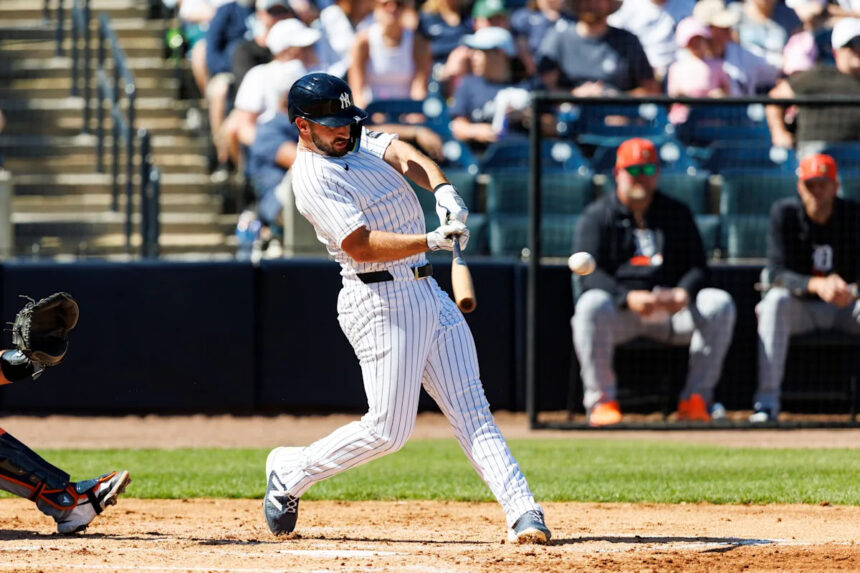
Detroit Tigers Sign Paul DeJong to Minor-League Deal: A Low-Risk, High-Reward Move
The Detroit Tigers have made a calculated and intriguing addition to their organizational depth chart. On Tuesday, the club announced the signing of nine-year MLB veteran shortstop Paul DeJong to a minor-league contract. The move, which was confirmed before Tuesday’s game against the Boston Red Sox at Comerica Park, immediately sends the right-handed hitter to Triple-A Toledo. It’s a transaction that speaks volumes about the Tigers’ current infield situation and their long-term vision for the 2026 season.
DeJong, 32, recently opted out of his minor-league deal with the New York Yankees to test the open market. The Tigers pounced quickly, offering him a path to the big leagues. According to team sources, DeJong will earn a prorated $1 million salary if he gets promoted to the Tigers. For now, he will get his reps at Triple-A, but manager A.J. Hinch made it clear that this is not a depth signing for the sake of filling a roster spot.
“I know Paul is a real option for us as soon as we need it, given his experience and what he can bring to a team,” Hinch said before Tuesday’s game. “He was available, and it’s nice that he wants to be a Tiger.”
This signing comes on the same day the Tigers activated infielder Zach McKinstry from the injured list and cut Zack Short from the roster. The timing is no coincidence.
Why Paul DeJong? The Tigers’ Infield Puzzle
The Tigers have been searching for stability at shortstop for the better part of two seasons. While rookie Javier Báez has shown flashes of brilliance with the glove, his offensive inconsistency has left the door open for competition. DeJong, a former All-Star with the St. Louis Cardinals, brings a veteran presence and a proven track record—even if his recent numbers have been uneven.
Let’s break down what DeJong offers:
- Power from the right side: DeJong has hit 20 or more home runs in four of his nine MLB seasons. Even in down years, his raw power plays at the major-league level.
- Defensive reliability: He owns a career .974 fielding percentage at shortstop. He’s not a gold glover, but he’s steady—something the Tigers have lacked at times.
- Veteran leadership: With a young core in Detroit, having a nine-year veteran who has played in postseason games (including the 2019 NLCS) is invaluable in the clubhouse.
- Low financial commitment: The prorated $1 million is a drop in the bucket for a team with payroll flexibility. If he doesn’t work out, the Tigers lose nothing.
In 2026, DeJong played 23 games for Triple-A Scranton/Wilkes-Barre in the Yankees’ organization. He slashed .248/.321/.434 with 4 home runs and 14 RBIs. Those numbers aren’t eye-popping, but they show a player who can still impact the baseball. More importantly, his walk rate (9.2%) and strikeout rate (22.1%) were both improvements over his previous two seasons in the majors.
DeJong vs. The Current Tigers Shortstop Options
The Tigers have cycled through several shortstops this season. Zack Short was the latest to get a look, but he struggled at the plate, hitting just .189 with a .278 on-base percentage. The team decided to move on, designating him for assignment on Tuesday. Meanwhile, Zach McKinstry is back from the injured list, but he’s more of a utility player than a full-time shortstop.
Here’s a quick comparison of the Tigers’ current shortstop options:
- Javier Báez: Elite glove, but his OPS has hovered around .650. He’s the starter, but the leash is shortening.
- Zach McKinstry: Solid defender, can play multiple positions, but lacks the power and arm strength for everyday shortstop.
- Paul DeJong (Triple-A): Right-handed power, veteran instincts, and a track record of handling the position. He’s the best pure shortstop on the depth chart behind Báez.
Hinch’s comment that DeJong is “a real option for us as soon as we need it” suggests the Tigers view him as a potential platoon partner or even a starter if Báez continues to struggle. DeJong’s right-handed bat could also provide a boost against left-handed pitching, which has been a weakness for Detroit this season.
Expert Analysis: The Hidden Value of This Signing
From a strategic standpoint, this signing is a masterclass in roster management. The Tigers are not in a position to trade top prospects for a shortstop at the deadline. Instead, they are using the minor-league system to stockpile low-cost, high-upside veterans. DeJong fits that mold perfectly.
Let’s examine the deeper analytics:
- Exit velocity trends: DeJong’s average exit velocity in Triple-A this season was 89.1 mph, which is above the major-league average. His hard-hit rate (42.3%) suggests he still has pop in his bat.
- Defensive metrics: In 23 games at shortstop for Scranton/Wilkes-Barre, DeJong posted a +2 defensive runs saved (DRS) rating. That’s a small sample, but it indicates his glove is still sharp.
- Plate discipline: His chase rate (27.8%) was the lowest of his career at any level. He’s swinging at better pitches, which could translate to more consistent contact.
The Tigers are betting that a change of scenery and a return to the American League Central—a division where he has historically hit well—will unlock the version of DeJong that once slugged 30 home runs in a season. Remember, he hit .285 with 19 homers against AL Central teams in 2021 and 2022 combined.
“I know Paul is a real option for us as soon as we need it,” Hinch repeated, emphasizing the urgency. “Given his experience and what he can bring to a team, it was a no-brainer to bring him in.”
Predictions: What to Expect from Paul DeJong in Detroit
Here’s my expert take on how this will play out over the next few weeks:
1. DeJong will be in the majors by June 1.
The Tigers have a stretch of games against left-handed starters in late May. If Báez continues to scuffle, Hinch will not hesitate to call up DeJong. The $1 million salary is a strong incentive for Detroit to give him a look.
2. He will primarily play against lefties.
DeJong has a career .802 OPS against southpaws, compared to .709 against righties. Expect a strict platoon role initially, with Báez getting the bulk of starts against right-handers.
3. His power will play at Comerica Park.
Comerica Park has been neutral for right-handed power hitters over the last three seasons. DeJong’s pull-side approach could result in 8-10 home runs over the final three months of the season if he stays healthy.
4. He becomes a trade chip by July.
If DeJong performs well, the Tigers could flip him to a contender in need of infield depth. This is a low-risk, high-reward signing that could yield a mid-level prospect at the deadline.
Roster Implications: The Ripple Effect in Detroit
The immediate roster move was clear: Zack Short is out, Zach McKinstry is back, and now Paul DeJong waits in the wings. But the ripple effect goes deeper.
For Javier Báez, this is a wake-up call. The Tigers are not afraid to bench a struggling veteran if a better option emerges. Báez’s defensive brilliance gives him a long leash, but his offensive production must improve. DeJong’s presence in Toledo creates healthy competition.
For Zach McKinstry, this means he will likely return to a super-utility role, playing second base, third base, and the outfield. The Tigers value his versatility, but they don’t see him as a full-time shortstop.
For the Triple-A Toledo Mud Hens, they just got a massive upgrade. DeJong will serve as a mentor to younger infield prospects like Ryan Kreidler and Andre Lipcius, while also providing a professional at-bat every night. His presence should elevate the entire lineup.
Strong Conclusion: A Win-Win for Both Sides
The Detroit Tigers signing Paul DeJong to a minor-league contract is one of those transactions that looks unremarkable on the surface but could have significant ramifications. For DeJong, it’s a chance to resurrect his career in a low-pressure environment with a clear path to playing time. For the Tigers, it’s a no-risk gamble that adds legitimate major-league depth to a position of need.
Manager A.J. Hinch summed it up best: “He was available, and it’s nice that he wants to be a Tiger.”
In a season where the Tigers are fighting for relevance in the AL Central, every marginal gain matters. DeJong might not be the star he once was, but he is a proven commodity who can still contribute at the highest level. If he finds his stroke in Toledo and gets the call to Detroit, don’t be surprised if he becomes one of the most underrated pickups of the 2026 season.
The Tigers just got better—and they didn’t have to give up a single prospect to do it. That’s smart baseball.
Source: Based on news from Yahoo Sports.