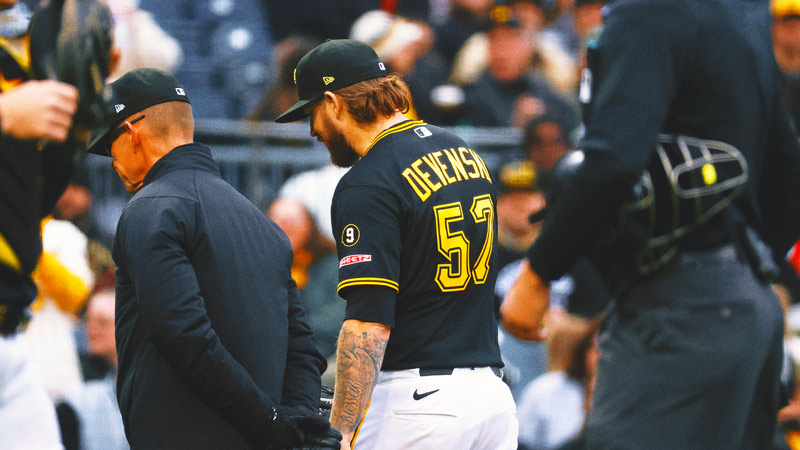
Pirates Reliever Chris Devenski Suspended 3 Games for Intentional Beaning of Reds Prospect Sal Stewart
The fallout from a heated moment at PNC Park has officially landed. Pittsburgh Pirates reliever Chris Devenski has been handed a three-game suspension and an undisclosed fine by Major League Baseball for intentionally throwing at Cincinnati Reds rookie Sal Stewart during Saturday’s lopsided 17-7 victory. The incident, which occurred in the top of the seventh inning, has reignited debates about baseball’s unwritten rules, player safety, and the accountability of managers in high-emotion situations.
MLB Senior Vice President for On-Field Operations Michael Hill announced the discipline Tuesday, also confirming that Pirates manager Don Kelly received a one-game suspension and a fine for his role in the affair. Both suspensions are slated to begin Tuesday night, when the Pirates open a critical road series against the Arizona Diamondbacks. Devenski, who was ejected immediately after the pitch, has the option to appeal—a move that would delay the penalty until the process is resolved.
Let’s break down what happened, why the league came down so hard, and what this means for a Pirates bullpen already navigating a turbulent season.
The Incident: A 91-MPH Message Gone Wrong
With the Pirates holding a commanding 10-run lead in the seventh inning, Devenski entered the game with a clear agenda. On a 1-2 count to Stewart—a highly touted Reds rookie who had already collected two hits in the game—Devenski unleashed a 91-mph fastball that drilled the 22-year-old squarely in the back. Home plate umpire immediately ejected Devenski, and the benches briefly emptied, though no physical altercation ensued.
The intent was unmistakable. Replays showed Devenski staring at Stewart before the pitch, and the trajectory of the ball left no doubt it was a purposeful plunking. For the Pirates, the message was clear: protect your turf. For MLB, the message was equally clear: this type of retaliation—especially in a blowout—crosses the line.
Key details from the incident:
- Score at the time: Pirates 17, Reds 7 (top of the 7th inning)
- Pitch location: 91-mph fastball to the lower back
- Result: Devenski ejected; Stewart remained in the game after being checked by trainers
- Manager involvement: Don Kelly ejected shortly after arguing the call
The timing is particularly damning. Throwing at a hitter with a double-digit lead is almost universally condemned across the sport. It suggests a lack of situational awareness and, in the league’s view, a deliberate escalation that could have sparked a bench-clearing brawl. Stewart, a former first-round pick, is considered a cornerstone of Cincinnati’s rebuild—making the target selection even more controversial.
Why MLB Threw the Book at Devenski and Kelly
The league’s swift and decisive action reflects a zero-tolerance policy for intentional throwing, especially when the game is effectively decided. MLB’s disciplinary statement emphasized that Devenski’s actions were “a clear violation of the rules prohibiting intentional throwing at a batter.” The three-game suspension is standard for first-time offenders in these scenarios, but the inclusion of manager Don Kelly signals that the Pirates’ dugout leadership was complicit.
Let’s examine the precedent. In recent seasons, similar suspensions have been handed down for intentional beanballs in non-competitive situations. For example, in 2022, then-Angels reliever Andrew Wantz received a three-game ban for throwing at Seattle’s Jesse Winker after a benches-clearing incident. The difference here? There was no prior altercation in Saturday’s game. The Pirates appeared to be acting on a perceived slight from earlier in the series—perhaps a hard slide or a bat flip—but no concrete justification was ever offered by the team.
Why the league came down hard:
- Game context: A 10-run lead makes retaliation indefensible from a competitive standpoint.
- Player safety: Stewart is a rookie with minimal MLB service time; targeting him sends a dangerous message.
- Manager accountability: Kelly’s ejection and subsequent suspension suggest he either condoned or failed to prevent the action.
- Deterrence: MLB wants to discourage pitchers from acting as judge, jury, and executioner.
The fine amounts for both Devenski and Kelly were not disclosed, per MLB policy, but they are typically tied to a percentage of their salary for the days missed. For Devenski, who signed a minor league deal with the Pirates in 2024, the financial hit is minimal. The reputational damage, however, is significant.
Expert Analysis: The Unwritten Rules vs. The Rulebook
As a veteran baseball observer, I’ve seen this play out dozens of times. The “unwritten rules” of baseball dictate that pitchers protect their teammates and respond to disrespect. But the written rules—specifically Rule 6.02(c)(9)—explicitly forbid a pitcher from intentionally throwing at a batter. The league has been increasingly aggressive in enforcing this rule, particularly when the intent is obvious and the game is out of hand.
What makes this case unique is the victim. Sal Stewart is not a veteran who has been around the block. He’s a 22-year-old rookie who was simply trying to make a name for himself. The Pirates’ decision to target him—rather than a more established Reds star—smacks of opportunism. It’s one thing to send a message to a hot-headed veteran. It’s another to drill a kid who hasn’t even played 50 games.
My take on the suspensions:
- Devenski’s suspension is fair. Three games is the standard tariff for a first-time intentional beaning. If he appeals, he risks a longer ban if the league deems the appeal frivolous.
- Kelly’s one-game ban is light. Managers are responsible for controlling their players. Kelly should have pulled Devenski aside after the first pitch or warned the umpire. His failure to do so—and his subsequent argument—earned him a deserved slap on the wrist.
- The Pirates’ bullpen will feel the pinch. Devenski has been a reliable middle-inning arm, posting a 3.86 ERA in 21 appearances. Losing him for three games—plus the potential for an appeal delay—forces Pittsburgh to lean on less experienced arms.
Predictions: I expect Devenski to accept the suspension rather than appeal. The Pirates are in a tight wild-card race, and dragging this out would only create a media circus. Kelly will serve his one-game ban Tuesday, meaning bench coach Andy Haines will manage the series opener against the Diamondbacks. Look for the Reds to retaliate in some form—perhaps a brushback pitch or a hard takeout slide—when these teams meet again in September.
What This Means for the Pirates’ Postseason Push
The timing of this suspension couldn’t be worse for Pittsburgh. The Pirates entered Tuesday’s action just 2.5 games back of the final National League wild-card spot. Every game matters, and losing a reliever—even for three games—creates a domino effect in the bullpen. Manager Don Kelly’s absence for one game also removes the team’s tactical leader from the dugout, though the impact is likely minimal over a single contest.
Bullpen implications for the Pirates:
- Devenski’s role: He has been used primarily in the sixth and seventh innings, often with a lead. The Pirates will need to stretch their setup men, like Colin Holderman and Carmen Mlodzinski, to cover those innings.
- Call-up candidate: The Pirates could recall a fresh arm from Triple-A Indianapolis, such as right-hander Ryder Ryan, to fill the roster spot during the suspension.
- Long-term risk: If Devenski appeals and the process drags on, he could miss a crucial series against the Milwaukee Brewers next week. That would be a major blow.
For the Reds, this incident adds fuel to a rivalry that has simmered for years. Cincinnati has been on the receiving end of several questionable pitches from Pirates arms, and Stewart is now the latest name on that list. Expect the Reds’ hitters to be extra vigilant when these teams meet again, and don’t be surprised if Cincinnati’s pitching staff sends a message of their own.
Conclusion: A Costly Lesson in Temper Control
Chris Devenski’s three-game suspension is a textbook example of MLB’s crackdown on vigilante justice. While the unwritten rules of baseball have long tolerated retaliation, the modern game is moving toward a safety-first philosophy—especially when a rookie with no history of antagonism is involved. The Pirates, already fighting for a playoff spot, now have to navigate a week without one of their most trusted relievers and a day without their manager.
For Devenski, the lesson is clear: save the message pitches for a tie game, not a 10-run laugher. For Don Kelly, the lesson is about leadership: you cannot let your players escalate a situation when the game is already decided. And for the rest of the league, this serves as a reminder that MLB is watching—and they are not afraid to hand out penalties that hurt.
The Pirates open their series in Arizona tonight without their manager and their suspended reliever. The Diamondbacks, meanwhile, are licking their chops at a bullpen that just lost a key arm. In the high-stakes world of a pennant race, every suspension matters. This one could be the difference between October baseball and an early vacation.
Source: Based on news from Fox Sports.