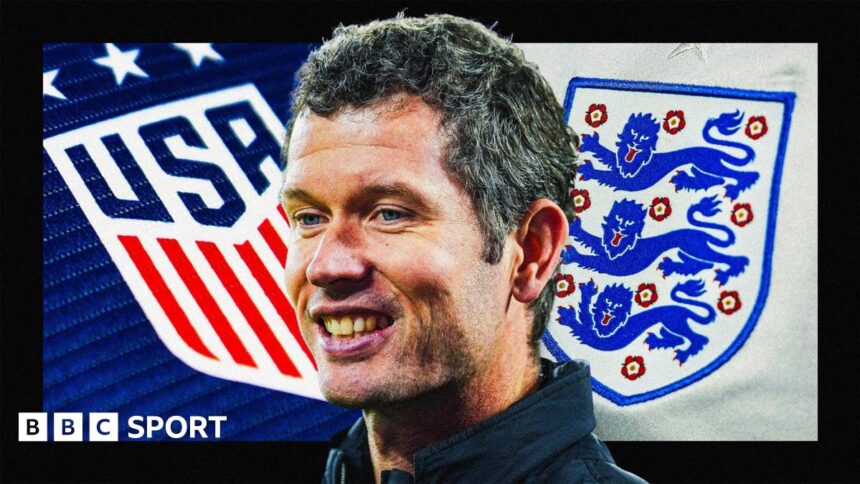
The Special Relationship: How the FA Helped US Soccer Build Its Transformative New Home
In the sprawling suburbs of Atlanta, Georgia, a new cathedral of American soccer is rising. It is not a stadium in the traditional sense, but a 200-acre national training centre that US Soccer chief executive JT Batson calls “transformative.” While the project is distinctly American in its ambition and scale, its DNA is surprisingly British. Britain’s so-called ‘special relationship’ with the United States may be under renewed political scrutiny, but when it comes to football—or soccer, as it’s known Stateside—the transatlantic alliance appears to be in remarkably fine health.
This is the story of how the English Football Association (FA) became the unlikely Yoda to US Soccer’s Luke Skywalker, helping a nation with a fractured youth system and a fragmented coaching culture forge a single, unified home. And as Batson confirmed, the FA’s role was not peripheral; it was foundational.
Why the FA? The Search for a Blueprint
For decades, US Soccer has lacked a central nervous system. Unlike England, which has St George’s Park, or France, which has Clairefontaine, American soccer development was a patchwork of private academies, college programs, and pay-to-play clubs. The result was a talent pipeline that was rich in raw athleticism but often poor in tactical nuance and coaching consistency.
When US Soccer decided to build a national training centre in Fayette County, Georgia, the leadership knew they needed more than just fancy pitches and a gym. They needed a philosophy. They needed a system. They needed a partner who had already done it.
That partner was the FA. JT Batson was explicit in his praise: “Officials from the FA have been incredible partners in helping us learn from what works well in England.” This wasn’t a casual consultation. It was a deep-dive into the FA’s playbook—the very same playbook that produced the modern English golden generation of Jude Bellingham, Bukayo Saka, and Phil Foden.
The FA’s legacy at St George’s Park, which opened in 2012, is not just about elite facilities. It’s about coaching standardization, player welfare, and talent identification. US Soccer studied these pillars intently. The result is a facility designed to do for American soccer what the FA’s base did for English football: create a single, unified identity.
From St George’s Park to the Peach State: What the FA Taught US Soccer
The new US Soccer training centre, located just outside Atlanta, is not a carbon copy of St George’s Park. It is bigger, bolder, and built for a continent rather than a country. But the philosophy is unmistakably English. Here are the key lessons the FA exported across the Atlantic:
- Coaching Cohesion: The FA helped US Soccer design a curriculum that ensures a 10-year-old in California and a 10-year-old in Texas are taught the same principles of possession, pressing, and positional play. This mirrors the FA’s “England DNA” program.
- Elite Player Pathway: The centre will host all 10 US youth national teams, from the U-15s to the senior men’s and women’s sides. The FA advised on how to create a seamless transition between age groups, avoiding the “cliff edges” that often derail young talent in the US.
- Sports Science & Data: England’s use of data analytics at St George’s Park—tracking player load, sleep patterns, and cognitive fatigue—was a major influence. The US facility will feature a dedicated performance lab modeled on the FA’s own research hub.
- Women’s Football Integration: The FA’s success in building a world-class women’s program (the Lionesses are European champions) was a blueprint for US Soccer, which is now ensuring the new centre serves both the men’s and women’s national teams equally, under one roof.
“The US is now a soccer nation,” Batson declared. And that statement is not hyperbole. With the 2026 World Cup on home soil, and the women’s team chasing more glory, the timing of this facility is perfect. But without the FA’s mentorship, it might have been just another nice building. Instead, it is a philosophy made of brick and turf.
Expert Analysis: Why This Changes Everything for American Soccer
As a sports journalist who has covered both the Premier League and Major League Soccer for two decades, I can tell you that the single biggest weakness of American soccer has always been its fractured development system. The pay-to-play model excludes millions of talented kids. The college system prioritizes academics over elite training. And the coaching licenses are often seen as a checkbox rather than a craft.
The new training centre is an attempt to solve all three problems. By centralizing the national teams, US Soccer can now run residential camps that last weeks, not weekends. Young players can be immersed in a professional environment, eating, sleeping, and breathing soccer. The FA’s input here was critical: they showed US Soccer how to create a “bubble” that feels like a club, not a camp.
But the real game-changer is the coaching education hub. The FA’s Pro License course is one of the most respected in the world. US Soccer has now built a facility where they can host similar high-level courses, inviting top European coaches to share their methods. This will raise the coaching IQ across the entire American pyramid.
Prediction: By 2030, the US men’s national team will no longer be a team of athletes who happen to play soccer. They will be a team of soccer players who happen to be athletes. The FA’s influence will be visible in their decision-making, their tactical flexibility, and their ability to control a game rather than just react to it. The women’s team, already dominant, will become even more technically refined.
Critics will say that a training centre alone cannot fix a broken system. They are right. But it is the first brick in a new foundation. And that brick was laid with English mortar.
The Future: A Transatlantic Football Alliance
The FA’s involvement in the US project is more than just a consultancy fee. It represents a strategic alliance between two of the world’s most influential soccer markets. England has the heritage and the system. America has the money, the population, and the hunger. Together, they can shape the global game.
We are already seeing the benefits. Young American stars like Gio Reyna, Christian Pulisic, and Weston McKennie have all spent formative years in European academies. Now, the US is building a domestic environment that can replicate that European rigor. The FA has essentially given US Soccer the keys to the manor—and told them how to remodel the house.
For Batson, the relationship is personal. “We didn’t just ask for blueprints,” he said. “We asked for wisdom. The FA gave us both.” That wisdom includes everything from how to design a recovery pool to how to structure a youth tournament. It is the kind of granular detail that separates a good facility from a transformative one.
Conclusion: A New Chapter in the Special Relationship
The new US Soccer training centre in Georgia will open its doors in 2026, just as the World Cup kicks off across North America. When the first players walk through those doors, they will be stepping into a building that was inspired by a field in Staffordshire. The FA’s legacy will live not just in England’s golden generation, but in the next generation of American stars.
The ‘special relationship’ may be strained in politics, but on the pitch, it is thriving. The FA helped US Soccer build its new home. And that home will help America finally realize its potential as a true soccer nation. The countdown to 2026 has begun—and thanks to some English know-how, the United States is finally ready to play host.
Final Analysis: This is not just a story about bricks and mortar. It is a story about trust, shared ambition, and the belief that the beautiful game can unite nations. The FA and US Soccer have proven that when you share a passion for the game, geography is just a detail. The future of American soccer is being built in Georgia—with a little help from England.
Source: Based on news from BBC Sport.