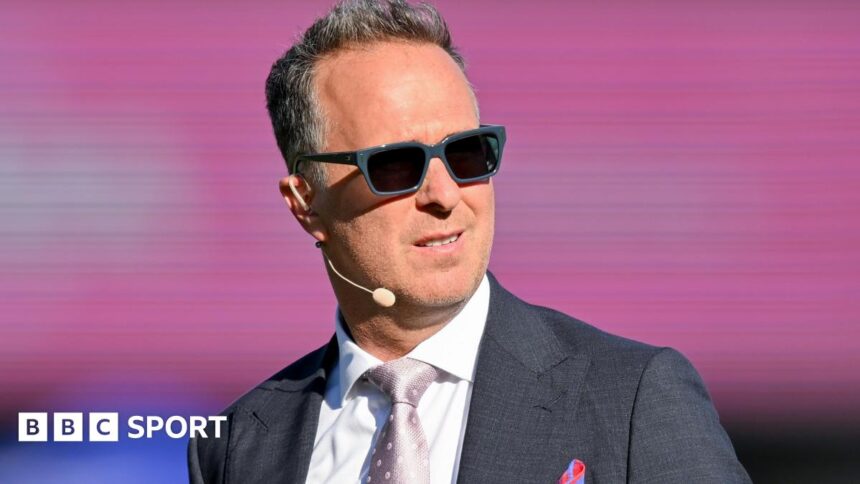
Wait to Name England Selector “Ridiculous” – Vaughan Slams ECB’s Delays as County Season Races On
In the high-stakes world of international cricket, timing is everything. Yet, as the County Championship enters its fourth round and England prepares to name a squad for the first Test against New Zealand in just two weeks, the ECB has still not appointed a permanent replacement for outgoing national selector Luke Wright. Former England captain Michael Vaughan has branded the delay “ridiculous,” and his frustration echoes through the corridors of Lord’s and the county circuit alike. With the Ashes defeat still fresh and a new era under head coach Brendon McCullum and captain Ben Stokes taking shape, the absence of a key decision-maker at the selection table is more than an administrative hiccup—it is a strategic misstep.
Wright announced his intention to step down on 22 January and formally left his post after the T20 World Cup concluded in March. The process to find his successor has now reached its final stages, with interviews held this week. But for Vaughan, the timeline is indefensible. “It’s ridiculous how they’re announcing a selector so late,” he said on the Stick to Cricket podcast. “You’ve had months. The county season is already underway, and the Test team is about to be picked. How can you build a squad without the person who’s supposed to be building it?”
This article dives deep into the controversy, examines the fallout from the Ashes review, and explores what this delay means for England’s immediate future—especially with a tricky series against New Zealand on the horizon.
The Gould Review, Key’s Survival, and the Vacuum at the Top
The backdrop to this saga is the Ashes defeat that saw England lose 3-0 to Australia on home soil. In the aftermath, the ECB commissioned a review led by Sir Andrew Strauss and former umpire Simon Gould. The review’s findings were damning in parts, but one of its most surprising outcomes was that director of men’s cricket Rob Key kept his job. Key had overseen the Ashes campaign, and many expected heads to roll. Instead, the review recommended structural tweaks rather than a wholesale clear-out.
Yet, while Key remains in post, the role of national selector—the person who works hand-in-hand with Key, McCullum, and Stokes to identify talent—has been left vacant for over three months. This is the same role that Luke Wright performed with distinction, helping to balance the demands of red-ball and white-ball cricket across a packed calendar. The delay is especially puzzling given that the review explicitly called for stronger alignment between the county game and the international setup.
Vaughan’s criticism is not just about speed; it is about credibility. “You’ve got a selector who’s already left, and you’re interviewing people now? What message does that send to the counties? To the players?” he asked. The former captain’s point is sharp: the ECB had months to plan this transition. Wright’s departure was no surprise—he flagged it in January. Yet the process has dragged on, leaving a critical role unfilled during the most active period of county cricket.
The County Championship: Four Rounds of Evidence, No One to Assess It
While the ECB dithers, the County Championship has already provided a treasure trove of data. Four rounds of action have been completed, with standout performances from bowlers like Jamie Porter (Essex), Matthew Potts (Durham), and Ollie Robinson (Sussex), as well as batters such as James Rew (Somerset) and Sam Northeast (Hampshire). These are the players who will form the backbone of England’s Test squad for the New Zealand series. But who is watching them with the authority to make final calls?
- Jamie Porter has taken 18 wickets at an average of 19.2, reminding everyone of his red-ball prowess.
- Matthew Potts continues to impress with his relentless line and length, taking 14 wickets in three matches.
- James Rew, still only 20, has scored 487 runs at an average of 81.1, including two centuries.
- Sam Northeast has 423 runs at 70.5, proving his consistency at the highest domestic level.
These are not just numbers—they are auditions. Yet, without a permanent selector, the evaluation process is fragmented. Rob Key and the coaching staff are likely doing the heavy lifting, but Vaughan argues that a dedicated selector brings a different perspective. “You need someone who is at the grounds, watching the players in the moment, not just looking at spreadsheets. That person should have been in place before the first ball of the county season,” he said.
The ECB’s official line is that the process is “in its final stages,” with interviews concluded this week. But the timing could not be worse. England are set to announce their squad for the first Test against New Zealand in two weeks. That squad will be shaped by the current interim setup, meaning the new selector—whoever it is—will inherit a team they had no hand in building. This is not how elite sport works. It is like a football manager taking over the day before a Champions League final.
Vaughan’s Verdict: A Failure of Planning and Leadership
Michael Vaughan is not known for pulling punches, and his comments on the Stick to Cricket podcast were characteristically blunt. “It’s ridiculous,” he repeated. “You’ve had the review, you’ve had the recommendations, you’ve had months. And now you’re scrambling? This is the England cricket team, not a village club.” Vaughan’s frustration is rooted in a broader concern: that the ECB’s leadership is too often reactive rather than proactive.
The former captain also highlighted the contrast with other cricket boards. Australia, for instance, has a streamlined selection panel that meets regularly and is in constant dialogue with state coaches. England, by contrast, has allowed a key role to lie vacant during a period of transition. “The Ashes defeat should have been a wake-up call,” Vaughan said. “Instead, it’s been a slow-motion car crash of delays and indecision.”
Vaughan’s analysis extends to the impact on players. He noted that uncertainty at the top filters down. “If you’re a county player on the fringe, you want to know who is watching you. You want to know that your performances are being seen by the person who makes the decisions. Right now, that person doesn’t exist. It’s not fair on the players.”
This is a valid point. The psychological aspect of selection cannot be underestimated. Players often speak of the importance of knowing the “selector’s eye”—the specific traits that a particular selector values. Without that clarity, the county circuit becomes a guessing game. Is the new selector a stats man? A gut-feel traditionalist? A data-driven analyst? No one knows, because no one has been appointed.
What the New Selector Must Do Immediately
Assuming the ECB announces a new selector within the next week—as many expect—the incoming person will face an immediate baptism of fire. Here are the key tasks awaiting them:
- Finalise the Test squad for New Zealand: The first Test starts on 28 November at Hagley Oval in Christchurch. The squad must be named by 14 November at the latest. The new selector will have little time to influence the 15-man group.
- Build relationships with county directors of cricket: The selector must quickly establish trust with the men who run the 18 first-class counties. This is vital for future talent identification and player workload management.
- Address the spin-bowling conundrum: England’s spin attack has been inconsistent. With Jack Leach recovering from injury and young spinners like Tom Hartley and Rehan Ahmed still raw, the selector must decide on the long-term red-ball spin option.
- Plan for the 2025-26 Ashes tour: Though it sounds distant, the next Ashes series in Australia is only 18 months away. The selector must start building a squad capable of winning Down Under.
These are not small tasks. They require a selector who is already embedded in the system, with a clear philosophy and the confidence to make tough calls. Vaughan believes the ECB should have appointed an internal candidate early on. “You had people in the system who could have done the job. Why not promote from within? Why wait and make it a big drama?” he asked.
Prediction: England Will Survive, but the Damage Is Done
Despite the administrative chaos, England’s Test team under Stokes and McCullum has shown remarkable resilience. The “Bazball” era has brought a new energy, and the squad is deep in talent. I predict that England will win the New Zealand series 2-1, thanks to the batting depth of Joe Root, Harry Brook, and Ben Duckett, and the relentless pace attack led by Mark Wood and James Anderson (if fit). The new selector, whoever it is, will benefit from a strong core group.
However, the long-term consequences of this delay could be significant. The ECB has sent a message that planning and succession are not priorities. This will not be lost on the counties, who already feel disconnected from the national setup. It also raises questions about the leadership of Rob Key. If the review cleared him, why is the selection process so tardy? Key must take responsibility for the timeline.
Furthermore, the delay may have cost England the chance to integrate a new selector’s vision into the early county rounds. The next six weeks are critical for identifying players for the winter tours of Pakistan and New Zealand. The new selector will be playing catch-up from day one.
A Strong Conclusion: Time for the ECB to Act
Michael Vaughan is right to call this situation “ridiculous.” The ECB’s failure to name a national selector before the county season began is a basic error of governance. It undermines the credibility of the selection process, frustrates players, and sends a poor signal to the cricketing world. The Ashes review was supposed to herald a new era of clarity and efficiency. Instead, we have a vacuum.
The good news is that the process is now in its final stages. By the time England’s squad for New Zealand is announced, a new selector should be in place. But the damage to trust and momentum has been done. The ECB must learn from this mistake. In elite sport, you cannot afford to leave key positions unfilled for months. The next time a selector steps down, the succession plan should be ready to go the same day.
For now, all eyes are on the new appointment. Will it be a former international like Marcus Trescothick or Jonathan Trott? A county director like Paul Downton? Or an outsider with fresh ideas? Whoever it is, they will inherit a team with immense potential but a selection process that has been badly handled. Vaughan’s warning is clear: “Get it right, or the next Ashes defeat won’t be a wake-up call—it will be a funeral.”
The clock is ticking. The county grounds are buzzing. The Test summer is around the corner. England cannot afford another delay. It is time for the ECB to name the selector, end the uncertainty, and let the cricket do the talking.
Source: Based on news from BBC Sport.