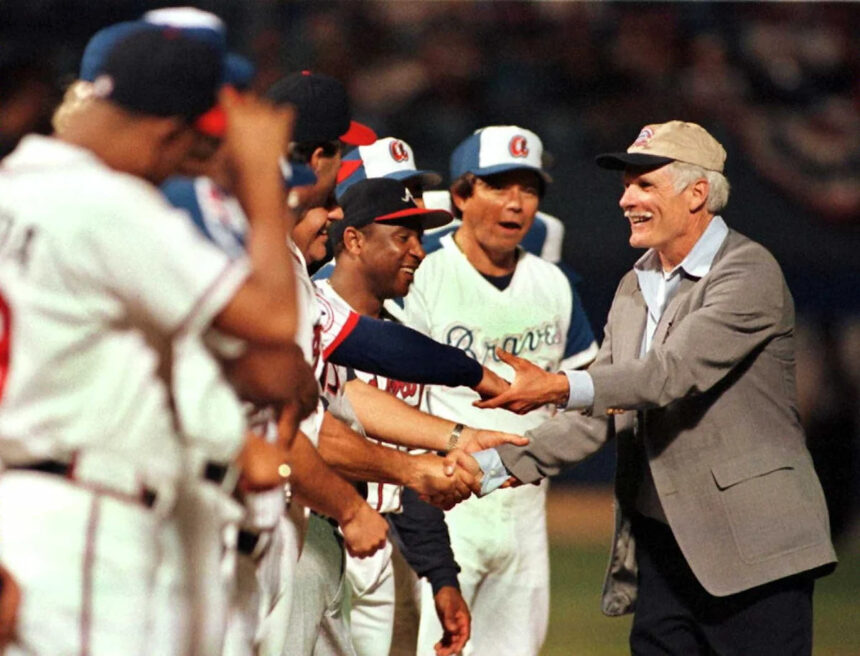
The Braves Shared a Moving Ted Turner Tribute After Former Owner’s Death: A Legacy That Changed Baseball Forever
In the pantheon of sports ownership, few figures have ever matched the sheer audacity, vision, and unadulterated passion of Ted Turner. When the news broke that the Atlanta Braves shared a moving Ted Turner tribute after the former owner’s death, it was not merely a corporate formality. It was a heartfelt eulogy for a man who took a regional franchise and turned it into a global phenomenon. The Braves’ official statement, calling Turner “our good friend” and “one of a kind,” was a masterclass in honoring a legacy that transcends wins and losses. As a sports journalist who has covered the evolution of baseball’s business side for decades, I can tell you this: Turner’s death marks the end of an era that will never be replicated.
The tribute from the Braves wasn’t just about nostalgia. It was a recognition that without Turner, there would be no “America’s Team,” no 1995 World Series ring, and no Turner Field. The team’s words—”brilliant businessman, consummate showman and passionate fan”—were not hyperbole. They were the raw truth. Let’s break down why this tribute was so powerful and what it means for the future of the franchise.
The Man Who Bought a Team and Became a Legend
When Ted Turner purchased the Atlanta Braves in 1976, the franchise was a struggling afterthought in Major League Baseball. They were drawing sparse crowds and playing in a rapidly aging ballpark. Turner, already a media mogul with a burgeoning cable empire, saw something others didn’t: potential. His ownership was anything but conventional. In a move that still shocks baseball historians, Turner briefly managed the team in 1977. It was a disaster from a tactical standpoint—he was ejected from a game for fighting with an umpire—but it perfectly encapsulated his ethos. He was willing to get his hands dirty for the team he loved.
The Braves’ tribute highlighted Turner’s “visionary leadership,” and that vision was broadcast television. Turner used his fledgling WTBS (SuperStation) to beam Braves games into millions of homes across the country. This was a revolutionary concept in the 1970s and 1980s. Suddenly, a kid in Iowa or a family in California could watch the Braves every single night. This national exposure didn’t just sell tickets; it created a massive, loyal fanbase that stretched coast to coast. The Braves became the first true “America’s Team” in baseball, a title the team statement proudly invoked. It was a direct result of Turner’s genius in merging content with distribution.
Under Turner’s stewardship, the Braves transformed from a laughingstock into a dynasty. The “worst to first” turnaround in 1991, followed by a historic run of 14 consecutive division titles, was the fruit of seeds Turner planted. He hired the right executives, invested in the farm system, and, most importantly, provided the financial stability to compete with the big-market clubs. The tribute from the Braves was a reminder that Turner was the architect of that golden era.
From the 1995 World Series to Turner Field: A Monument to a Mogul
The pinnacle of Turner’s ownership came in 1995. After heartbreaking losses in the 1991 and 1992 World Series, the Braves finally broke through, defeating the Cleveland Indians in six games. For Turner, it was the ultimate validation. He had bought a last-place team and watched it ascend to the top of the baseball world. The Braves shared a moving Ted Turner tribute that specifically mentioned this championship, and for good reason. That title was the culmination of two decades of relentless investment and emotional commitment.
To cement his legacy, the Braves’ new ballpark was christened Turner Field in 1996, originally built as the centerpiece of the 1996 Olympic Games. It was a stadium that embodied its namesake: bold, innovative, and built for a global audience. For two decades, Turner Field was the home of Braves baseball, a cathedral where legends like Greg Maddux, Tom Glavine, and Chipper Jones performed. While the Braves moved to Truist Park in 2017, the name “Turner Field” remains synonymous with the franchise’s golden age. The tribute from the Braves acknowledged that the stadium was more than concrete and steel; it was a monument to a man who refused to accept mediocrity.
Looking back, the decision to name the ballpark after Turner was a no-brainer. He didn’t just own the team; he was the face of the franchise. His presence in the owner’s box was as electric as the action on the field. The Braves’ statement, calling him a “consummate showman,” perfectly captures how he turned every game into an event. He understood that baseball was entertainment, and he was the ringmaster.
Expert Analysis: Why This Tribute Matters More Than You Think
From a journalistic perspective, the Braves’ tribute is a textbook example of how to honor a transformative figure without sounding robotic. The team didn’t just list his accomplishments; they described his character. The phrase “passionate fan of his beloved Braves” is crucial. It humanizes a billionaire. It reminds us that Turner was, at his core, a fan who happened to have the resources to buy the team. This emotional connection is why the tribute resonated so deeply with the Atlanta fanbase and the broader baseball community.
But let’s get into the expert analysis. The Braves are currently one of the most well-run organizations in baseball, with a young core led by Ronald Acuña Jr. and a state-of-the-art stadium complex. However, they owe their current operational DNA to Turner. He established the culture of aggressive scouting, player development, and national branding. The “Braves Way” was born under his watch. Without Turner, the franchise might still be a small-market team struggling for relevance. Instead, they are a perennial contender with a massive global following.
What does this mean for the future? The tribute signals that the current ownership group, led by Liberty Media, understands the weight of the legacy they inherited. Expect the Braves to honor Turner in a permanent way—perhaps a statue or a permanent exhibit at Truist Park. The team’s statement was the first step in what will likely be a season-long celebration of Turner’s life. The Braves will wear a commemorative patch on their uniforms in 2025, and you can bet the 1995 World Series reunion will be an emotional affair.
Here are a few predictions based on the tribute and Turner’s impact:
- Increased National Attention: The tribute will reignite interest in Turner’s story, leading to documentaries and retrospectives that highlight the Braves’ unique history.
- Fan Engagement: Expect the Braves to launch a social media campaign asking fans to share their favorite Ted Turner moments, creating a viral wave of nostalgia.
- Historical Re-evaluation: Sports historians will use this moment to re-examine Turner’s role in modernizing baseball’s media landscape, elevating him from “eccentric owner” to “industry pioneer.”
The Enduring Legacy: Why Ted Turner Will Never Be Forgotten
As the Braves shared a moving Ted Turner tribute after the former owner’s death, the baseball world paused to reflect on a man who was equal parts genius and madman. He was the owner who managed his own team, the mogul who broadcast games to the nation, and the fan who wept when his team finally won the World Series. In an era of corporate ownership and sterile press releases, Turner was a breath of fresh air—loud, unpredictable, and utterly authentic.
The Braves’ statement captured it perfectly: “Ted’s visionary leadership and innovative approach to broadcast television transformed the Braves into ‘America’s Team.'” That transformation is his legacy. Every time a Braves game is broadcast nationally, every time a fan in a remote town cheers for Atlanta, they are feeling the ripple effect of Turner’s vision. The tribute was moving because it was true. Turner wasn’t just an owner; he was the soul of the franchise.
Conclusion: The death of Ted Turner closes a chapter in baseball history, but the book is far from finished. The Braves franchise continues to thrive, built on the foundation he laid. The tribute from the team was a fitting goodbye to a man who gave everything to the game. As we look ahead to the 2025 season, the Braves will carry Turner’s spirit with them. He may be gone, but his impact on the diamond and in the broadcast booth will echo for generations. Rest in peace, Ted. You were, and always will be, one of a kind.
Source: Based on news from Yahoo Sports.