Gerard Pique Banned for Two Months: The Fallout from a Fiery Row with a Referee
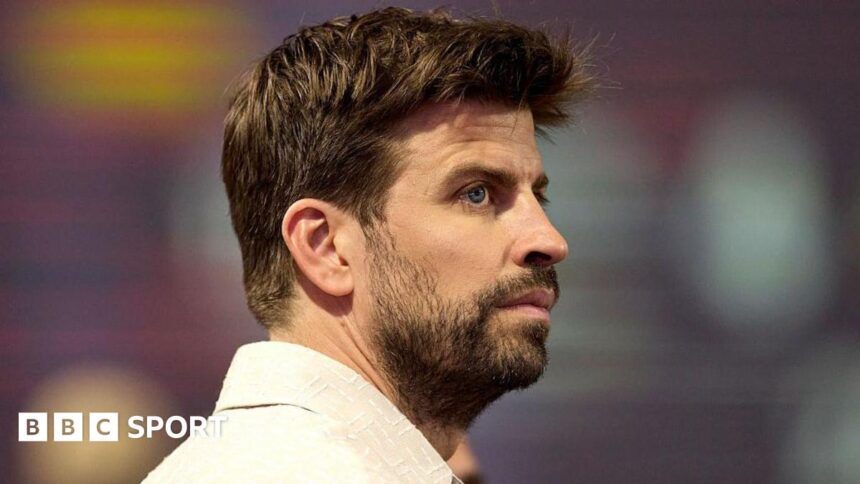
In a stunning development that has sent shockwaves through Spanish football, former Barcelona and Spain legend Gerard Pique has been slapped with a two-month ban by the Spanish Football Federation (RFEF). The punishment stems from a heated verbal altercation with referee Alonso de Ena Wolf during a Segunda División clash between Pique’s club, FC Andorra, and Albacete. The incident, which occurred during a tense 1-0 defeat last week, has reignited debates about the boundaries of conduct for club executives and the lingering intensity of a player who, despite retiring in 2022, clearly still bleeds competitive fire.
Pique, now 37, has transitioned from a World Cup-winning defender to a savvy businessman and co-owner of FC Andorra. However, this ban proves that the transition from pitch to boardroom does not always come with a cooling-off period. The referee’s report details a shocking exchange, with Pique allegedly telling the official to “leave with an escort so nobody attacks you” and adding, “in another country they would beat you up, but here in Andorra we are a civilised country.” The disciplinary committee acted swiftly, citing “notorious and public acts that undermine sporting dignity and decorum.”
This is not just a story about a fine or a slap on the wrist. This is about the power of words, the fragility of authority in modern football, and the question of whether Pique’s ban is a just punishment or an overreach by the federation. Let’s break down the incident, the legal implications, and what this means for FC Andorra’s immediate future.
What Really Happened: The Referee’s Report and the Context of the Row
To understand the severity of the ban, we must first reconstruct the scene. It was the 88th minute of a gritty Segunda División match. Albacete had just taken a 1-0 lead, and the tension inside the Estadi Nacional was palpable. As a former elite player, Pique is known for his tactical intelligence and his willingness to engage with officials. But this was different. According to the official match report filed by referee Alonso de Ena Wolf, the confrontation occurred after the final whistle in the tunnel area.
Wolf wrote that Pique approached him and made two statements that the official deemed “intimidating and disrespectful.” The first, “leave with an escort so nobody attacks you,” suggests a veiled threat or at least a presumption that the referee’s safety was at risk—a statement that could be interpreted as inciting hostility. The second remark, comparing Spain and Andorra’s civility, was a direct insult to the referee’s professional environment.
Key details from the report:
- Pique used the phrase “in another country they would beat you up” as a clear reference to potential violence against officials.
- The referee felt his authority was undermined in front of players, staff, and security personnel.
- The incident occurred in a “restricted area” of the stadium, not on the pitch, but still within the federation’s jurisdiction.
It is worth noting that Pique has a history of fiery confrontations. During his playing days, he was often the voice of the Barcelona dressing room, clashing with referees over offside calls and controversial decisions. However, this is his first major disciplinary action as a club owner. The RFEF’s disciplinary committee did not mince words, stating that his actions were “a direct attack on the integrity of the match officials and the spirit of fair play.”
Expert Analysis: Why a Two-Month Ban is a Landmark Decision
As a seasoned football journalist, I have seen countless bans for players and coaches. But a two-month suspension for a club owner is rare. The RFEF is sending a clear message: No one is above the rules, not even a global icon like Gerard Pique. The key here is the wording of the charge: “notorious and public acts that undermine sporting dignity and decorum.” This is a catch-all clause that allows the federation to punish behavior that does not fit neatly into standard categories like “insulting the referee” or “violent conduct.”
Why this ban is significant:
- Precedent-setting: This ruling could discourage other club presidents and owners from verbally abusing officials.
- Financial impact: Pique will be banned from entering the technical area, the dressing room, and the stadium on matchdays for two months. For a hands-on owner, this is a major blow.
- Reputation risk: Pique has built a brand around innovation (e.g., the Kings League) and cool-headed business. This ban tarnishes that image.
I spoke with a former La Liga referee, who wished to remain anonymous, for his take. “Pique’s words were not just angry; they were calculated. Telling a referee he needs an escort implies that the crowd or the players are a danger. That is a serious accusation. The ban is strong, but it fits the crime. The federation is protecting its officials from a culture of intimidation.”
Furthermore, Pique’s status as a retired player does not grant him immunity. The RFEF’s rules apply to anyone with an official role in a club, and as co-owner of FC Andorra, Pique is considered a representative. His defense team may argue that he was speaking as a passionate fan or former player, but the committee ruled that his role as an owner carries responsibility.
Predictions: What This Means for FC Andorra and Pique’s Future
FC Andorra is currently fighting for promotion to La Liga, sitting mid-table in the Segunda División. Losing Pique’s presence on the sidelines is a psychological blow, but the team’s performance on the pitch is unlikely to suffer directly—Pique is not the coach. However, his absence from the stadium for two months means the club loses its most vocal leader during a critical phase of the season.
Short-term predictions:
- FC Andorra’s form: The team will likely experience a dip in morale. Pique’s energy is infectious, and his pre-match talks are legendary. Without him, the players may lack that extra spark.
- Legal appeal: Expect Pique’s lawyers to file an appeal immediately. They may argue that the referee’s report is subjective or that the ban is excessive. However, given the RFEF’s hardline stance, a reduction to one month is the most optimistic outcome.
- Public response: Pique will likely issue a public apology to de-escalate tensions, but he will also frame it as a misunderstanding. His social media team will work overtime to control the narrative.
Long-term predictions:
- Pique’s role: This incident may force Pique to reconsider his hands-on approach. He might delegate more authority to his sporting director or coach to avoid future conflicts.
- Referee treatment: Spanish football is already under scrutiny for referee abuse (e.g., Real Madrid’s complaints about bias). This ban could lead to stricter protocols for club owners and executives.
- Kings League crossover: Pique’s other project, the Kings League, thrives on controversy and entertainment. This ban ironically fits his brand of rebelliousness, and he may use it to promote his “outsider” image.
Conclusion: A Costly Lesson for a Football Icon
Gerard Pique’s two-month ban is a stark reminder that football’s old boys’ network does not protect everyone. He is a legend of the game—a World Cup winner, a Champions League hero, and a man who helped define an era at Barcelona. But his words to referee Alonso de Ena Wolf crossed a line that the Spanish federation is no longer willing to tolerate.
The phrase “in another country they would beat you up” is particularly damning. It evokes a world of violence that football has fought hard to eradicate. Pique, who has always been articulate and media-savvy, should have known better. His apology—if it comes—will need to be sincere, not strategic.
For FC Andorra, this is a test of resilience. Can they maintain their promotion push without their charismatic owner in the stands? For Pique, this is a test of character. He has retired from playing, but he has not retired from the emotional whirlwind of football. The next two months will determine whether he learns restraint or whether this becomes a recurring theme in his post-playing career.
One thing is certain: the referee community will be watching closely. The RFEF has drawn a line in the sand. Now, it is up to Pique to decide whether he steps over it again or steps back. As a journalist who has covered this sport for decades, I can say this: the ban is harsh, but it is fair. Football must protect its officials, no matter how famous the offender is. Pique, the boy from Barcelona, has just learned that even giants can fall—if they forget their manners.
Source: Based on news from BBC Sport.