Zaragoza Keeper Banned for 13 Games: The Punch That Shocked Spanish Football
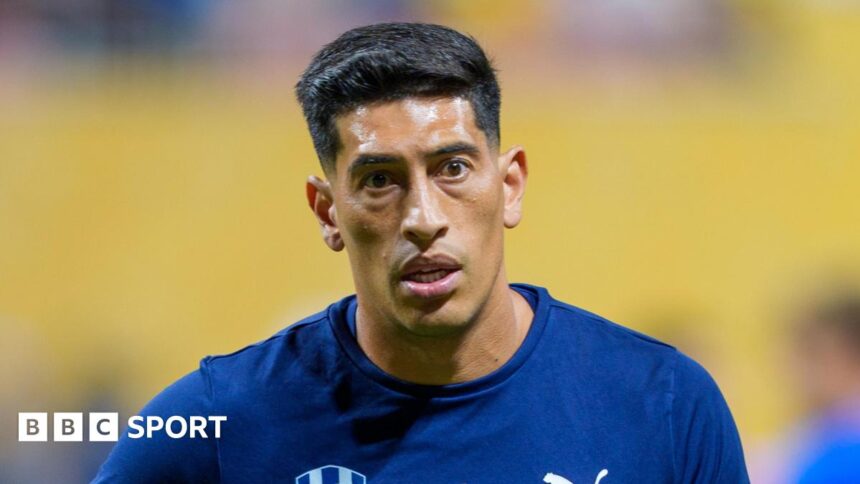
The Spanish Segunda División has been rocked by one of the most severe disciplinary actions in recent memory. Real Zaragoza goalkeeper Esteban Andrada has been handed a staggering 13-match ban after a shocking incident of violence during a heated derby against Huesca. The Argentine shot-stopper, currently on loan from Mexican side Monterrey, lost his composure in stoppage time, punching Huesca captain Jorge Pulido in the face and sparking a mass brawl that has left the league reeling.
This is not just a red card. This is a moment of madness that threatens to derail Zaragoza’s promotion hopes and potentially end Andrada’s career in Spain. As a sports journalist who has covered dozens of derby meltdowns, I can tell you this: a 13-game ban for a goalkeeper in a 42-game season is virtually a season-ending sentence. Let’s break down exactly what happened, why the punishment is so severe, and what this means for the club, the player, and the league.
How the Incident Unfolded: A Derby Descends into Chaos
The scene was set for a classic Aragonese derby. Real Zaragoza and Huesca, two bitter rivals, were locked in a tense, physical battle at the Estadio La Romareda on Sunday. With the scoreline tight and emotions running high, the match entered stoppage time with both teams desperate for a result.
Then came the flashpoint. Esteban Andrada, already on a yellow card, committed a foul that earned him a second bookable offence. The red card was shown. The goalkeeper was sent off. In most cases, that would be the end of it. A frustrated walk to the tunnel, a suspension for the next match, and a fine. But Andrada did not walk.
Instead, the 33-year-old sprinted towards Huesca captain Jorge Pulido and, in a moment of unbridled aggression, punched him directly in the face. The blow was not a slap or a push—it was a closed-fist strike that sent Pulido reeling. The stadium erupted. Players from both benches sprinted onto the pitch, and a mass brawl ensued that took several minutes to break up.
The fallout was immediate. Huesca goalkeeper Dani Jimenez and Zaragoza defender Dani Tasende were also shown red cards for their roles in the melee. But the primary offender, Andrada, faced the wrath of the competition committee. The verdict: a 13-match suspension—one of the heaviest bans ever handed down in Spanish second-tier football.
Expert Analysis: Why the 13-Game Ban is Justified (and Unprecedented)
Let’s be clear: in any professional sport, an intentional punch to an opponent’s face is a criminal act, not just a footballing foul. The Spanish Football Federation (RFEF) does not take such incidents lightly. The 13-match ban is based on Article 98 of the RFEF’s disciplinary code, which covers “aggressive acts against opponents that occur after the play has stopped.”
Here is the breakdown of the punishment:
- Four matches for the initial red card (second bookable offence).
- Nine additional matches for the punch and the subsequent violent conduct.
This is not a standard red-card suspension. The nine-match addition reflects the severity of the assault. In my analysis, the committee likely considered several aggravating factors:
- Premeditation: Andrada did not punch Pulido in the heat of a tackle. He ran several meters to confront him.
- Targeting the head: A punch to the face carries a high risk of serious injury (concussion, fractures, or eye damage).
- Inciting a riot: The punch directly caused a mass brawl that led to two more red cards and could have escalated further.
- Reputation of the league: The Segunda División is fighting for credibility. Allowing a goalkeeper to throw a punch with a slap on the wrist would send the wrong message.
Comparatively, similar bans in Spain include the 12-match suspension handed to Barcelona’s Luis Suarez for biting Giorgio Chiellini (though that was in a different competition) and the 10-match ban for Real Madrid’s Pepe for kicking a player while on the ground. Andrada’s 13 matches now sits at the top of the list for violent conduct in the Segunda División.
Prediction: Zaragoza will appeal. They will argue that the ban is disproportionate. They will point to the fact that Pulido was not seriously injured (he continued playing after treatment). However, I expect the ban to be reduced by no more than two or three matches. The RFEF will want to make an example of this case to deter future violence. A final ban of 10-11 games is the most realistic outcome.
Impact on Real Zaragoza: A Promotion Campaign in Jeopardy
Real Zaragoza are currently fighting for a playoff spot in the Segunda División. They have a proud history—six Copa del Rey titles, a legacy of top-flight football—but they have been stuck in the second tier for over a decade. This season, under coach Víctor Fernández, they had built momentum. Andrada was a key part of that.
The Argentine keeper, on loan from Liga MX side Monterrey, had started 12 matches this season. He had kept four clean sheets and was considered a steady, experienced presence between the posts. Now, Zaragoza must navigate 13 matches without their first-choice goalkeeper. In a 42-game season, that is roughly one-third of the remaining fixtures.
Let’s look at the options:
- Cristian Álvarez: The 38-year-old veteran is the backup. He has not played a single minute this season. Can he step in cold and perform at a promotion-chasing level? Unlikely.
- Youth academy options: Zaragoza have a promising young keeper in the B team, but throwing a teenager into a high-pressure derby run is a gamble.
- Emergency loan: The January transfer window is closed, but the club could petition the league for a special dispensation due to “force majeure.” That is a long shot.
This is a catastrophic blow to Zaragoza’s promotion hopes. Goalkeeper is the most specialized position on the pitch. You cannot simply rotate a midfielder into goal. The entire defensive structure—communication with defenders, command of the box, distribution—relies on the keeper. Without Andrada, Zaragoza’s defense will be exposed. I predict they will drop from playoff contention to mid-table by the time the ban ends.
Furthermore, the club faces a PR disaster. Andrada’s actions have tarnished the club’s image. Sponsors and fans are furious. The club will likely fine Andrada heavily and may even seek to terminate his loan agreement with Monterrey, sending him back to Mexico in disgrace.
The Broader Conversation: Violence in Football Must Be Eradicated
This incident is not an isolated moment of passion. It is a symptom of a deeper problem in modern football: the normalization of aggression. We have seen players headbutt opponents, stamp on ankles, and even bite. But a full-force punch to the face in the 90th minute of a derby is a line that cannot be crossed.
Let’s be honest: Jorge Pulido could have suffered a fractured jaw, a detached retina, or a concussion. The fact that he walked away without major injury is luck, not a justification. Andrada’s actions were not “competitive spirit.” They were assault.
The RFEF has sent a clear message: Violence has no place in football. The 13-game ban sets a precedent that will echo through every locker room in Spain. Young players watching this will understand: if you throw a punch, you will miss a third of the season. That is a deterrent.
However, I also believe the discussion must extend to player welfare. Why was Andrada so enraged? Was there a history of provocation from Pulido? Did the referee lose control of the match earlier? These are questions the disciplinary committee should also address. But they do not excuse the punch.
As a journalist, I have seen dozens of red cards for violent conduct. Most are for reckless tackles or pushing. A deliberate punch is in a different category. It belongs in a boxing ring, not a football pitch. The 13-game ban is not just punishment—it is a statement.
Conclusion: Andrada’s Legacy and Zaragoza’s Crossroads
Esteban Andrada arrived at Real Zaragoza with a reputation as a solid, experienced goalkeeper from Monterrey. He was supposed to be the man to help the club return to La Liga. Instead, he will be remembered as the goalkeeper who threw a punch and threw his season away.
The 13-match ban is harsh, but it is fair. Andrada must now serve his time, reflect on his actions, and hope that his career in Spain is not over. For Real Zaragoza, the road ahead is bleak. Without their starting keeper, their promotion dream is all but dead. The club must now focus on damage control, rebuilding team morale, and finding a way to survive the next 13 matches without their most important player.
This is a cautionary tale for every footballer: One moment of madness can undo months of hard work. The derby was heated. The emotions were high. But there is never an excuse for punching an opponent in the face. Andrada learned that lesson the hard way—with a ban that will haunt him for the rest of the season.
As the Segunda División moves on, one thing is certain: the next time a player even thinks about throwing a punch, they will remember Esteban Andrada and his 13-game sentence. That, in the end, might be the only positive outcome of this ugly incident.
Source: Based on news from BBC Sport.