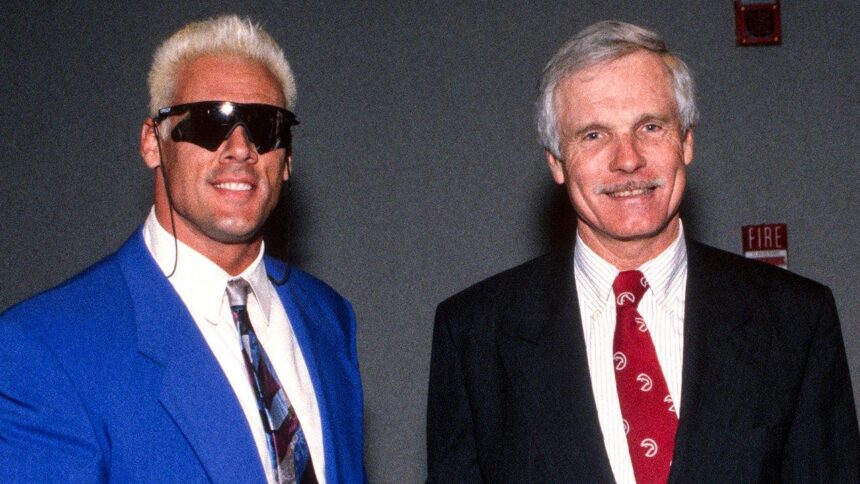
All Elite Wrestling Pays Tribute to Ted Turner: A 10-Bell Salute for the Man Who Changed the Game
The wrestling world paused on Wednesday night. It wasn’t for a title match, a shocking debut, or a backstage brawl. It was for a man who never laced up a pair of boots but whose influence on the squared circle is arguably greater than any single grappler in history. Media mogul Ted Turner passed away on Tuesday at the age of 87, and All Elite Wrestling (AEW) honored his legacy in the most profound way the industry knows: a solemn 10-bell salute.
As the news broke that the CNN founder and cable news pioneer had died, tributes poured in from across the sports and entertainment spectrum. But for professional wrestling fans, the loss hits differently. Turner wasn’t just a billionaire who owned a TV network; he was the man who bought a struggling regional promotion called World Championship Wrestling (WCW) and turned it into a cultural juggernaut that nearly killed the WWE. AEW co-founder Tony Khan, recognizing this historic debt, opened Wednesday’s special double episode of Dynamite and Collision with a moment of silence that resonated far beyond the arena.
This was not a generic tribute. It was a direct acknowledgment that without Turner’s vision, the very landscape that allowed AEW to exist might never have been tilled.
The Man Who Believed Wrestling Belonged on Cable
To understand why AEW honored Ted Turner with such reverence, you have to go back to the 1980s. In an era when wrestling was considered a regional oddity or a syndicated sideshow, Turner saw something else. When he purchased Jim Crockett Promotions in 1988 and rebranded it as WCW, he wasn’t just buying a wrestling company. He was buying content for his superstation, TBS.
Turner’s genius was simple: he understood that wrestling was a weekly, episodic drama that could drive ratings and build a loyal audience. While Vince McMahon was taking the WWF national through pay-per-views and syndication, Turner put WCW on cable television every Saturday night on TBS and later on TNT. This gave the promotion a consistent, nationwide platform that no other competitor had.
Key contributions from the Turner era that changed wrestling forever:
- The Birth of Nitro: In 1995, Turner launched WCW Monday Nitro live on TNT, directly competing head-to-head with WWF Raw. This sparked the infamous Monday Night Wars.
- Financial Backing: Turner allowed WCW to spend enormous sums of money on talent, poaching stars like Hulk Hogan, Randy Savage, and Kevin Nash from the WWF, creating a roster that felt like a “dream match” every week.
- Creative Freedom: While not always a recipe for success, Turner’s management style gave bookers like Eric Bischoff the freedom to take risks, leading to the creation of the New World Order (nWo) storyline, which revolutionized wrestling storytelling.
- Global Reach: TBS and TNT were available in millions of homes. Turner turned a regional promotion into a global brand that, for 83 consecutive weeks, beat the WWF in the ratings.
Turner’s passing is a reminder that the “Attitude Era” of the late 1990s was a direct reaction to the competition he funded. Without Ted Turner, there is no Monday Night War. Without that war, professional wrestling as we know it—with its edgier content, larger-than-life characters, and corporate rivalries—simply would not exist.
AEW’s Tribute: More Than a Gesture, It’s a Lineage
When Tony Khan stepped into the ring on Wednesday night to announce the 10-bell salute, he was doing more than paying respects. He was drawing a direct line from Turner’s vision to the promotion he built. AEW is, in many ways, the spiritual successor to WCW.
The parallels are impossible to ignore. Both were founded by wealthy outsiders willing to challenge the WWE monopoly. Both relied on cable television distribution (TNT and TBS for WCW; TNT and TBS for AEW). Both emphasized a more sports-oriented presentation and a deep roster of talent. Khan has openly cited the Turner-era WCW as a major influence on his booking philosophy, particularly in terms of giving talent creative freedom and building long-term storylines.
The tribute was especially poignant given the venue and the timing. AEW airs its flagship shows on TNT and TBS—the very networks Turner built. Every Wednesday night when the Dynamite intro hits, the show exists on the foundation Turner laid 30 years ago.
“Ted Turner was a pioneer who took a chance on wrestling when no one else would,” Khan said in his pre-show remarks. “He understood that this art form could be mainstream, that it could be prime-time, and that it could be a legitimate sport. We stand on his shoulders tonight.”
The 10-bell salute itself was somber and respectful. The roster lined the ramp, heads bowed. The crowd in the arena fell silent. It was a stark contrast to the usual chaos of AEW programming, and it underscored the gravity of the moment. This was not a ratings stunt; it was a genuine moment of reflection for an industry that owes him everything.
Expert Analysis: What Turner’s Legacy Means for AEW’s Future
From a journalistic perspective, the significance of AEW honoring Turner cannot be overstated. It signals a mature understanding of wrestling history that is often lacking in modern promotions. By explicitly tying itself to the Turner legacy, AEW is doing two things.
First, it is legitimizing its own existence. AEW has always faced questions about its long-term viability. By invoking Turner—a man who built a wrestling empire that eventually collapsed due to corporate mismanagement—Khan is subtly reminding fans that even empires fall, but the spirit of competition endures. AEW is not just a competitor; it is the continuation of a tradition that Turner started.
Second, it is a strategic branding move. The Turner name is synonymous with quality cable programming and sports innovation. For a promotion that wants to be seen as the “alternative” to WWE, associating with the man who created the original alternative is powerful marketing. It also strengthens AEW’s relationship with Warner Bros. Discovery, the current owner of TNT and TBS. The tribute is a public thank you to the corporate parent for continuing to invest in wrestling.
Predictions for the future based on this tribute:
- Increased focus on “old school” storytelling: Expect AEW to lean even harder into the sports-based presentation that defined WCW, with more emphasis on rankings, tournaments, and legitimate athletic competition.
- Potential for a “Turner Cup” or tournament: It would be a fitting tribute for AEW to create an annual tournament or championship trophy named after Turner, perhaps for tag teams or a new singles competition.
- More archival footage: AEW may begin to incorporate classic WCW footage into their video packages, further blending the history of the two brands under the TNT/TBS umbrella.
- A renewed focus on the “war” with WWE: While not a direct war like the 1990s, the competitive spirit Turner fostered is alive in AEW. His death may galvanize the roster to push harder to prove that his model of wrestling television is still viable.
A Strong Conclusion: The Lasting Echo of a 10-Bell Salute
As the final bell tolled on Wednesday night, the silence in the arena was deafening. It was the sound of a generation of wrestlers, fans, and executives acknowledging a debt that can never be fully repaid. Ted Turner was not a wrestler, but he was a champion. He championed the idea that professional wrestling was not a carnival sideshow but a legitimate form of entertainment worthy of prime-time television and serious investment.
His passing at 87 closes a chapter in the history of cable television and sports entertainment. But as AEW proved Wednesday night, the story is not over. The 10-bell salute was not a goodbye; it was a passing of the torch. The promotion that now occupies the same airwaves, on the same networks, is the living monument to his vision.
Will AEW ever reach the heights of the Monday Night War era? That remains to be seen. But one thing is certain: every time the lights go down on Dynamite or Collision, every time a superstar walks the ramp on TNT, the ghost of Ted Turner is in the building. He gave wrestling a platform, a budget, and a reason to believe it could be more. For that, the industry will be forever grateful. Rest in peace, Ted. The bell has rung, and your legacy has never been louder.
Source: Based on news from Fox Sports.