Higgins Returns: Ireland’s Centre of Attention for Pivotal Wales Clash
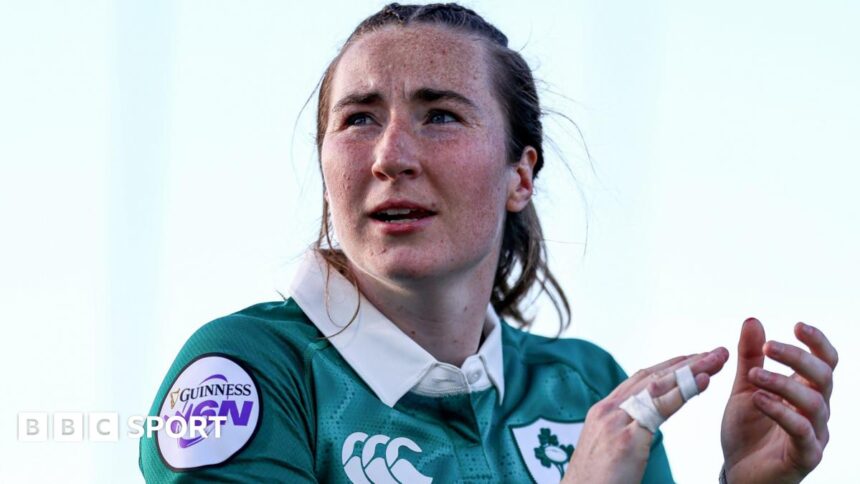
After a tense fallow week spent dissecting a bruising defeat in France, Ireland Women’s head coach Scott Bemand has rolled the dice on experience. In the sole change to his starting XV for Saturday’s crucial Women’s Six Nations home fixture against Wales at the Affidea Stadium, **Eve Higgins** returns to the midfield. The Blackrock College star replaces **Nancy McGillivray**, who drops out of the matchday squad entirely, in what is a clear signal of intent from the Irish coaching staff.
This is not merely a rotation. It is a recalibration. Following a rollercoaster campaign that has seen Ireland dismantle Italy in Dublin but struggle to contain the power of England and France, Bemand is banking on Higgins’ defensive steel and attacking nous to unlock a Welsh side that is equally desperate for a victory. With both teams sitting on two wins and two defeats, Saturday’s encounter is effectively a play-off for third place—and a massive psychological boost heading into the final round.
The Eve Higgins Factor: Why This Change Matters
Eve Higgins is no stranger to the big stage. The 24-year-old centre started the tournament’s opening salvo against England, a 33-12 loss where she was one of the few Irish backs to consistently bend the defensive line. Since then, her involvement has been a game-by-game proposition: she came off the bench in the record 57-20 victory over Italy and was introduced as a replacement in the 26-7 defeat to France in Clermont.
Now, she is back in the driver’s seat. The decision to recall Higgins is a direct response to the physicality Wales will bring. The Welsh midfield, anchored by the powerful running of **Hannah Jones** and the creative spark of **Keri Lake**, poses a significant threat in the wide channels. Higgins offers a unique blend of attributes that McGillivray, for all her promise, has yet to fully master at this level:
- Defensive organisation: Higgins is a vocal leader in the blitz defence, crucial for shutting down Wales’ offload game.
- Counter-attacking vision: Her ability to read the play and launch attacks from deep was sorely missed against France.
- Set-piece stability: As a former Sevens international, her footwork in tight spaces offers Ireland a reliable option off the scrum and lineout.
Statistically, Ireland’s attack has struggled to fire in the opening 20 minutes of their last two matches. Higgins’ inclusion should provide a steadier hand to navigate the early pressure Wales will inevitably apply.
Breaking Down Ireland’s Campaign: A Tale of Two Halves
Ireland’s Six Nations journey has been a study in contrasts. The campaign opened with a brave but ultimately one-sided loss to England at Twickenham. That was followed by the historic, high-scoring demolition of Italy—a performance that had fans dreaming of a top-three finish. Then came the reality check in Clermont, where France’s set-piece dominance and pace out wide exposed Ireland’s defensive frailties.
Now, after a fallow week, the squad has had time to heal both body and mind. The key question is: which Ireland shows up on Saturday? The one that ran Italy ragged with fast ruck speed and offloads, or the one that struggled to exit their own half against France?
Bemand’s selection suggests a focus on ball retention. Higgins is a player who thrives with front-foot ball. If the Irish forward pack—led by the ever-reliable **Sam Monaghan** and the explosive **Aoife Wafer**—can gain parity at the breakdown, Higgins will have the platform to pull the strings. However, if the Welsh back row, particularly **Alex Callender**, targets the Irish ruck, the midfield could become a battleground where Higgins’ defensive reads will be tested to the limit.
One area of concern remains the goal-kicking. Dannah O’Brien has been solid from the tee, but the pressure of a tight game against a physical Welsh side will demand a near-perfect return. Higgins’ return should also relieve some of the playmaking burden on O’Brien, allowing her to focus on her own distribution.
Wales: The Unpredictable Threat
Wales arrive in Dublin with a similar record but a vastly different trajectory. After a narrow loss to Scotland, they stunned France with a gritty defensive display before falling to England. Last time out, they edged Italy in a scrappy affair. This is a Welsh side that is difficult to read—they can be brilliant in broken play but vulnerable when forced into structured, set-piece rugby.
Ireland’s victory over Wales in last year’s championship was a turning point for Bemand’s side. That win, secured at the same Affidea Stadium, was built on a suffocating defensive effort and clinical finishing. To repeat the dose, Ireland must:
- Dominate the aerial battle: Wales’ back three are dangerous in space but can be pressured under the high ball. Expect Ireland to use O’Brien’s boot to pin them deep.
- Target the Welsh scrum: The Irish front row of **Linda Djougang**, **Neve Jones**, and **Christy Haney** has been formidable. A penalty try or consistent scrum penalties could be the difference.
- Use Higgins as a decoy runner: Her presence alone will occupy Welsh defenders, potentially freeing up space for wingers **Aoife Doyle** and **Katie Corrigan** to exploit out wide.
Wales will likely look to slow the game down and force errors. They know Ireland’s bench has less experience, so expect a high-tempo start from the visitors to try and build an early lead.
Expert Analysis: The Key Battlegrounds
As a journalist who has covered this rivalry for years, I see this match coming down to two specific areas: the breakdown speed and the 10-12 channel.
Breakdown speed: Ireland’s best performances this campaign have come when they recycle ball in under three seconds. Against France, that speed evaporated. The return of Higgins, who is excellent at cleaning out rucks from the outside centre position, should help. If Ireland can generate quick ball, their backline—with the pace of **Enya Breen** and the power of **Aoife Dalton**—will cause Wales serious problems.
The 10-12 channel: This is where the game will be won or lost. Wales will target Ireland’s fly-half and inside centre with heavy runners. Higgins, playing at 13, will need to slide across and offer double tackles. Conversely, Ireland will look to isolate Wales’ defensive hinge. If Higgins can punch a hole in the first phase, Ireland’s support runners will flood through.
My prediction? This will be a tight, physical contest that may not be pretty but will be fiercely competitive. Ireland’s home advantage and the emotional lift of Higgins’ return should be enough to edge them over the line. I predict a **22-18 victory for Ireland**, with Higgins scoring a crucial try or providing the assist for the winning score in the final quarter.
Strong Conclusion: A Defining Moment for Bemand’s Project
Saturday is more than just a game; it is a defining moment for Scott Bemand’s tenure. A win against Wales would keep Ireland firmly in contention for a third-place finish—their best result in years—and build genuine momentum heading into the final round against Scotland. A loss, however, would leave the campaign feeling like a missed opportunity, with the Italy victory becoming an outlier rather than a sign of progress.
Eve Higgins’ return is the final piece of the puzzle. She brings the composure, the experience, and the big-game temperament that Ireland need in a pressure cooker environment. The players around her have bought into the system; the crowd at the Affidea Stadium will be a vocal 12th player. Now, it is time for execution.
This Ireland side has shown it can score tries in bursts. They have shown they can defend for long periods. The missing ingredient has been consistency. With Higgins back in the saddle, Ireland have their best chance to deliver a complete 80-minute performance. The stage is set. The selection is made. Now, it is time for the players to write their own headlines.
Expect a battle. Expect emotion. And expect Eve Higgins to be at the heart of it all.
Source: Based on news from BBC Sport.