Iran Demands FIFA Guarantees: Will Political Tensions Derail Team Melli’s World Cup Dream?
The countdown to the 2026 FIFA World Cup has taken a dramatic and deeply political turn. Iran’s football federation chief, Mehdi Taj, has confirmed he will meet FIFA President Gianni Infantino in the coming days to demand written guarantees that the Islamic Republic of Iran will be treated with “respect” during the tournament in the United States. The move, which Tehran warns could lead to a reconsideration of participation, has sent shockwaves through the global football community and raises the specter of one of Asia’s most passionate football nations sitting out the world’s biggest sporting event.
The crisis was ignited not on the pitch, but at the border. Last week, Canada—a co-host of the 2026 World Cup alongside the US and Mexico—denied Taj entry into the country. The reason? His past links to the Islamic Revolutionary Guard Corps (IRGC), a force designated as a terrorist organization by both the US and Canada. This diplomatic snub has escalated into a full-blown existential question for Iran’s football program: Can Team Melli compete safely and with dignity on American soil?
The Diplomatic Standoff: Why Canada’s Denial Triggered a FIFA Crisis
Mehdi Taj’s planned meeting with Infantino is not a routine bureaucratic check-in. It is a high-stakes negotiation born from a geopolitical firestorm. Speaking to Iran’s state broadcaster IRIB, Taj did not mince words. He stated that if FIFA cannot provide “concrete guarantees” regarding the respect of Iran’s national symbols, institutions, and officials, the country may be forced to “reconsider” its participation in the 2026 tournament.
The core of the issue lies in the IRGC designation. The United States designated the IRGC as a Foreign Terrorist Organization in 2019, and Canada followed suit in 2024. For Tehran, the IRGC is a legitimate state institution. For Washington and Ottawa, it is a sanctioned military entity. Taj’s past affiliation with the IRGC—a common career path for many senior Iranian officials—made him persona non grata in Canada. This is not just a personal slight; it is seen in Tehran as a direct affront to the sovereignty of the Islamic Republic.
“We are not asking for special treatment. We are asking for the minimum standard of respect that any sovereign nation deserves,” Taj was quoted as saying in the IRIB interview. “If we cannot be assured that our flag, our anthem, and our officials will be treated with the dignity they deserve, then we must ask ourselves if this tournament is worth the humiliation.”
This is not the first time political friction has threatened Iran’s World Cup participation. In 2022, tensions over the Woman, Life, Freedom protests nearly led to Iran’s expulsion, and the team faced hostile crowds in Qatar. But this time, the stakes are higher because the matches are being played on US soil—a country with which Iran has no diplomatic relations.
Expert Analysis: Can FIFA Mediate a Political Minefield?
From a journalistic perspective, this is a classic case of sports washing vs. sporting integrity colliding with hard-nosed international law. FIFA has always prided itself on the principle of political neutrality, enshrined in its statutes. However, the reality is that FIFA cannot control the visa and entry policies of sovereign nations like the United States and Canada.
Let’s break down the key variables:
- FIFA’s Limited Power: Gianni Infantino can issue letters of guarantee and diplomatic notes, but he cannot override US immigration law. If the US government decides to deny entry to certain Iranian officials or impose restrictions on the team’s movement, FIFA has no legal recourse.
- The IRGC Problem: Iran’s football federation is heavily intertwined with the state. Many officials, including Taj, have backgrounds in the IRGC or other state security bodies. This makes them vulnerable to sanctions and entry bans under US and Canadian law.
- The “Respect” Clause: Taj’s demand is vague but powerful. What constitutes “respect”? Is it the right to display the national flag without protest? Is it immunity from legal actions or protests by exile groups? The definition will be a key battleground in the Infantino meeting.
- Player Sentiment: Iran’s star players, including Mehdi Taremi and Sardar Azmoun, have largely remained silent on this issue. However, many of them play in Europe and are acutely aware of the political pressures. A boycott would devastate their careers and legacy.
Prediction: I believe FIFA will offer a face-saving compromise. Infantino will likely promise to use his “best offices” to ensure Iran’s delegation is treated with diplomatic courtesy, but he will stop short of guaranteeing that all officials will receive visas. The most likely outcome is a “conditional participation”—Iran will play, but with a reduced delegation or with the understanding that certain high-risk officials will stay home.
What a Boycott Would Mean for the 2026 World Cup
Let’s be clear: Iran withdrawing from the World Cup would be a seismic event. Team Melli is not just a football team; it is a national symbol for over 85 million Iranians. The team’s qualification was a rare moment of unity in a deeply divided country. A boycott would be seen by hardliners in Tehran as a victory against “Western arrogance,” but by the Iranian public—especially the youth—as a devastating loss.
From a tournament logistics perspective, Iran’s absence would create a major headache for FIFA. The draw for the 2026 World Cup (expanded to 48 teams) has already been partially structured around Iran’s presence. A last-minute withdrawal would force a reshuffle of groups and potentially leave a vacant spot that cannot be filled in time.
Furthermore, the commercial implications are significant. The Iranian diaspora in the United States is one of the most passionate and visible fan bases. Iranian-American fans were expected to turn out in force for matches in cities like Los Angeles, New York, and Houston. Their absence would be a financial blow to local economies and to FIFA’s broadcast ratings in the Middle East.
Let’s not forget the security dimension. The US government has already ramped up security protocols for the World Cup, citing potential threats from state-sponsored actors. Iran’s participation—or non-participation—will be scrutinized by intelligence agencies on both sides. A boycott could be framed by Tehran as a protest against “American hostility,” while Washington might view it as a tactical move to avoid potential protests or defections by Iranian players.
The Road Ahead: Key Dates and What to Watch For
The next few weeks are critical. Here is a timeline of what we should expect:
- Infantino-Taj Meeting: This will happen within the next 7-10 days, likely in Zurich or Doha. The outcome will set the tone. Watch for any joint statement that mentions “mutual respect” and “security assurances.”
- US Visa Processing: Iran’s delegation will need to apply for US visas. If the US State Department denies visas to Taj or other senior officials, the crisis will escalate immediately.
- FIFA Council Vote: If no resolution is found, the FIFA Council may be forced to vote on a special resolution regarding Iran’s participation. This would be unprecedented.
- Public Pressure: Expect campaigns from Iranian exile groups urging FIFA to ban Iran if human rights conditions are not met. Conversely, expect state-backed propaganda in Iran framing any restrictions as an act of war.
My expert prediction: Iran will play in the 2026 World Cup. The cost of a boycott is too high for both Tehran and FIFA. However, the atmosphere will be toxic. The team will likely face heightened security, restricted movement, and a media frenzy focused on politics rather than football. Mehdi Taj will return from his meeting with Infantino with a piece of paper full of promises—but those promises will be tested the moment an Iranian official steps off the plane in America.
Conclusion: Football at the Crossroads of Geopolitics
The Iran-FIFA showdown is a stark reminder that football is never just a game. It is a stage where nations project power, seek legitimacy, and confront their enemies. Mehdi Taj’s demand for “respect” is a bargaining chip in a much larger geopolitical poker game. The United States, Canada, and Iran are all using the World Cup as a lever to advance their own narratives.
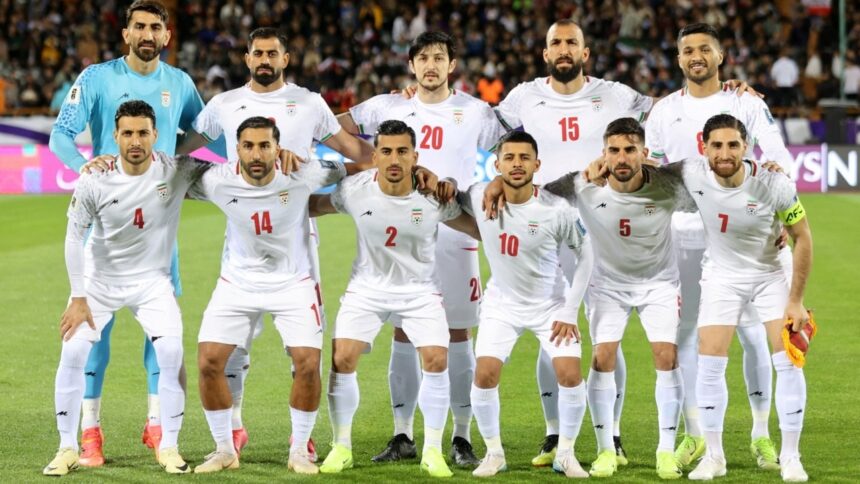
For the players—the men who will wear the white jersey of Team Melli—this is a nightmare. They want to compete against the best in the world. They want to make their families proud. Instead, they are caught in a diplomatic crossfire that has nothing to do with the beautiful game.
As a sports journalist, I have seen politics ruin tournaments before. The 1980 Moscow boycott. The 2022 Qatar controversy. But this feels different. This is not about a host nation’s laws; it is about the fundamental right of a team to exist on foreign soil without being treated as a pariah.
The ball is now in Gianni Infantino’s court. He must find a way to satisfy Tehran’s demands without alienating Washington. If he fails, the 2026 World Cup will kick off with a deafening silence where 85 million voices should have been roaring. And that would be a tragedy for football, for diplomacy, and for the millions of Iranians who simply want to watch their team play.
Source: Based on news from India Today Sport.