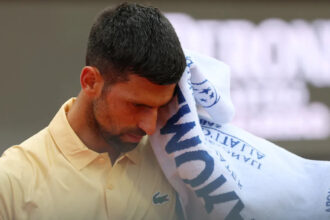
Sinner Adds Voice to French Open Prize Money Protests: A New Era of Player Power Dawns in Tennis
The pristine clay of Roland Garros is usually the stage for breathtaking rallies and grueling five-set epics. This year, however, the most significant battle might be taking place off the court. The simmering discontent over prize money distribution at the French Open has reached a boiling point, and the sport’s brightest young star, Jannik Sinner, has just thrown his considerable weight behind the protest. The world No. 2’s comments have sent a clear signal: the players are organized, they are angry, and they are ready to take their fight to Wimbledon and the US Open.
For weeks, the locker room chatter at the Grand Slams has centered on an uncomfortable truth. While tournament revenues skyrocket—fueled by massive broadcast deals, corporate sponsorship, and record ticket sales—the percentage of that revenue trickling down to the players, particularly those in the early rounds, remains stubbornly low. Sinner’s intervention is not just a casual opinion; it is a calculated move in a high-stakes negotiation that could redefine the financial landscape of professional tennis.
The Anatomy of the Protest: Why the French Open is the Flashpoint
To understand the depth of the frustration, one must look at the numbers. The French Open generated over €380 million in revenue in 2023, a figure that is expected to climb higher in 2024. Yet, the total prize money pool, while increasing year-on-year, does not reflect this explosive growth proportionally. The top players, like Sinner, Novak Djokovic, and Carlos Alcaraz, are not the primary complainants. They will earn millions regardless. The real fury comes from the rank-and-file players—those ranked outside the top 50—who struggle to break even.
“It’s not just about the champions. It’s about the whole ecosystem,” Sinner stated in a press conference following his second-round win. “We see the business is booming. The stadiums are full. The TV numbers are high. But the players who make the show, especially in the first week, are not seeing a fair share. We are hoping that Wimbledon and the US Open listen to our demands.”
The timing is critical. The French Tennis Federation (FFT) has historically been the most resistant to structural changes regarding revenue sharing. Unlike Wimbledon, which has a long tradition of incremental prize money increases, or the US Open, which has experimented with player compensation packages, Roland Garros operates with a more rigid financial model. This has made it the perfect target for a coordinated player protest. Jannik Sinner’s voice is particularly potent because he is widely seen as the future face of the sport—a clean-cut, diplomatic champion who rarely engages in controversy. When he speaks, the tennis world listens.
Beyond the Baseline: The Economic Reality of a Pro Tennis Player
The disconnect between the glamour of the Grand Slams and the grim financial reality for most pros is staggering. Consider this: a player who loses in the first round of the French Open in 2024 will earn approximately €73,000. After taxes, coaching fees, travel, accommodation, and physiotherapy costs, that sum can evaporate quickly. For a player based in South America or Asia, the cost of a two-week European clay-court swing can easily exceed €50,000.
- Travel Costs: Flights, hotels, and meals for a player and at least one coach for 10-14 days.
- Coaching Fees: Top-tier coaches command $1,000-$3,000 per week plus expenses.
- Physio & Fitness: Traveling physiotherapists and strength trainers are a necessity, not a luxury.
- Equipment & Stringing: Rackets, strings, and grips are consumable goods that cost thousands per tournament.
- Agent & Management Fees: Typically 10-20% of prize money.
This leaves many players operating at a loss unless they reach the third round or beyond. The French Open prize protests are therefore not about greed among the elite; they are about survival for the 128-player draw. Sinner’s support signals a shift in mentality. The top stars are realizing that a healthy tour requires a healthy middle class. If the tour becomes a graveyard for talent where only the top 20 can afford to compete, the quality of the product will inevitably suffer.
“We need the lower-ranked players to be able to live,” Sinner added. “They are the ones who push us in practice. They are the ones who create the depth of the tournament. If we only take care of the top guys, the sport gets weaker.” This is a powerful admission from a player who has earned over $20 million in career prize money. It shows a maturity and a collective consciousness that has been missing from the sport’s leadership for decades.
Wimbledon and the US Open: The Next Battlegrounds
The protest is not ending in Paris. According to Sinner, the players are already looking ahead. The Wimbledon and US Open tournaments are now under the microscope. The All England Club, known for its strict traditions and deep pockets, has historically been more generous with its prize money distribution, but the players want a formalized revenue-sharing model.
The US Open, run by the USTA, has been the most progressive of the four majors. They were the first to introduce a “base salary” for main-draw players and have significantly increased first-round prize money in recent years. However, the players argue that this is still not enough. They want a fixed percentage of total tournament revenue, similar to how professional team sports leagues operate. This would tie player compensation directly to the success of the event, creating a true partnership.
Expert Analysis: The leverage the players hold is unprecedented. The formation of the Professional Tennis Players Association (PTPA), co-founded by Novak Djokovic, has given the players a unified voice. While the PTPA is not a union in the traditional sense, it has successfully lobbied for better conditions. If the French Open, Wimbledon, and the US Open fail to meet these demands, the whispers of a potential boycott—or at least a coordinated media blackout—are growing louder. The Grand Slam boards are acutely aware that a player strike during a major would be catastrophic for the sport’s reputation and its broadcast contracts.
Prediction: Wimbledon will likely cave first. The All England Club values its image of fairness and tradition. A public spat with the players, especially a beloved figure like Sinner, would be a PR disaster. Expect Wimbledon to announce a significant increase in first-round prize money and a commitment to a revenue-sharing negotiation for 2025. The US Open will follow suit, perhaps with a more aggressive package to position itself as the “player’s Grand Slam.” The French Open, stubborn as always, will be the last holdout, but will eventually be forced to adjust by market pressure.
The Bigger Picture: Reimagining the Tennis Economy
This protest is about more than just the four weeks of Grand Slam tennis. It is a fundamental re-evaluation of how the sport’s wealth is distributed. The ATP and WTA Tours, which run the 50-week calendar, also face criticism for low prize money at Masters 1000 and 500 events. Sinner’s comments at the French Open have opened a Pandora’s box. If the majors start paying a higher percentage, the pressure will mount on the smaller tournaments to follow suit.
The current model is unsustainable. Tennis is a global sport with a massive fan base, yet its players are among the lowest-paid professional athletes in major sports. Compare a top-50 tennis player to a backup quarterback in the NFL or a bench player in the NBA. The tennis player works 11 months a year, travels across continents, and bears all costs, while the team athlete has guaranteed contracts, health insurance, and travel expenses covered. This disparity is the root of the anger.
Sinner’s leadership in this moment cannot be overstated. He is not just a great player; he is becoming a statesman for the sport. By adding his voice to the French Open prize protests, he has legitimized the movement. He has taken it from a grumble in the locker room to a headline on the front page. The message is clear: the era of players silently accepting whatever crumbs are thrown their way is over.
Conclusion: The Ball is Now in the Grand Slams’ Court
The 2024 French Open will be remembered for many things—the swirling Parisian wind, the emergence of new clay-court stars, and the relentless pursuit of history. But the most enduring legacy of this tournament may be the moment the players finally stood up and demanded a seat at the revenue table. Jannik Sinner has become the unlikely standard-bearer for this revolution, using his platform to speak for the hundreds of players who grind in anonymity.
The protests are not going away. The players have the momentum, the data, and the public sympathy. The French Open, Wimbledon, and the US Open now face a choice: adapt and share the wealth, or risk a fractured relationship with the very athletes who make their events worth billions. The smart money is on adaptation. The economics of tennis are changing, and the players—led by voices like Sinner’s—are no longer willing to be silent partners in their own success. The next serve is in the hands of the tournament directors. How they return it will define the future of the sport.
Source: Based on news from ESPN.
Image: CC licensed via commons.wikimedia.org