Dean Defends England Women’s Army Camp: “Missing Games is a Necessary Sacrifice”
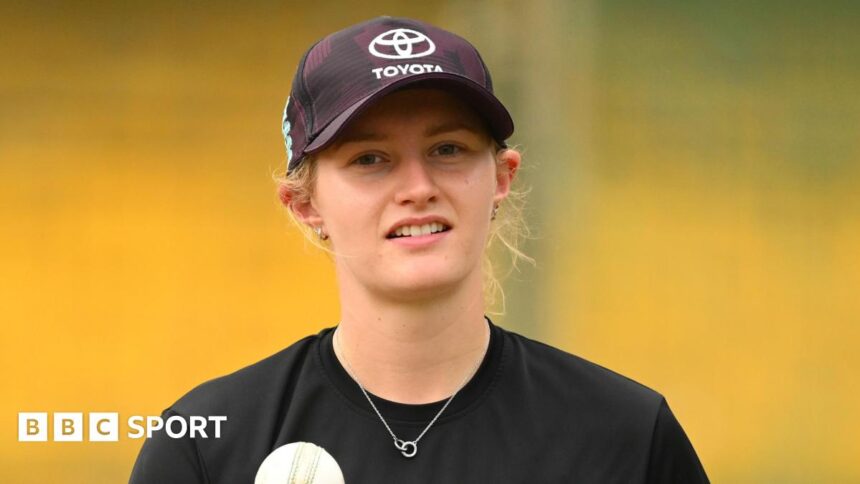
As Charlie Dean prepares to become the 20th woman to lead England in a One-Day International, the stand-in captain has issued a robust defence of a controversial decision that has split opinion in the women’s domestic game. Dean insists that withdrawing the entire T20 World Cup squad from a round of domestic fixtures for an army bootcamp at the Royal Military Academy Sandhurst was a vital, non-negotiable step in forging a winning mentality.
The decision to pull 15 players from last week’s One-Day Cup matches—following earlier absences for training at Loughborough—has sparked debate about the balance between national team preparation and the integrity of domestic competitions. However, speaking exclusively to BBC Sport, Dean made it clear that the squad’s cohesion is the priority. “Missing a game or two doesn’t feel like too much of a detriment when we really feel like that was productive for us,” she stated emphatically.
This is not just a PR exercise. It is a calculated, high-stakes strategy by a team desperate to reclaim global dominance. With the T20 World Cup looming, England are betting that the bonds forged in the mud of Sandhurst will pay dividends when the pressure is on in the Caribbean.
The Army Camp: More Than Just Push-Ups and Obstacle Courses
The decision to swap the relative comfort of a cricket field for the gruelling environment of a military academy was not taken lightly. The England and Wales Cricket Board (ECB) and head coach Jon Lewis have been searching for an edge, a way to create a “band of brothers” mentality within a squad that has often been criticised for being too clinical and not resilient enough in crunch moments.
Dean, who will lead the side in the absence of the injured Heather Knight, explained the rationale behind the radical approach. “It’s about understanding how you react when you are physically and mentally exhausted,” she said. “On a cricket field, you can get away with being a bit individual. In an army environment, you cannot. You have to trust the person next to you completely.”
The camp at Sandhurst included:
- Team-based problem solving under high-stress conditions.
- Physical endurance challenges designed to break down individual barriers.
- Leadership exercises where players had to rotate command roles.
- Debrief sessions focused on communication under fatigue.
Dean believes that this shared hardship creates a unique chemistry that cannot be replicated in net sessions or standard team meetings. “You learn who the real leaders are when everyone is tired and cold. That is invaluable for us,” she added.
The Domestic Fallout: Is the One-Day Cup Being Devalued?
While the England camp is bullish about the benefits, the decision has not been universally welcomed. Critics argue that pulling the entire World Cup squad from the One-Day Cup—a key development pathway for domestic talent—sends a poor message. The tournament, which is meant to showcase the next generation, was left without its headline acts.
This is the second time this season that domestic matches have taken a back seat to England training. Earlier in the summer, players missed One-Day Cup fixtures for a standard training block at Loughborough. The cumulative effect has been a fragmented domestic season where the best players are rarely seen by local fans.
However, Dean counters that the long-term gain for the national team outweighs the short-term pain for the counties. “We are not just preparing for a series; we are preparing for a World Cup,” she argued. “If we win that trophy, no one will remember the two games we missed in June. They will remember the medal around our necks.”
This is a high-risk gamble. If England underperform at the World Cup, the decision to prioritise an army camp over domestic match practice will be heavily scrutinised. But Dean is confident the squad’s “collective intelligence” has been sharpened by the experience.
Expert Analysis: The Psychology of the Bootcamp
From a sports psychology perspective, the decision to use military-style immersion is a bold but logical move. England’s women have historically been technically excellent but have sometimes struggled with the mental intensity of knockout tournaments. The army camp is designed to address this specific weakness.
Key psychological benefits observed by analysts include:
- Stress inoculation: Players become accustomed to performing under duress.
- Social bonding: Shared adversity accelerates trust-building.
- Role clarity: In a military setting, everyone knows their job. This translates to the cricket field.
Dean herself is a fascinating case study. As a spin bowler who has often been the quiet, tactical operator in the side, stepping into the captaincy during a period of such intense preparation will test her leadership credentials. She is not a natural extrovert, but the camp may have forced her to find a louder voice.
“I’m not the loudest person in the room, but at Sandhurst, you have to be clear and direct,” Dean admitted. “It has helped me understand that leadership isn’t about shouting; it’s about being decisive and earning trust.”
Predictions: What This Means for England’s World Cup Campaign
With the T20 World Cup on the horizon, the question is whether this unorthodox preparation will translate into results. Based on the data from previous teams that have used similar military integration camps (most notably the Australian men’s team in 2019), the impact is usually seen in the following areas:
- Improved fielding intensity: The army camp drills focus on relentless effort, which should improve ground fielding and catching.
- Better death-over execution: The ability to stay calm under pressure should help bowlers in the final overs.
- Stronger bench depth: Players who are used to rotating roles in a military setting are more adaptable to batting order changes.
Prediction: If England can carry the “Sandhurst spirit” into their first match, they will be a formidable unit. However, the real test will come in the semi-finals, where past England teams have often faltered. The army camp will have succeeded if, in a high-pressure chase, the players look at each other and remember they have already survived something harder together.
Dean is betting on that exact scenario. “You can’t fake that bond. It has to be built. And we built it in the mud and the rain,” she said with a smile. “Now we just have to take it to the middle.”
Conclusion: A Calculated Risk That Could Define a Generation
Love it or hate it, the decision to prioritise an army bootcamp over domestic match time is a statement of intent from the England women’s setup. It signals that the ECB is willing to disrupt the domestic calendar to create a team that is not just talented, but mentally unbreakable.
Charlie Dean, stepping into the captaincy spotlight, has shown the maturity to defend that decision with conviction. She understands the criticism but refuses to apologise for putting the team first. “We are here to win a World Cup. That is the only thing that matters,” she concluded.
If England lift that trophy, this camp will be remembered as a masterstroke. If they fall short, it will be another chapter in the long debate about how best to prepare elite athletes. For now, Dean and her squad are united, battle-hardened, and ready to prove that missing a few games was a small price to pay for a shot at glory.
Source: Based on news from BBC Sport.