NBA Draft Lottery Winners and Losers: Wizards, Pacers and Everyone But OKC
The 2026 NBA Draft Lottery has officially come and gone, and the results have sent shockwaves through the league. In a season defined by shameless tanking, league fines, and strategic roster mismanagement, the ping-pong balls have finally spoken. And boy, did they have a story to tell.
This was not a subtle season. One-third of the league’s teams essentially waved the white flag before the All-Star break. The league office fined two franchises for blatantly violating the player participation policy. And yet, when the dust settled on lottery night, the four most unapologetic tankers—the Washington Wizards, Utah Jazz, Memphis Grizzlies, and Chicago Bulls—walked away with the top four picks. It was a masterclass in gaming the system, and it paid off in a big way.
But not everyone walked away happy. The Oklahoma City Thunder, despite owning a treasure trove of future picks, watched their own selection slide down the board. The Indiana Pacers found themselves in no-man’s land. And the San Antonio Spurs? Well, they got exactly what they deserved. Let’s break down the winners and losers of the 2026 NBA Draft Lottery.
The Unapologetic Tankers: Washington, Utah, Memphis, and Chicago
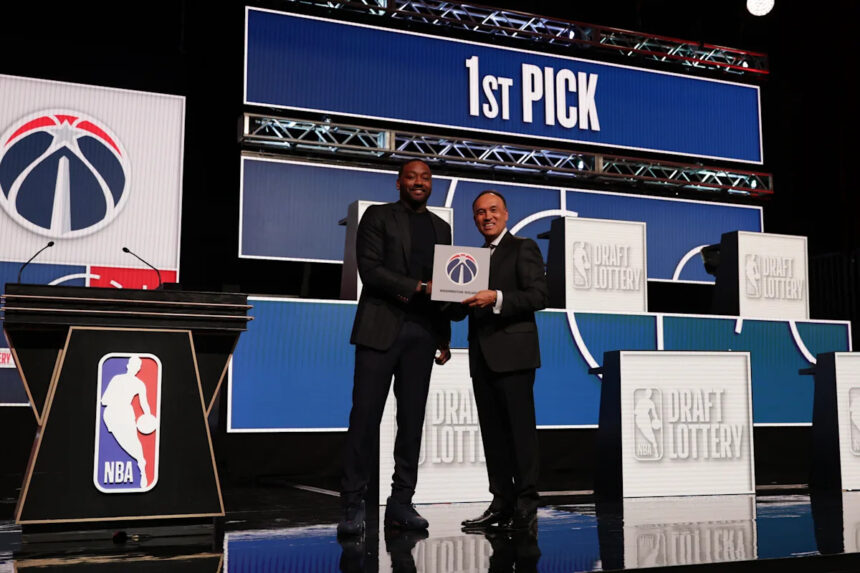
Let’s call this what it is: a victory for strategic incompetence. The Washington Wizards set the tone early. They traded for Trae Young and Anthony Davis in separate deals, then promptly sat them for the remainder of the season. No fake injuries. No vague load management. They just didn’t play them. It was brazen, it was transparent, and it worked. Washington landed the No. 1 overall pick, which they will likely use on BYU forward AJ Dybantsa, a generational two-way talent who can score from all three levels.
The Utah Jazz were fined for violating the player participation policy, but they didn’t care. They traded for Jaren Jackson Jr. and let him play exactly three games before shutting him down. The message was clear: we are not here to win. Utah’s reward? The No. 2 pick, likely to be Duke power forward Cam Boozer, a polished, high-IQ big man who can anchor a franchise for a decade.
The Memphis Grizzlies took a different route. They traded away Jaren Jackson Jr., slow-played the returns of Ja Morant and Desmond Bane, and demoted promising rookie Rayan Rupert to the G League the morning after he dropped a 30-point triple-double. It was a masterclass in asset management disguised as tanking. Memphis now holds the No. 3 pick, which they’ll likely use on Kansas guard Darryn Peterson, an explosive scorer who fits perfectly next to Morant.
Finally, the Chicago Bulls traded away their entire veteran core—DeMar DeRozan, Zach LaVine, Nikola Vučević—for a nonsensical roster featuring seven guards. They free-fell out of the play-in and straight into the lottery, landing the No. 4 pick. Expect them to take North Carolina big Caleb Wilson, a versatile stretch five who can shoot, pass, and protect the rim.
Key takeaway: Under the current lottery rules, tanking works. The league may hate it, but these four teams made the smart choice. This draft class—headlined by Dybantsa, Boozer, Peterson, and Wilson—is absolutely worth the embarrassment.
The Losers: Oklahoma City Thunder and the “Too Good to Tank” Trap
The Oklahoma City Thunder are the biggest losers of lottery night, and it’s not even close. OKC entered the season with a cache of future picks, including swaps and unprotected selections from multiple teams. But their own pick, which they hoped would slide into the top five, fell to No. 8. Why? Because the Thunder were too good. They won too many games. They played their young core—Shai Gilgeous-Alexander, Chet Holmgren, Jalen Williams—and it cost them.
Now, OKC faces a brutal reality: they have no clear path to adding a top-tier prospect without trading the farm. Their roster is deep, but it lacks the high-end lottery talent that could push them over the top. The Thunder’s front office, led by Sam Presti, is brilliant, but they’re now stuck in the dreaded middle ground—too good to tank, not good enough to win a title. That’s a dangerous place to be.
Bullet points on OKC’s lottery disaster:
- Own pick fell to No. 8, missing out on the top four.
- No clear trade partner to move up without gutting the roster.
- Missed opportunity to add a franchise-altering prospect like Dybantsa or Boozer.
- Now reliant on player development and marginal improvements.
The Thunder’s future is still bright, but this lottery loss stings. They needed a star, and they got a role player.
The Pacers: Stuck in the Middle, Again
The Indiana Pacers are the quiet losers of this lottery. They didn’t tank, they didn’t cheat, and they didn’t embarrass themselves. But they also didn’t win. Indiana finished with the 10th-worst record, which gave them a 13.9% chance at a top-four pick. They didn’t get it. Instead, they slid to No. 10, a spot that almost guarantees a role player rather than a star.
The Pacers’ roster is a puzzle with missing pieces. Tyrese Haliburton is a superstar, but he needs help. Myles Turner is a solid two-way center, but he’s not a No. 2 option. The rest of the roster is a collection of complementary pieces—Bennedict Mathurin, Jarace Walker, Obi Toppin—who have yet to prove they can be consistent contributors on a winning team.
Indiana’s problem is clear: they are too good to get a top pick, but not good enough to compete in the Eastern Conference. They are the definition of NBA purgatory. Unless they hit a home run at No. 10—and this draft is deep, but not that deep—they’ll be stuck in the same cycle for years.
What the Pacers should do:
- Trade the No. 10 pick for a proven veteran who can space the floor.
- Package Mathurin and a future pick to move into the top six.
- Or, accept mediocrity and hope for a miracle in free agency.
None of these options are ideal. The Pacers are losers because they have no clear path forward.
The Surprise Winners: San Antonio Spurs and Houston Rockets
While the tankers celebrated, the San Antonio Spurs quietly won the lottery without even trying. The Spurs didn’t tank—they played Victor Wembanyama, Devin Vassell, and Keldon Johnson all season. They won more games than expected. And yet, they landed the No. 5 pick, thanks to a favorable bounce of the ping-pong balls.
San Antonio now has two lottery picks in the top 10 (No. 5 and No. 9, via the Toronto Raptors). They can package these picks to move up for a star like Darryn Peterson, or they can add two quality prospects to surround Wembanyama. This is a massive win for a franchise that refused to tank.
The Houston Rockets also come out as winners. They own the No. 6 pick, which they can use to add another young piece to a core that already includes Jalen Green, Alperen Şengün, and Amen Thompson. Houston didn’t need to tank—they’re already building a contender. This pick is just icing on the cake.
Final prediction: The Spurs will trade up to No. 3 or No. 4 to grab Caleb Wilson, pairing him with Wembanyama for the most dominant frontcourt in the league. The Rockets will draft a shooter at No. 6 and immediately contend for a playoff spot.
Conclusion: The System is Broken, But It Worked
The 2026 NBA Draft Lottery exposed everything wrong with the league’s incentive structure. Teams that tanked shamelessly were rewarded. Teams that competed honestly were punished. The Wizards, Jazz, Grizzlies, and Bulls made a calculated bet that the league wouldn’t stop them, and they won. The Thunder and Pacers learned a harsh lesson: there is no reward for being almost good enough.
But here’s the silver lining: this draft class is loaded. AJ Dybantsa, Cam Boozer, Darryn Peterson, and Caleb Wilson are legitimate franchise cornerstones. The top four teams earned their picks, even if the method was ugly. And for the rest of the league? It’s time to rethink the strategy. Either tank harder, or get better. There is no middle ground anymore.
As for the fans? Buckle up. The 2027 season will be even worse. And that’s exactly what the league deserves.
Source: Based on news from Yahoo Sports.