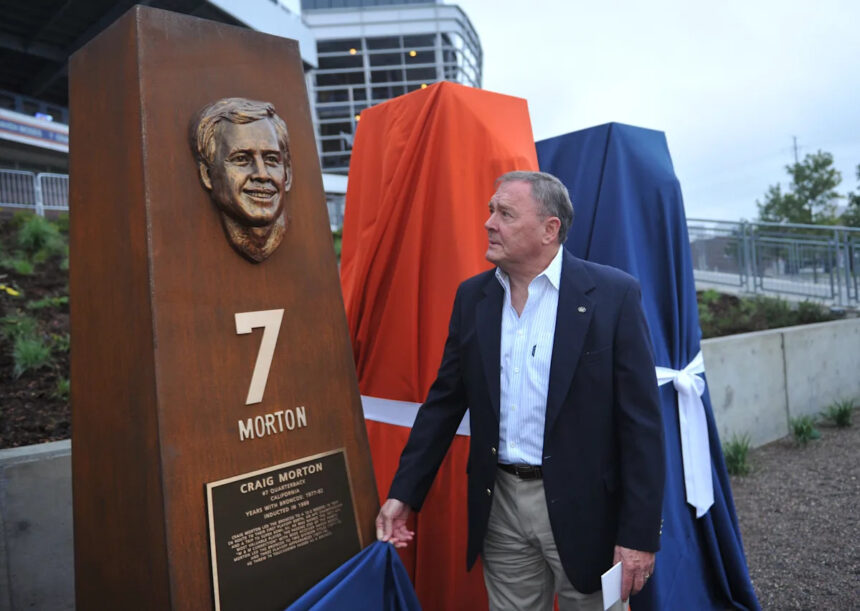
Remembering Craig Morton: The Gunslinger Who Bridged Two Eras and Defined the Broncos’ Rise
The NFL lost a true pioneer and a remarkable talent this week. Craig Morton, the legendary quarterback who carved out an 18-year career spanning the Dallas Cowboys, New York Giants, and Denver Broncos, passed away on Saturday at the age of 83. For a generation of football fans, Morton was more than just a signal-caller; he was a symbol of resilience, a man who tasted the bitterest defeat before tasting Super Bowl glory, and the architect of the Denver Broncos’ first-ever championship run.
Morton’s death closes the book on a career that was as complex as it was impactful. He was the No. 5 overall pick in the 1965 NFL Draft, a star at Cal who arrived in Dallas with immense pressure. He spent a decade in the shadow of the legendary Roger Staubach, yet when called upon, he delivered a Super Bowl ring. But it was his second act in Denver—where he transformed a laughingstock franchise into a legitimate contender—that truly cemented his legacy. Let’s break down the career, the context, and the lasting impact of one of football’s most fascinating figures.
The Dallas Years: A Ring, A Rivalry, and a Trade
To understand Craig Morton, you must first understand the pressure cooker of 1960s Dallas. The Cowboys were “America’s Team” in waiting, a roster loaded with talent but perpetually falling short. Drafted to be the franchise savior, Morton was immediately thrust into a quarterback controversy that would define his early years. He was the starter for the Cowboys’ first Super Bowl appearance in 1970 (Super Bowl V), a heartbreaking 16-13 loss to the Baltimore Colts where Morton threw four interceptions. It was a brutal baptism.
However, Morton’s resilience shone through. He remained the starter for the 1971 season, leading Dallas to a 10-1 record. But a late-season injury opened the door for Roger Staubach, and “Captain America” never looked back. Morton was relegated to backup duty for the rest of the season—including the Cowboys’ dominant 24-3 victory over the Miami Dolphins in Super Bowl VI. He earned a ring, but it was a bittersweet prize. He was the backup on a championship team, a role that felt like a consolation.
For the next two seasons, the Staubach-Morton quarterback controversy was the NFL’s most compelling drama. Morton was the pure passer, the strong-armed gunslinger. Staubach was the scrambler, the leader. The Cowboys’ brain trust, led by Tom Landry, ultimately chose Staubach. In 1974, they traded Morton to the New York Giants for a package of draft picks. It was a seismic move.
Key Stats from Morton’s Cowboys Tenure:
- Drafted: No. 5 overall, 1965
- Years: 1965-1974
- Super Bowl Rings: 1 (Super Bowl VI, as backup)
- Key Moment: Started Super Bowl V, lost; won ring as backup in Super Bowl VI.
- Legacy: The ultimate “what-if” in Dallas, but a vital part of the Cowboys’ early success.
The Denver Renaissance: The First Super Bowl for the Mile High City
After a forgettable stint with the Giants (1974-1976), Morton’s career was on life support. He was 33 years old, a journeyman with a reputation for inconsistency. Then, the Denver Broncos called. It was the move that changed everything.
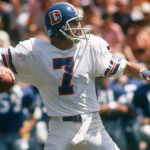
In 1977, the Broncos were a franchise defined by failure. They had never made the playoffs. They had never had a winning record. Enter Craig Morton. Head coach Red Miller and defensive coordinator Joe Collier had built a ferocious defense known as the “Orange Crush,” but they needed a steady hand at quarterback to manage the game and deliver in clutch moments. Morton was that man.
The 1977 season was a fairy tale. The Broncos went 12-2 in the regular season, a franchise record for wins. Morton wasn’t flashy, but he was efficient. He threw for 1,929 yards, 14 touchdowns, and just 8 interceptions. He was the calm in the storm, the veteran who could read defenses and get the ball to his playmakers. The Broncos defeated the Pittsburgh Steelers and the Oakland Raiders in the playoffs to reach Super Bowl XII.
The irony of Super Bowl XII was staggering. The opponent? The Dallas Cowboys. The quarterback on the other side? Roger Staubach. It was the ultimate revenge game for Morton. Unfortunately, the script didn’t hold. The Cowboys’ “Doomsday Defense” was relentless. Morton threw four interceptions, and the Broncos lost 27-10. It was a heartbreaking mirror image of his Super Bowl V loss. He had led the franchise to the promised land, but he couldn’t finish the job.
Expert Analysis: Morton’s 1977 season is a masterclass in “game manager” quarterbacking. He didn’t have the arm of a young John Elway (who would arrive in 1983), but he had the football IQ to exploit defenses. His ability to avoid turnovers during the regular season was the single biggest factor in Denver’s turnaround. He turned a team that was 9-5 the year before into a 12-2 juggernaut simply by not losing games. That is a skill that is often undervalued by modern analysts.
The Legacy: More Than Just a Stat Line
Craig Morton retired after the 1982 season with 27,908 passing yards, 183 touchdowns, and 187 interceptions. Those numbers, by today’s standards, look pedestrian. But in the context of the 1970s and early 80s, they were elite. He played in an era where defensive backs could mug receivers, where the passing game was a risk-reward proposition, and where a 3,000-yard season was a Hall of Fame achievement.
His legacy, however, is defined by his courage. He is one of the few quarterbacks in NFL history to start a Super Bowl for two different teams (Cowboys in V, Broncos in XII). He is the only quarterback to lose a Super Bowl with one team and then lead a different franchise to its first Super Bowl appearance. That is a unique, and incredibly difficult, achievement.
Prediction: In the coming years, as the Broncos continue to search for their next franchise quarterback, the shadow of Craig Morton will loom large. He represents the “blue-collar” ethos of the Denver fanbase. He wasn’t the most talented guy on the field, but he was the toughest. I predict that the Broncos will honor him in a significant way during the 2024 season—perhaps a patch on the uniform or a permanent tribute at Empower Field at Mile High. His impact on the franchise’s identity is immeasurable.
The New York Giants, for whom he played just 29 games, released a poignant statement: “We are saddened to hear of Craig’s passing. He was a great leader and teammate. Our thoughts are with his family and friends.” That sentiment was echoed across the league. From the Cowboys to the Giants to the Broncos, Morton left a mark on every locker room he entered.
Conclusion: The Gunslinger Who Never Quit
Craig Morton’s passing at 83 is a reminder that the NFL is a league of eras, and the men who built them are fading away. He was a bridge between the leather-helmet days and the modern aerial attack. He was the quarterback who taught the Denver Broncos how to win. He was the man who stood in the pocket, took the hit, and got back up.
He may not have a bust in Canton, but he has something more important: a permanent place in the hearts of three fanbases. For Cowboys fans, he was the man who held the torch before Staubach. For Giants fans, he was a bright spot in a dark decade. For Broncos fans, he was the original hero, the man who showed a franchise that had never tasted success what it felt like to be a champion.
Rest in peace, Craig Morton. You were the original gunslinger, and you will not be forgotten.
Source: Based on news from Yahoo Sports.