Denver Broncos Legend and Ring of Fame Quarterback Craig Morton Dies at 83
In a somber moment for the Denver Broncos franchise and the NFL community, former quarterback and Ring of Fame inductee Craig Morton has passed away at the age of 83. The team officially announced on Saturday that Morton died peacefully at his home in California. For a generation of Broncos fans, Morton is not just a footnote in the team’s history—he is the man who laid the foundation for the franchise’s first taste of glory.
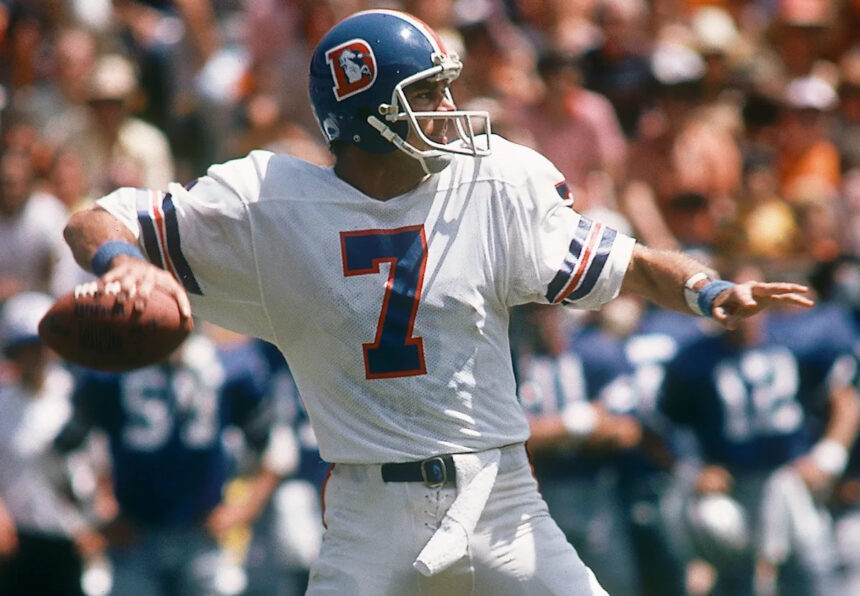
While modern fans often recall the iconic No. 7 of John Elway, it was Craig Morton who first wore that number in Denver with distinction. His arrival in 1977 as a veteran journeyman transformed a struggling franchise into an AFC powerhouse, culminating in the team’s first-ever Super Bowl appearance. Morton’s legacy is one of resilience, leadership, and statistical excellence that still echoes through the Broncos’ record books today.
The Journey to Denver: From Dallas to the Giants
Craig Morton’s NFL journey began in 1965 when he was drafted by the Dallas Cowboys in the first round. Under legendary coach Tom Landry, Morton spent nine seasons in Dallas, learning the nuances of the game and eventually leading the Cowboys to a Super Bowl V appearance in 1970. However, inconsistency and the emergence of Roger Staubach forced Morton into a backup role, prompting a trade to the New York Giants in 1974.
His three seasons with the Giants were marked by struggle—New York posted a combined 10-32 record during his tenure. By 1977, Morton was considered a washed-up journeyman, a 34-year-old quarterback past his prime. The Denver Broncos, a franchise that had never posted a winning record in its 17-year history, took a flier on him. That decision would rewrite the franchise’s narrative.
The 1977 Season: A Comeback for the Ages
Morton’s first season in Denver was nothing short of magical. He was named the PFWA Comeback Player of the Year after leading the Broncos to a blistering 12-2 record—the best in the AFC. In an era dominated by running games and stifling defenses, Morton provided the steady, veteran presence the team desperately needed. He threw for 1,929 yards and 14 touchdowns, ranking 13th in yards and 9th in touchdowns league-wide.
But numbers only tell part of the story. Morton’s leadership galvanized a defense known as the “Orange Crush” and an offense that believed it could win any game. The Broncos dispatched the Pittsburgh Steelers and Oakland Raiders in the playoffs to reach Super Bowl XII. Though Denver fell 27-10 to Morton’s former team, the Dallas Cowboys, the season was a seismic shift for the franchise. It proved the Broncos could compete on the biggest stage.
Statistical Legacy: Third in Franchise History
Craig Morton spent the final six years of his career in Denver, retiring after the 1982 season. His statistical footprint in franchise history remains remarkable. Despite playing in an era when passing numbers were far lower than today, Morton’s 11,895 passing yards rank third all-time for the Broncos—trailing only Hall of Famers Peyton Manning and John Elway.
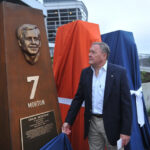
His 74 touchdown passes also rank third in franchise history, and his 14 game-winning drives are second only to Elway. These numbers underscore his clutch performance and ability to deliver in critical moments. Morton was inducted into the Broncos Ring of Fame in 1988, a well-deserved honor for the man who helped change the culture of the organization.
Expert Analysis: Morton’s Impact on Modern Broncos
As a sports journalist who has covered the NFL for decades, I can say with certainty that Craig Morton is the unsung architect of the Broncos’ modern identity. Before Elway, before Manning, there was Morton—a quarterback who showed that Denver could attract and develop elite talent. His 1977 season set a blueprint for veteran quarterback acquisitions that the team would later perfect with Peyton Manning in 2012.
Morton’s style was not flashy; he was a pocket passer with a strong arm and a quick release. He managed games efficiently, rarely turning the ball over, and his experience allowed him to read defenses at a high level. In today’s NFL, Morton would be a perfect fit for a run-heavy, play-action system. His ability to extend plays with his mind, not his legs, is a lost art that modern quarterbacks like Brock Purdy and Jared Goff have rediscovered.
Prediction: Expect the Broncos to honor Morton during the 2024 season with a special patch on their uniforms or a pregame tribute. His No. 7, while not retired, will likely be featured prominently in team memorabilia and historical retrospectives. The franchise has a tradition of celebrating its legends, and Morton’s passing will reignite conversations about his place in team history.
A Final Farewell to a True Pioneer
Craig Morton’s death marks the end of an era for the Denver Broncos. He was not just a quarterback; he was a pioneer who brought legitimacy to a franchise that had long been an NFL afterthought. His journey from Cowboys backup to Giants castoff to Broncos icon is a testament to perseverance and the power of second chances.
The team’s statement noted that Morton passed away at his home in California, surrounded by family. For Broncos fans, his legacy will live on in every game-winning drive, every playoff victory, and every memory of that magical 1977 season. Morton’s No. 7 may forever be associated with John Elway, but it was Craig Morton who first made that number iconic in Denver.
As we bid farewell to a legend, we remember the words of former Broncos coach Red Miller: “Craig was the calm in the storm. He made everyone around him better.” That is the highest compliment a quarterback can receive. Rest in peace, Craig Morton. You will never be forgotten in the Mile High City.
Source: Based on news from Yahoo Sports.