Why Not Us? How the US ‘Golden Generation’ is Rewriting the World Cup Narrative
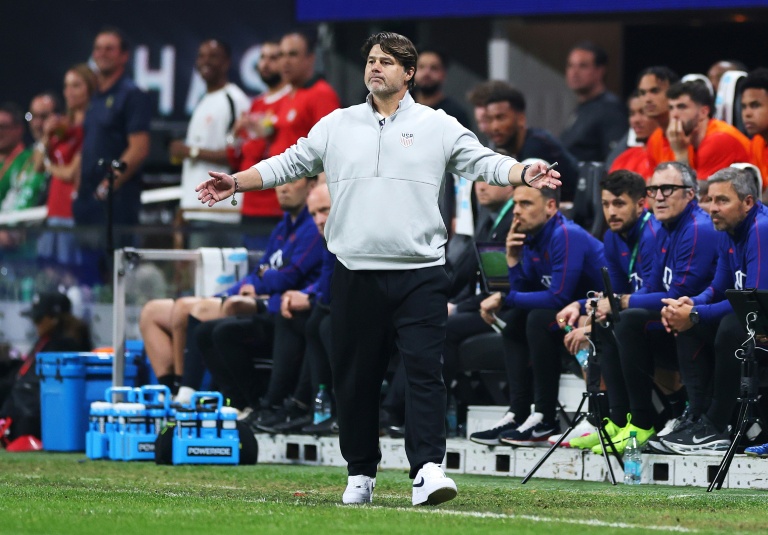
The question hangs in the air, heavy with audacity and ambition. It was posed not by a fan in a crowded bar, but by the man tasked with orchestrating the greatest heist in American soccer history. “Why not us?” Mauricio Pochettino asked, his Argentine accent slicing through the spring air. For decades, the United States men’s national team has been the polite guest at the World Cup table—appreciated, occasionally dangerous, but never truly expected to lift the trophy. That script is being torn up. With the 2026 World Cup set to kick off on home soil, a perfect storm of home advantage, a forgiving group draw, and a roster of players widely celebrated as the nation’s “golden generation” has transformed the co-hosts from plucky underdogs into a team that demands to be taken seriously.
The global superpower may historically be a footballing minnow, but the landscape has shifted seismically since the US last hosted the tournament in 1994. Back then, the sport was a curiosity, a suburban pastime played on manicured fields while the rest of the world sneered. Three decades later, soccer has boomed. Major League Soccer is a legitimate destination league. The women’s national team has long set the standard for excellence. And now, the men’s side is finally catching up, stocked with players who are not just surviving but thriving at the highest levels of European football. Pochettino’s challenge is no longer about building a team that can compete; it is about building a team that can win.
The Golden Generation: From Minnows to Mainstays
Let us dispense with the old narrative. The United States is no longer merely “making up the numbers.” The proof is not in the FIFA rankings, but in the starting XIs of Europe’s elite clubs. The spine of this team is forged in the crucible of the Champions League and the most demanding domestic leagues on the planet. Christian Pulisic, once a prodigy at Borussia Dortmund, has reinvented himself at AC Milan. He is no longer just the face of American soccer; he is a serial winner, a player who has tasted Serie A glory and carries the swagger of a champion. Alongside him, Weston McKennie anchors the midfield at Juventus, a box-to-box dynamo whose physicality and technical ability make him a nightmare for any opponent.
Then there is Tyler Adams, the captain, the heartbeat. At Bournemouth, a club that has defied every expectation in the Premier League, Adams has become the quintessential modern defensive midfielder. His reading of the game, his relentless pressing, and his leadership are the glue that holds this generation together. But the depth extends far beyond the headline names. Gio Reyna is a creative force at Borussia Dortmund, a player capable of unlocking the tightest defenses with a single pass. Folarin Balogun, the Arsenal academy product who chose the Stars and Stripes, offers a clinical edge in front of goal that the US has lacked for years. Sergiño Dest, Tim Weah, Yunus Musah—the list goes on. This is not a one-man show. This is a squad where every position has competition, where players are pushing each other at clubs like Monaco, PSV Eindhoven, and Leeds United.
Key players to watch in 2026:
- Christian Pulisic (AC Milan): The talisman. His dribbling and directness are the team’s primary attacking weapon.
- Tyler Adams (Bournemouth): The captain and the brain. His ability to break up play and dictate tempo is non-negotiable.
- Weston McKennie (Juventus): The engine. A goal-scoring midfielder who provides aerial threat and relentless energy.
- Gio Reyna (Borussia Dortmund): The magician. His vision and creativity could be the difference in tight knockout games.
The Pochettino Factor: Belief as a Weapon
When the US Soccer Federation hired Mauricio Pochettino in late 2024, the message was clear: this is no longer a development project. This is a win-now mandate. Pochettino is a manager of immense pedigree, having guided Tottenham Hotspur to a Champions League final, won trophies at Paris Saint-Germain, and managed Chelsea. He is not a diplomat; he is a builder of cultures. His famous “Pochettino press” is a system that demands relentless physical output, tactical discipline, and an unshakable belief in the collective.
“I am here because I believe that we can win,” Pochettino said upon his arrival. Those words were not mere platitudes. They were a challenge to a fanbase that has been conditioned to hope for a quarterfinal run and call it a success. The Argentine has spent his career instilling a winner’s mentality in his players, from Harry Kane at Spurs to Kylian Mbappé at PSG. Now, he is applying that same alchemy to a group of young Americans who are hungry for validation.
The spring press conference where he repeated “Why not us? Why not us? Why not us?” was a masterclass in psychological warfare. He is daring the players to dream, but more importantly, he is daring them to do the work. His tactical flexibility is another weapon. Pochettino can set up a team to dominate possession or to counter-attack with devastating speed. With the US, he has the raw materials to do both. The question is whether he can mold this collection of individual talent into a cohesive unit that can withstand the pressure of a home World Cup.
Home Advantage and a Kind Draw: The Path is Paved
The stars are aligning, and the US could not have asked for a more favorable path to the knockout stages. The group draw for the co-hosts has been widely described as forgiving. The US will face opponents that, on paper, are beatable. This is not a group of death. It is a group of opportunity. Avoiding a European superpower or a South American giant in the opening phase allows the team to build momentum, to settle into the tournament, and to let the home crowd become a factor.
Home advantage in a World Cup is not just about noise. It is about comfort. It is about sleeping in your own bed, eating familiar food, and having the entire nation behind you. The US hosted in 1994, and while the team was a ragtag group of college kids and lower-league journeymen, the energy of the stadiums was electric. In 2026, the infrastructure is better, the talent is superior, and the expectations are exponentially higher. Matches will be played in iconic venues like the MetLife Stadium in New Jersey, the Rose Bowl in California, and AT&T Stadium in Texas. The US will have a true home-field advantage, especially if they can avoid the logistical nightmares of cross-country travel that plagued previous hosts.
The group stage is the first test. If the US can top their group—a realistic and necessary goal—they will likely face a more manageable opponent in the Round of 16. From there, the tournament opens up. The quarterfinals, the semifinals, the final—each step becomes a battle of belief. Pochettino’s “Why not us?” mantra is designed to carry the team through those moments of doubt. The path is there. The question is whether the golden generation has the steel to walk it.
Prediction: A Quarterfinal Floor, a Final Ceiling
Let us be realistic. The United States is not the favorite to win the 2026 World Cup. That tag belongs to the usual suspects: Argentina, Brazil, France, England. But the gap has narrowed significantly. The US has the talent to beat any team on a given day. The key is consistency and composure under pressure. I see this team reaching the quarterfinals as a baseline expectation. Anything less would be a disappointment given the draw and the home crowd.
However, the ceiling is higher. If Pulisic is in top form, if Adams controls the midfield, and if the defense holds firm, a run to the semifinals is not a fantasy. It is a legitimate possibility. The 2002 team reached the quarterfinals with far less talent. This group has the individual quality and the tactical guidance to go further. The real test will be a potential quarterfinal or semifinal match against a European giant. In those games, the pressure will be immense. The crowd will be a factor, but so will the opponent’s experience. Pochettino’s job is to ensure that his players do not freeze. He must make them believe that they belong on that stage.
My final prediction: The US will advance from their group with relative ease. They will win a tight Round of 16 match, setting up a quarterfinal clash that will define this generation. Whether they win or lose, the journey will be transformative. The “golden generation” will prove that the United States is no longer a footballing minnow. They are a rising tide, and in 2026, they have the chance to flood the world’s biggest stage.
Conclusion: The Time is Now
For decades, American soccer fans have been told to wait. Wait for the infrastructure. Wait for the youth development. Wait for the next generation. The wait is over. The golden generation is here, and they are playing at home. Mauricio Pochettino has given them permission to dream, and he has given the fans permission to demand more. “Why not us?” is not a question; it is a statement of intent. The US is no longer just participating in the World Cup. They are hosting it, and they are aiming to conquer it. The world may still see the United States as a footballing curiosity. But by July 2026, that perception will be shattered. The stars and stripes are ready to fly higher than ever before. The answer to Pochettino’s question is simple: There is no reason it cannot be them. The only thing left is to go out and prove it.
Source: Based on news from Yahoo Sports.