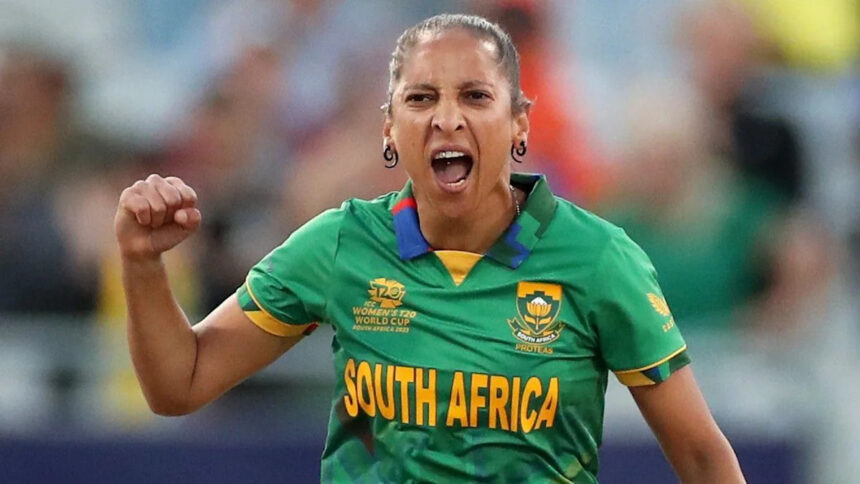
Shabnim Ismail Reverses Retirement: South Africa’s Pace Ace Returns to Hunt T20 World Cup Glory
In a move that has sent shockwaves through the women’s cricket landscape, South Africa’s all-time leading T20 wicket-taker, Shabnim Ismail, has officially reversed her international retirement. The 37-year-old speedster has been named in the Proteas’ squad for the upcoming Women’s T20 World Cup in England, a decision that instantly transforms the team’s title credentials.
Ismail, widely regarded as one of the fastest bowlers the women’s game has ever seen, last pulled on the green and gold more than three years ago. Her return, coupled with the availability of Marizanne Kapp and the continued resurgence of Dane van Niekerk, gives South Africa a formidable, battle-hardened core as they prepare to chase their first-ever ICC trophy.
This is not a nostalgia tour. This is a calculated, high-stakes gamble by a team that has finished as runners-up at the last two T20 World Cups. And with Ismail’s raw pace back in the attack, the Proteas suddenly look like the most dangerous side in the tournament.
The Return of a Legend: Why Ismail’s U-Turn Changes Everything
When Shabnim Ismail stepped away from international cricket in early 2022, it felt like the end of an era. She had been the spearhead of South Africa’s bowling attack for over a decade, a bowler who could consistently clock speeds above 120 km/h and unsettle even the most accomplished batters. Her retirement left a void in raw pace that no other South African bowler has truly filled.
Fast forward to 2025, and Ismail is back. The decision to reverse her retirement was not made lightly. Sources close to the team suggest that the lure of one final tilt at a World Cup, combined with a stellar season in domestic franchise leagues, convinced her that she still has plenty to offer.
“She is still one of the fastest bowlers in the world,” a team insider confirmed. “Her numbers in the recent domestic T20 competitions were outstanding. She’s bowling with more control and intelligence than ever.”
Ismail’s return is particularly significant because of her record. She is South Africa’s all-time leading wicket-taker in T20Is, with 126 wickets in 113 matches at an economy rate that has often been underrated. But beyond the numbers, she brings an intimidating presence. Batters know that facing Ismail means facing pace, bounce, and a relentless line just outside off stump.
- All-time T20I wicket leader for South Africa (126 wickets)
- One of the fastest deliveries ever recorded in women’s cricket (over 128 km/h)
- Proven big-match performer with experience in multiple World Cups
Her inclusion means that South Africa now have a pace battery that can match any team in the world. Alongside Marizanne Kapp, who is back to full fitness after a recent illness, and the guile of Nadine de Klerk, the Proteas have depth, variety, and now, extreme pace.
Key Additions and a Resurgent Squad: Kapp and van Niekerk Join the Charge
Ismail is not the only headline-maker in this squad. The return of Marizanne Kapp is equally vital. Kapp, arguably the most valuable all-rounder in women’s cricket, missed recent matches due to illness but is now fully recovered. Her ability to swing the new ball, bowl crucial death overs, and smash quick runs in the middle order makes her indispensable.
Then there is Dane van Niekerk. The former captain, who also came out of retirement in the past year, has been included despite a recent calf injury. Van Niekerk’s leg-spin and calm leadership experience are assets that cannot be replicated. If she is fully fit, she adds a strategic layer to the bowling attack that South Africa have missed.
This trio—Ismail, Kapp, and van Niekerk—represents over 30 years of international experience. In a World Cup environment, where pressure can suffocate younger players, their presence is priceless.
“Having three world-class players like that back in the same squad is a massive boost,” said a senior cricket analyst. “It gives the captain multiple match-winning options and takes the pressure off the younger bowlers.”
The squad also benefits from recent form. South Africa recently dismantled the ODI world champions, India, winning a five-match T20 series 4-1. That result, achieved without Ismail, demonstrated the team’s growing depth. With her addition, the Proteas look even more complete.
Expert Analysis: Can South Africa Finally Break the Glass Ceiling?
Let’s be clear: South Africa have been the nearly-women of T20 cricket. They reached the final in 2023 and again in 2024, only to fall short against Australia on both occasions. The narrative has been one of valiant effort but ultimate heartbreak.
However, this squad feels different. The inclusion of Shabnim Ismail directly addresses their biggest weakness in previous finals: the lack of a genuine wicket-taking threat with the new ball. In past World Cup finals, Australia’s openers were able to get off to flying starts because South Africa lacked early penetration. Ismail can change that.
Her ability to generate steep bounce and consistently hit the 125+ km/h mark will force opposing batters into mistakes. Even if she doesn’t take wickets, her economy rate and pressure create opportunities for bowlers at the other end.
Another factor is the England conditions. The T20 World Cup will be played on English soil in June, where pitches often offer seam movement and variable bounce. This suits Ismail’s style perfectly. She is not just a flat-track bully; she thrives on surfaces that reward aggression and accuracy.
“If Ismail is bowling 128 km/h with the new ball in England, she will be unplayable on her day,” one former international said. “She has the experience to adapt her lengths. This is a smart selection.”
However, there are risks. Ismail is 37 and has not played international cricket for three years. The step up from domestic leagues to World Cup intensity is significant. Fitness will be closely monitored, and the team management will need to manage her workload carefully. But given her professionalism and recent form, those concerns appear manageable.
The squad also has a favorable group stage draw. They open against Australia on 13 June—a blockbuster clash that will immediately test their credentials. After that, they face Pakistan, India, the Netherlands, and Bangladesh. That is a tough but navigable path to the knockout stages.
- Opening match: vs Australia (13 June) – the ultimate litmus test
- Key group games: vs India and Pakistan
- Predicted finish: Semi-finals at minimum; genuine title contenders
My expert prediction? South Africa will reach the final for the third consecutive time. Whether they can finally go one step further depends on how quickly Ismail, Kapp, and van Niekerk can rediscover their international rhythm. If they do, the trophy could finally come home.
Strong Conclusion: A Last Dance Worth Watching
This is not a farewell tour. This is a statement of intent. Shabnim Ismail’s return is the final piece of a puzzle that South African cricket has been trying to solve for years. She brings the X-factor, the intimidation, and the big-match experience that separates contenders from champions.
The Women’s T20 World Cup in England is shaping up to be one of the most competitive tournaments in history. Australia remain the team to beat, but England on home soil, India’s rising stars, and New Zealand’s resilience all pose threats. Yet, no team has undergone a more dramatic transformation in the lead-up than the Proteas.
With Ismail steaming in from the Pavilion End, Kapp holding the other end, and van Niekerk spinning webs in the middle overs, South Africa have the tools to write a new chapter. The question is no longer whether they can compete. The question is whether they can finish the job.
For Ismail, this is the last dance. For South Africa, it might just be the perfect moment to finally claim the crown. The world will be watching when they take on Australia on June 13. And if Shabnim Ismail has anything to say about it, the speed gun will be working overtime.
Source: Based on news from Yahoo Sports.