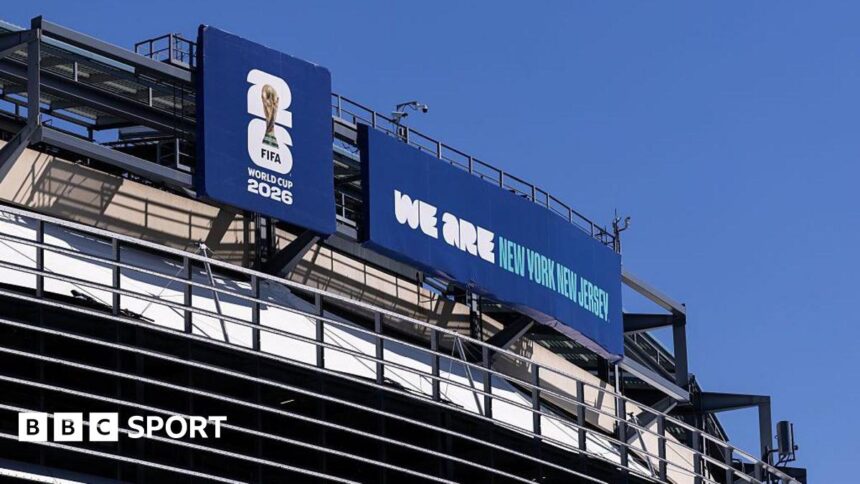
World Cup 2026: Transport Prices Slashed After Fan Fury Over “Astronomical” Costs
The beautiful game is coming to New Jersey, but the ugly reality of pricing nearly spoiled the party. Following a fierce backlash from supporters, organizers have dramatically cut the cost of travel to World Cup matches at the iconic MetLife Stadium—which will be temporarily rebranded as New York/New Jersey Stadium for the tournament. This is a major win for the average fan, but it raises critical questions about how much the 2026 World Cup will truly cost the dedicated supporter.
For months, the Football Supporters’ Association (FSA) and other fan groups across the Atlantic have been sounding the alarm. The original transport pricing felt less like a ticket to a game and more like a ransom note. Now, after a public relations nightmare, the local organizing committee has blinked. Let’s break down the cuts, the context, and what this means for the 80,000-plus fans expected to flock to the Meadowlands.
From Outrage to Action: The Price Cuts Explained
The numbers were staggering. When the initial transport packages were announced, a round-trip train ticket from New York Penn Station to the stadium was priced at a jaw-dropping $150. A shuttle bus from Secaucus Junction, a journey of less than 15 minutes, was set to cost $80. For a family of four, that meant spending nearly $500 just to get to the turnstiles and back.
Thomas Concannon, the leader of the England fan group within the FSA, did not mince words. He described the original pricing as “astronomical” and “completely out of the norm” for a major sporting event. His voice, amplified by a wave of social media fury and mainstream press coverage, forced a recalculation.
The new rates represent a significant victory for consumer advocacy:
- Train Ticket: Reduced from $150 to $98 (a 35% reduction).
- Shuttle Bus: Reduced from $80 to $20 (a staggering 75% reduction).
This is not just a discount; it is an admission of error. The original $80 shuttle bus price—more expensive than a match ticket in many lower-tier games—was a clear miscalculation of the fan economy. The new $20 fare brings it closer to the cost of a standard Uber Pool or a typical event-day shuttle in the United States.
Expert Analysis: From a logistics standpoint, this is smart business. Empty trains are a financial disaster. A full train at $98 generates far more revenue than a half-empty train at $150. The organizers realized that price gouging on transport creates a terrible first and last impression of the tournament. Fans who feel ripped off on the way to the game are less likely to spend money on merchandise, food, and beverages inside the stadium.
Why MetLife Stadium is the “New York/New Jersey Stadium”
A quick note on branding: You will not see a “MetLife” sign anywhere near the field during the World Cup. As part of FIFA’s strict policy on corporate sponsored names, the venue will be officially known as New York/New Jersey Stadium throughout the tournament.
This is standard procedure for FIFA, which bans all non-FIFA partner branding from the stadium footprint. The same policy applied to the Allianz Arena in Munich (known as “FIFA World Cup Stadium Munich” in 2006) and the Emirates Stadium in London for the 2015 Women’s World Cup. While it creates a temporary identity crisis for the venue, it ensures that the global sponsors—who pay billions for exclusivity—are the only brands visible on the world’s biggest stage.
For fans, the address remains the same: East Rutherford, New Jersey. The stadium will host eight matches, including the World Cup Final and one of England’s Group L games. This makes the transport issue particularly acute for English supporters, who are known for traveling in large numbers and expecting reliable, affordable infrastructure.
The Deeper Problem: Is This a One-Off or a Trend?
While the transport price cut is welcome, it is a symptom of a larger tension within the 2026 World Cup organization. The United States, Canada, and Mexico are hosting a tournament that is designed to be the most commercially lucrative in history. This means high ticket prices, premium hospitality packages, and a general push toward maximizing revenue per visitor.
However, the soul of the World Cup has always been the fan. The tournament thrives on the energy of supporters who camp out, sing in the streets, and spend weeks following their teams. If those fans are priced out, the atmosphere suffers. The FSA’s intervention was not just about a train ticket; it was a warning shot across the bow of the organizing committee.
What to watch for: The battle over ticket pricing is far from over. While match tickets have not been officially slashed, secondary market prices are already sky-high. The real test will be whether FIFA and local organizers extend this “fan-first” logic to other costs, such as food and beverage concessions inside the stadium and the cost of official fan merchandise.
There is also the issue of accessibility. MetLife Stadium is notoriously difficult to get to. It sits in a swampy area of the Meadowlands, far from the dense subway network of Manhattan. The $20 shuttle bus is a lifeline, but it relies on fans first getting to Secaucus Junction via NJ Transit. If that mainline train service is also subject to surge pricing or delays, the entire travel experience remains fragile.
Predictions for the 2026 Fan Experience
Based on this transport victory, here are three predictions for how the 2026 World Cup will unfold for the average traveler:
1. Dynamic Pricing Will Be Tested (and Likely Rejected): The backlash against the $150 train ticket proves that fans have a red line. Expect organizers to avoid dynamic pricing for essential services like transport in the future, sticking instead to flat, slightly premium rates that feel fair. The $98 train ticket is likely the ceiling.
2. Fan Zones Will Be Critical: With the stadium in New Jersey, the real party will be in Manhattan. Expect massive, free-to-enter Fan Fests in locations like Hudson Yards and Central Park. These zones will absorb the overflow of fans who cannot get tickets or who simply want to watch games with a crowd. The transport cut makes it easier for fans to base themselves in New York and commute only on game days.
3. England Fans Will Be the Litmus Test: The England supporters’ group was the loudest voice in this fight. Their presence at the final and group stage match will be massive. If the new transport system works smoothly for them, it sets a global standard. If it fails—if trains are late or overcrowded—the backlash will be immediate and damaging to the tournament’s reputation.
Strong Conclusion: The decision to slash World Cup transport prices is more than a PR fix; it is a strategic pivot. It acknowledges that the 2026 World Cup cannot be a fortress of corporate exclusivity. It must be a festival for the people. The $20 shuttle bus and the $98 train ticket are tokens of good faith—a promise that the organizers are listening.
But the real work begins on kickoff day. Will the trains run on time? Will the shuttles be plentiful? Will the atmosphere at New York/New Jersey Stadium justify the hype? The FSA has won this battle, but the war for the soul of the 2026 World Cup is just beginning. For now, the fans can celebrate: the journey to the final just got a little more affordable.
Source: Based on news from BBC Sport.