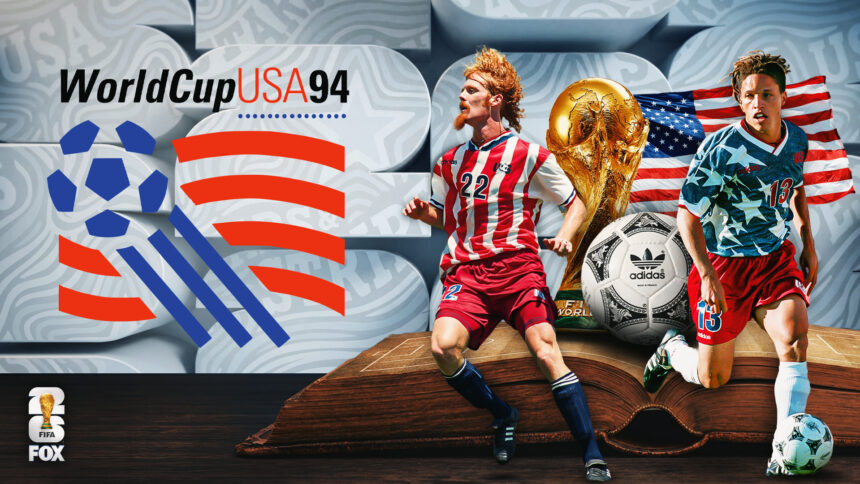
When America Embraced the Beautiful Game: A Brief History Of The 1994 World Cup
In the pantheon of global sporting events, few moments carry the weight of skepticism that greeted the announcement of the 1994 FIFA World Cup host. The United States. It was a choice that left purists in Europe and South America shaking their heads. How could a nation that called its best players “soccer stars” and filled its stadiums with shoulder pads and home runs possibly host the world’s most prestigious football tournament? The critics were loud, the doubts were real, and the stakes were impossibly high.
Yet, what transpired during that sun-drenched summer was not merely a tournament; it was a cultural revolution. The 1994 World Cup did not just happen in America—it changed America. It shattered attendance records, introduced a global audience to the electric atmosphere of American sports venues, and proved that the beautiful game could thrive even in the heart of football (the American kind) country. Let’s take a definitive look back at the summer soccer took over the United States.
The Audacity of Hope: Why the U.S. Was a Risky Bet
To understand the magnitude of the 1994 World Cup, you must first understand the landscape of American soccer in the early 1990s. The North American Soccer League (NASL) had famously collapsed in 1984, leaving the country without a top-tier professional league. The U.S. Men’s National Team (USMNT) was a perennial underdog, often failing to qualify for the World Cup itself. The general public viewed soccer as a niche activity for suburban kids, not a spectator sport worthy of major attention.
FIFA’s decision to award the tournament to the U.S. was a massive gamble. Critics argued that a country without a professional league and a population that supposedly didn’t “understand” the game was a questionable choice for the world’s biggest sporting event. The narrative was simple: America was a football desert, and the World Cup would be a mirage.
But the organizers had a secret weapon: scale. They didn’t try to mimic the intimate, standing-room-only stadiums of Europe. Instead, they embraced the American way. Matches were played in iconic NFL stadiums—the Rose Bowl, Giants Stadium, the Pontiac Silverdome, and the Cotton Bowl. These were cathedrals of American football, suddenly hosting the world’s best players. The result was a visual spectacle that stunned the globe.
Record-Breaking Crowds and a New American Religion
The most immediate and undeniable success of the 1994 World Cup was its attendance. The tournament set an all-time record that still stands today: an average attendance of nearly 69,000 fans per match. Over 3.5 million people walked through the turnstiles. This wasn’t just a success; it was a declaration.
- The Rose Bowl Final: 94,194 fans watched Brazil defeat Italy in a tense, goalless draw that went to penalties.
- The Pontiac Silverdome: The first-ever World Cup match played indoors, drawing 73,425 fans for a group stage game.
- Giants Stadium: Hosted seven matches, including the dramatic quarterfinal between Brazil and the Netherlands, with crowds exceeding 77,000.
The atmosphere was unique. American fans, known for their loud and family-friendly approach, brought a new energy to the stands. There were no segregated supporter sections in the same way Europe had them. Instead, you had families, college students, and immigrant communities all mingling together, waving flags from dozens of nations. For the first time, many Americans saw soccer not as a foreign import, but as a unifying spectacle.
The tournament also introduced the world to the “American soccer fan”—enthusiastic, loud, and surprisingly knowledgeable. The skeptics who predicted empty seats and apathy were silenced by the sheer volume of the crowds.
How Did the USA Perform in the 1994 World Cup?
For the host nation, the pressure was immense. The U.S. team, coached by Bora Milutinović, was a mix of college stars, foreign-born players, and veterans of the failed NASL. They were ranked 23rd in the world and were not expected to advance past the group stage.
But the U.S. team delivered the defining moment of American soccer history up to that point. They opened the tournament with a shocking 1-1 draw against Switzerland in the Pontiac Silverdome. Then came the match that changed everything: a 2-1 victory over Colombia in Pasadena. Colombia, a pre-tournament favorite, was stunned by goals from Earnie Stewart and a disastrous own goal by Andrés Escobar (a tragedy that would haunt the tournament).
The group stage finale against Romania was a 0-1 loss, but the U.S. had done enough. They advanced to the knockout rounds for the first time in the modern era. In the Round of 16, they faced the mighty Brazil. The game was a masterclass in defensive grit. The U.S. held the eventual champions to a 0-0 draw for 73 minutes before a stunning strike from Bebeto finally broke the deadlock. The U.S. lost 1-0, but they left the field to a standing ovation from the Rose Bowl crowd.
Expert Analysis: The U.S. team’s performance was not a fluke. It was the result of a tactical discipline rarely seen from American sides. Bora Milutinović built a system that was hard to break down, and players like Alexi Lalas (with his iconic red beard) and Tony Meola became household names. The team proved that America could compete on the world stage, laying the foundation for the launch of Major League Soccer (MLS) just two years later in 1996.
Key Moments That Defined the 1994 World Cup
Beyond the American fairy tale, the 1994 World Cup was a tournament of immense drama, controversy, and memorable football.
The Tragedy of Andrés Escobar: The Colombian defender’s own goal against the U.S. was a turning point in the tournament. Tragically, upon returning home, Escobar was murdered. The incident cast a dark shadow over the competition and highlighted the intense, sometimes dangerous, passion for the game in South America.
The Rise of Romário: The Brazilian striker was the tournament’s best player. He scored five goals, including the winner against the Netherlands and the crucial penalty in the shootout against Italy. Romário was a master of movement and finishing, and his partnership with Bebeto was lethal.
The Italian Enigma: Italy, led by the legendary Roberto Baggio, stumbled through the group stage but found their rhythm in the knockout rounds. Baggio scored dramatic winners against Nigeria and Spain. However, his legacy in the 1994 World Cup is defined by the final. With the score 0-0 and penalties looming, Baggio stepped up to take Italy’s fifth penalty. He skied it over the bar, handing the trophy to Brazil. That image—Baggio standing alone, head bowed—is one of the most iconic in World Cup history.
The Goalless Final: The final between Brazil and Italy was a defensive battle. It was the first World Cup final to end 0-0 after extra time. While some critics called it boring, it was a testament to the tactical discipline of both defenses. Brazil’s victory marked their fourth World Cup title, cementing their status as the most successful nation in the tournament’s history.
Predictions and Legacy: What the 1994 World Cup Foretold
Looking back with the clarity of a sports journalist, the 1994 World Cup was a crystal ball for the future of the sport. It predicted the global expansion of soccer’s commercial power. The tournament was a financial juggernaut, generating over $4 billion in revenue and proving that the U.S. market was the next frontier for FIFA.
Prediction that came true: The success of the 1994 World Cup directly led to the creation of Major League Soccer. The league launched in 1996 and has grown into a stable, competitive league that now attracts aging European stars and young South American talent. Without 1994, there is no MLS.
Prediction that is still unfolding: The tournament predicted that the U.S. would eventually become a serious footballing nation. The generation of kids who watched the 1994 World Cup are now the players, coaches, and executives running American soccer. The U.S. women’s team became a global powerhouse, and the men’s team has consistently qualified for World Cups. The 2026 World Cup, which the U.S. will co-host with Canada and Mexico, is the ultimate validation of the 1994 experiment.
Strong Conclusion: The Summer That Changed Everything
The 1994 World Cup was far more than a tournament. It was a cultural inflection point. The skeptics who argued that a country without a top-tier professional league and a population that supposedly didn’t “understand” the game were proven spectacularly wrong. The United States did not just host the World Cup; it embraced it, redefined it, and exported it back to the world with a new energy.
From the record-breaking crowds in NFL stadiums to the heartbreaking penalty miss of Roberto Baggio, from the rise of Romário to the gritty resilience of the U.S. team, the 1994 World Cup was a summer of unforgettable moments. It proved that soccer’s appeal is universal, transcending borders, languages, and even the shape of the ball itself.
Today, as we look toward the 2026 World Cup on home soil, we owe a debt of gratitude to the summer of 1994. It was the moment America finally fell in love with the beautiful game—and the beautiful game fell in love with America. The critics were silenced. The game was won. And the legacy lives on.
Source: Based on news from Fox Sports.