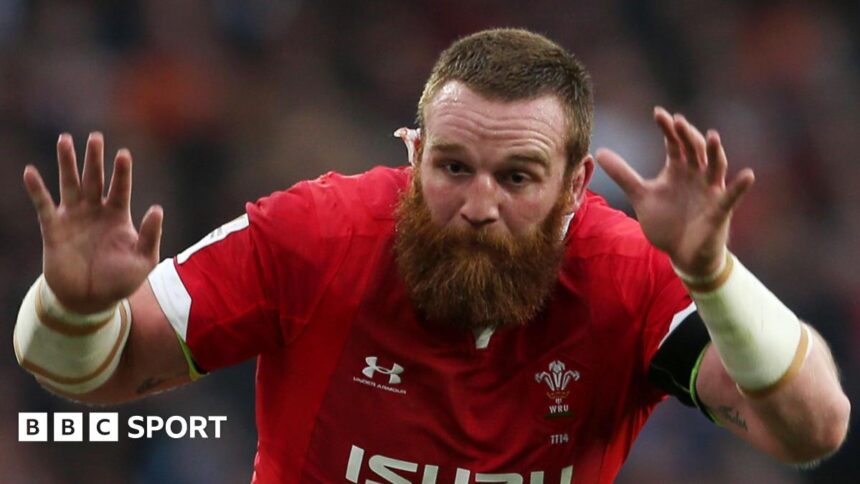
Jake Ball Retires: The End of an Era for Wales and Scarlets Rugby
Welsh rugby has bid a quiet but significant farewell to one of its most durable and uncompromising warriors. Jake Ball, the 34-year-old lock who wore the red of Wales with relentless physicality and the scarlet of the Scarlets with unwavering loyalty, has officially announced his retirement from professional rugby. The news, confirmed by the player himself, brings the curtain down on a career that spanned over a decade, featuring 50 international caps, a Grand Slam triumph, and a World Cup semi-final appearance.
For the Scarlets, the loss of Ball is more than just a statistical departure. It represents the end of a generational bridge—a player who returned to West Wales for a final swansong in the summer of 2025 after a brief stint in Japan, only to be cut short by persistent injuries and future business commitments. This article delivers an in-depth look at Ball’s career, the impact of his retirement, and what it means for Welsh rugby moving forward.
The Career of a Rugby Gladiator: From Scarlets Stalwart to Grand Slam Hero
Jake Ball’s journey from a promising young lock at the Scarlets to a mainstay of the Welsh national team is a story of grit, consistency, and underrated technical ability. Standing at 6ft 6in and weighing over 120kg, Ball was never the flashiest player on the pitch, but he was invariably the one doing the dirty work—the lineout mauls, the tackle dominance, and the ruck clearouts that allowed others to shine.
His professional career began in earnest with the Scarlets, where he made his debut in 2011. Over two separate stints—first from 2011 to 2020, and then a dramatic return in 2025—Ball racked up 148 appearances for the region. Those numbers speak to his durability and his standing within the squad. He was not merely a player; he was a leader in the engine room.
Ball’s international breakthrough came under Warren Gatland, who valued his physical edge. He earned his first cap in 2014 against South Africa and quickly became a fixture in the Welsh pack. The pinnacle of his international career arrived in 2019, a year that defined Welsh rugby’s modern era. Ball was a key member of the squad that swept the Six Nations to claim the Grand Slam, and just months later, he played a crucial role in the 2019 Rugby World Cup, helping Wales reach the semi-finals for the first time since 2011.
- International Caps: 50 appearances for Wales between 2014 and 2022.
- Major Honours: Six Nations Grand Slam (2019), World Cup semi-finalist (2019).
- Club Loyalty: 148 Scarlets appearances across two eras.
- Japanese Adventure: Played for NEC Green Rockets before returning to Llanelli in 2025.
His final season with the Scarlets, after returning from Japan, was meant to be a victory lap. Instead, he managed just 13 appearances before an injury forced him to reassess. In his retirement statement, Ball cited “injuries and future business commitments” as the primary reasons for stepping away. It is a pragmatic end for a player who always put the team first.
Expert Analysis: What Jake Ball Brought to the Welsh Pack
To understand the true value of Jake Ball, one must look beyond the statistics. In an era where locks are increasingly expected to be ball-handling playmakers, Ball was a throwback. He was a set-piece specialist and a defensive enforcer. His physicality in the tight exchanges was his trademark, and his ability to disrupt opposition lineouts was a weapon for both Scarlets and Wales.
During the 2019 Grand Slam campaign, Ball formed a formidable second-row partnership with Alun Wyn Jones. While Jones was the orchestrator and the spiritual leader, Ball was the battering ram. He made 42 tackles in that Six Nations tournament, often the first to engage in the heavy collisions that demoralise opponents. His work rate was phenomenal, and his tackle success rate hovered consistently above 90% in Test matches.
For the Scarlets, his return in 2025 was seen as a masterstroke. Head coach Dwayne Peel needed experience and leadership in a young pack. Ball provided exactly that. In his 13 appearances this season, he brought a level of physical intensity that lifted those around him. However, the modern game is unrelenting, and the toll of 50 Test matches and over 150 professional club games eventually caught up.
“Jake was the kind of player you hated playing against but loved having in your team,” said a former Wales teammate. “He never took a backward step. His retirement is a loss for the Scarlets’ set-piece and for Welsh rugby’s depth chart.”
Predictions for the Scarlets: Without Ball, the Scarlets will need to accelerate the development of younger locks like Ben Williams and Jac Price. The region will also likely look to the transfer market for a seasoned lock who can replicate Ball’s lineout leadership and physical edge. Expect the Scarlets to target a player with URC or Premiership experience in the off-season.
What This Retirement Means for Welsh Rugby’s Future
Jake Ball’s retirement is another chapter in the ongoing transition of the Welsh national team. The golden generation that delivered Grand Slams in 2019 and 2012 is slowly fading. With Ball joining the likes of Alun Wyn Jones, Justin Tipuric, and Dan Biggar in retirement, Gatland’s current squad is now heavily reliant on a younger core.
For Wales, the loss of Ball is not catastrophic—he had not played for the national team since 2022—but it is a symbolic reminder of the experience gap. The current Welsh locks, such as Adam Beard, Dafydd Jenkins, and Will Rowlands, are talented but lack the sheer number of Test caps that Ball and Jones provided. Ball’s retirement underscores the need for these younger players to step up quickly, particularly in the physicality department where Ball excelled.
From a SEO-optimised perspective, this retirement also highlights a broader trend: the increasing difficulty of top-level players to sustain careers into their mid-30s. Ball is 34, an age that was once considered prime for a lock. Today, the speed of the game, the intensity of the defensive systems, and the accumulation of micro-injuries are forcing players to retire earlier. Ball’s decision to leave for business commitments also reflects a shift in priorities among modern athletes, who are increasingly planning for life after rugby.
Strong Conclusion: A Legacy of Grit and Glory
Jake Ball may not have been the most decorated lock in Welsh history, but he was certainly one of the most respected. His career was built on a foundation of uncompromising effort and selfless team play. From the muddy pitches of Parc y Scarlets to the grand stages of the World Cup, he gave everything he had.
His retirement at the end of this season, while premature due to injury, is a dignified exit. He leaves the game with a Grand Slam medal, a World Cup semi-final appearance, and the gratitude of two clubs and a nation. For the Scarlets, the challenge is now to find a successor who can match his physical presence. For Wales, his retirement is a quiet but firm reminder that the next generation must now carry the torch.
As Jake Ball trades the rugby boots for a business suit, the sport loses a true grafter. But his legacy—of hard work, resilience, and loyalty—will endure in the memories of every fan who watched him charge into a ruck or secure a decisive lineout. Welsh rugby says thank you, and goodbye, to a warrior who played every game as if it were his last.
Source: Based on news from BBC Sport.