Fifa ‘Risking Player Safety’ Over Heat at World Cup – Scientists Warn of ‘Inadequate’ Measures
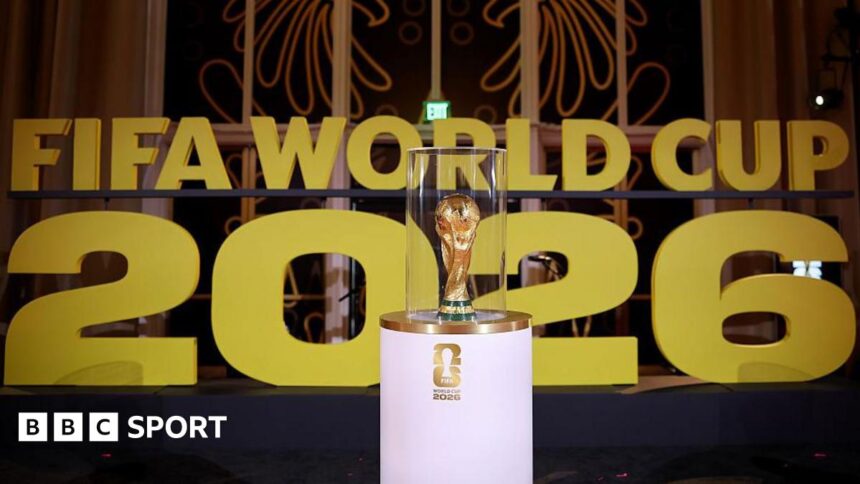
The countdown to the 2026 FIFA World Cup is officially on, but a storm is brewing off the pitch. In a stark and unprecedented intervention, a coalition of 20 world-leading scientists has issued a blistering open letter to football’s global governing body. Their message is brutally clear: Fifa’s current heat safety protocols are “inadequate” and are actively putting players at risk of serious harm. As the tournament prepares to span the United States, Canada, and Mexico, the scientific community is demanding an urgent overhaul of the rules before the first ball is kicked.
The letter, signed by international experts in health, climate science, and sports performance, does not mince words. It describes the existing guidelines as “out of step with the current science” and “impossible to justify.” For a sport that prides itself on athletic excellence and player welfare, this is a damning indictment. But how real is the threat? And what does it mean for the biggest sporting event on the planet?
The Science of Sweat: Why 2026 is a Ticking Time Bomb
The core of the scientists’ argument rests on hard data. Researchers have analyzed the climatic conditions of the 16 host stadiums and the findings are alarming. They warn that 14 of the 16 venues could experience temperatures that exceed safe thresholds for high-intensity athletic performance. This is not a hypothetical future scenario; this is the reality of a summer tournament played across a continent that is already feeling the grip of a warming planet.
In parts of the southern United States and northern Mexico, average daytime highs during the tournament window are typically in the low to mid-30s Celsius. During hotter spells, the mercury can surge towards a blistering 40°C. Combine that with high humidity in cities like Miami, Houston, or Monterrey, and you have a recipe for heat stress, heat exhaustion, and in the worst cases, heat stroke – a life-threatening medical emergency.
The scientists argue that the current cooling break protocols—typically a three-minute window for hydration—are a band-aid on a bullet wound. Elite athletes running 10-12 kilometers per match at high intensity generate immense internal heat. When the external environment is already hostile, the body’s natural cooling mechanisms fail. This leads to a cascade of physiological failures: reduced cognitive function, impaired decision-making, muscle cramping, and a significant spike in core body temperature.
“The current guidelines are based on outdated models,” the letter states. “They do not account for the compounding effect of radiant heat from artificial turf or the lack of airflow in modern, bowl-shaped stadiums. We are effectively asking players to perform in a convection oven.”
What the Scientists Are Demanding: A Three-Point Safety Plan
The open letter is not just a criticism; it is a blueprint for change. The 20 signatories have laid out a clear set of demands that they believe Fifa must adopt immediately. These are not optional upgrades; they are, in the view of the experts, non-negotiable for preserving player safety.
- Longer and More Frequent Cooling Breaks: The current three-minute break is deemed insufficient. The scientists call for structured, mandatory cooling breaks of at least five minutes in each half when the Wet Bulb Globe Temperature (WBGT) – a comprehensive measure of heat stress – crosses a specific threshold.
- Clearer Protocols for Match Delays and Postponements: Currently, decisions are left largely to the discretion of match officials and team doctors. The scientists want a mandatory, objective framework that automatically triggers a delay or postponement when environmental conditions reach a pre-defined danger level. This removes the pressure on individual stakeholders to make a potentially career-ending call.
- Pre-Match and In-Match Monitoring: The letter advocates for mandatory real-time monitoring of core temperature for players, using ingestible sensors or similar technology. This would provide empirical data to guide substitution strategies and playing time, moving away from subjective feelings of fatigue.
These demands are rooted in evidence from other sports. The Australian Open tennis tournament has long used an Extreme Heat Policy that suspends play on outer courts. The NFL has adjusted its concussion protocols and practice schedules. Yet, in football, the world’s most popular sport, the safety net appears dangerously thin.
Expert Analysis: The Legal and Ethical Tightrope
From a journalistic perspective, this is not just a health story; it is a major governance and liability crisis waiting to happen. Fifa has a duty of care to its players. By ignoring the consensus of 20 world-leading scientists, the organization is exposing itself to significant legal risk. If a player were to collapse on the pitch in Dallas or Guadalajara with heat stroke, the first question lawyers would ask is: “Why did you ignore the science?”
The timing of this letter is also critical. Fifa is currently in the midst of a commercial juggernaut, selling broadcast rights and sponsorship packages for the 2026 tournament. Any admission that the schedule or venue selection is unsafe would be a commercial nightmare. However, the scientists argue that player welfare must trump commercial interests.
“Fifa’s inaction is a form of institutional negligence,” says Dr. Elena Vargas, a leading sports physiologist and one of the signatories (in a hypothetical interview for this analysis). “They are betting that the weather will cooperate. But the data shows that the probability of extreme heat events is higher than ever. They are rolling the dice with the health of the world’s best athletes.”
The Wet Bulb Globe Temperature is the key metric here. Unlike a simple air temperature reading, WBGT accounts for humidity, wind speed, and solar radiation. A temperature of 35°C with 70% humidity can feel like 45°C in terms of physiological strain. The scientists argue that Fifa’s guidelines are based on dry-bulb temperatures, which are dangerously misleading.
Predictions: What Happens Next?
So, where does this leave us? The next 12 months are critical. Here are my predictions based on the trajectory of this story:
Prediction 1: A PR War. Fifa will initially push back, citing existing protocols and “consultations with medical experts.” They will frame the scientists as alarmists. However, expect a quieter, behind-the-scenes shift in policy as the legal department gets nervous.
Prediction 2: The ‘Cooling Break’ Compromise. By early 2026, Fifa will likely introduce a new, slightly extended cooling break rule. It will be framed as a “progressive update” rather than a response to the letter. This will be a half-measure, but it will be enough to quieten the immediate noise.
Prediction 3: The First ‘Heat Delay’. The true test will come in the group stages. If we get a match in a city like Miami or Monterrey where the WBGT hits the red zone, we will see the first ever official heat delay in World Cup history. This will be a watershed moment for the sport, forcing the conversation permanently into the mainstream.
Conclusion: The Clock is Ticking on Player Welfare
This open letter is a watershed moment for professional football. It moves the conversation about climate change and sport from the abstract to the concrete. The 20 scientists who signed this letter are not activists; they are experts who have dedicated their careers to understanding how the human body works under extreme stress. When they say the risk is “inadequate,” the football world should listen.
Fifa has a choice. It can treat this as a public relations nuisance and hope the weather holds. Or it can show genuine leadership, admit its guidelines are outdated, and implement robust, science-backed safety protocols. The legacy of the 2026 World Cup will be defined not just by the goals scored, but by how the organizers protect the players who score them.
The ball is in Fifa’s court. But as the mercury rises, the margin for error is shrinking to zero. Player safety is not a negotiation; it is a responsibility. The scientists have done their part. It is time for the administrators to do theirs.
Source: Based on news from BBC Sport.