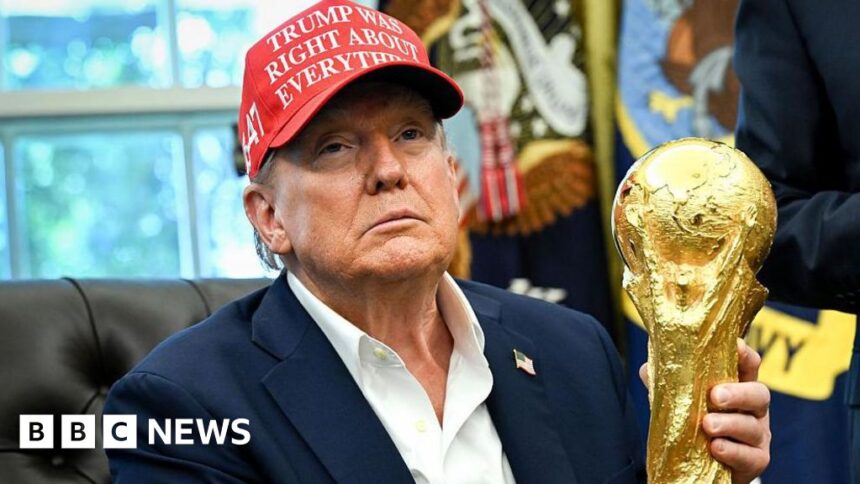
Trump Administration Drops $15,000 Visa Bond for World Cup Fans: A Game-Changer for 2026
In a dramatic and unexpected shift in U.S. immigration policy, the Trump administration has announced it will waive the controversial $15,000 visa deposit for international football fans traveling to the United States for the 2026 FIFA World Cup. The move, confirmed Wednesday by the State Department, removes a massive financial hurdle that threatened to deter tens of thousands of supporters from 50 countries—including five nations that have already qualified for the tournament.
For months, the $15,000 bond requirement—introduced last year to curb visa overstays—cast a long shadow over the world’s biggest sporting event. Fans from nations with high overstay rates faced an impossible choice: pay a sum larger than many annual salaries or miss the tournament entirely. Now, with a single policy reversal, the United States has effectively opened its doors to the global football community.
“We are waiving visa bonds for qualified fans who bought World Cup tickets,” Assistant Secretary of State for Consular Affairs Mora Namdar told the BBC. The exemption applies specifically to travelers holding valid match tickets for the 2026 World Cup, which will be co-hosted by the United States, Canada, and Mexico starting June 11.
Why the $15,000 Bond Was a Crisis for World Cup Attendees
The original visa bond policy, implemented in late 2024, targeted 50 countries whose citizens had historically high rates of overstaying their U.S. visas. The logic was straightforward: require a refundable $15,000 deposit from each applicant as insurance against illegal immigration. For a family of four, that meant $60,000 in locked-up cash—a figure that effectively priced out the vast majority of global football fans.
Critics immediately called the policy a “World Cup killer.” The bond was designed for general immigration control, not for a mega-event that relies on mass international travel. The five countries already qualified for the 2026 tournament—Algeria, Cabo Verde, Ivory Coast, Senegal, and Tunisia—were all on the list. That meant millions of passionate supporters from these football-loving nations faced a stark reality: they could buy tickets but couldn’t afford the bond to enter the country.
“It was a disaster waiting to happen,” says Dr. Elena Marchetti, a sports economics professor at Georgetown University. “You can’t host a global tournament and then tell entire fan bases they need to mortgage their homes to get a visa. The optics were terrible, and the economic impact would have been severe.”
Before Wednesday’s announcement, only players, coaches, and team officials were exempt from the bond. Ordinary fans with confirmed tickets—the lifeblood of any World Cup atmosphere—were left out in the cold. That gap has now been closed.
Breaking Down the New Exemption: Who Benefits?
The waiver applies exclusively to fans who have purchased official World Cup match tickets. This is not a blanket removal of the bond requirement for all travelers from the 50 listed countries. Instead, it is a targeted carve-out designed to facilitate tournament attendance while maintaining the broader policy for non-tournament travel.
Key details of the exemption include:
- Valid ticket required: Fans must present a confirmed match ticket at the visa interview. Group-stage tickets, knockout round passes, and hospitality packages all qualify.
- 50 countries covered: The exemption applies to all nations originally subject to the bond, including the five qualified teams: Algeria, Cabo Verde, Ivory Coast, Senegal, and Tunisia.
- No refund of existing bonds: Fans who already paid the $15,000 deposit before the waiver will reportedly have the funds returned after the tournament, though the State Department has not clarified the timeline.
- Duration of waiver: The exemption is valid for the duration of the 2026 World Cup, from June 11 through the final on July 19. Fans must depart the U.S. by the end of the tournament or risk reapplication of the bond.
For Senegalese fans, this is particularly significant. Senegal’s national team, the Lions of Teranga, is a powerhouse in African football and will draw massive support. Similarly, Algeria and Ivory Coast boast huge diasporas in the U.S. and Europe, many of whom were planning to travel. The waiver unlocks the door for tens of thousands of supporters who otherwise would have stayed home.
“This is a huge win for African football fans,” says Kwame Nkrumah, a FIFA-accredited travel agent based in Accra, Ghana. “I had clients from Senegal and Ivory Coast ready to spend $5,000 on tickets but they couldn’t afford the $15,000 bond. Now, they’re booking flights again.”
Expert Analysis: Why the U.S. Changed Course
The reversal did not happen in a vacuum. Behind the scenes, a coalition of FIFA officials, U.S. travel industry executives, and foreign diplomats lobbied heavily against the bond requirement. The economic stakes were enormous. The 2026 World Cup is projected to generate $5 billion in direct spending across the three host nations, with the U.S. capturing the largest share. Hotels, airlines, restaurants, and stadium vendors all stood to lose if fans from key markets were blocked.
“The math was simple,” explains James Whitaker, a former State Department policy advisor now at the Brookings Institution. “The bond was bringing in maybe a few million dollars in deposits, but it was threatening to cost the U.S. economy hundreds of millions in lost tourism revenue. The business community made that argument very loudly.”
There was also a diplomatic dimension. Several of the 50 countries on the bond list are key U.S. allies or strategic partners. Senegal, for example, is a major security partner in West Africa. Algeria is a critical energy supplier. Imposing a $15,000 tax on their citizens’ World Cup dreams risked damaging bilateral relations at a time when the U.S. needs cooperation on issues ranging from counterterrorism to trade.
“The State Department realized that a $15,000 visa bond for a Senegalese teacher who saved for years to see a World Cup match is not just bad policy—it’s bad diplomacy,” Whitaker adds.
FIFA also played a role. The global football governing body has strict requirements for host nations regarding visa access for ticket holders. While the bond did not technically violate FIFA’s rules, it created a perception of hostility that threatened the tournament’s brand. FIFA president Gianni Infantino had privately raised concerns with U.S. officials, sources told the BBC.
Predictions: How This Will Reshape the 2026 World Cup Experience
With the bond waiver in place, the fan experience for the 2026 World Cup is set to transform dramatically. Here are my key predictions:
1. Surge in ticket sales from bond-affected countries: Expect a rapid uptick in purchases from Algeria, Senegal, and Ivory Coast. Many fans were waiting for this announcement before committing to travel. The waiver effectively removes a psychological barrier as much as a financial one.
2. Boost to African and Middle Eastern fan zones: Cities like New York, Los Angeles, and Dallas—which will host matches—should prepare for an influx of supporters from these regions. Fan zones, cultural events, and halal food vendors will see increased demand.
3. Potential for last-minute visa bottlenecks: The U.S. State Department must now process tens of thousands of additional visa applications from the 50 countries. Without increased staffing, wait times could stretch into months. I predict the administration will announce emergency visa processing centers in major cities like Dakar, Algiers, and Abidjan within weeks.
4. Political backlash from restrictionist groups: The waiver will not be universally popular. Immigration hardliners have already criticized the move as a “security risk.” However, the economic and diplomatic benefits are likely to outweigh the political noise, especially with the tournament less than 18 months away.
5. A template for future U.S. mega-events: This policy shift could set a precedent for how the U.S. handles visa bonds for major events like the 2028 Los Angeles Olympics or the 2031 Rugby World Cup. The message is clear: when the economic stakes are high, the bond can be waived.
Strong Conclusion: A Win for Football, a Test for America
The decision to waive the $15,000 visa deposit for World Cup fans is more than a policy tweak—it is a statement of intent. The United States is telling the world that it wants to be a welcoming host for the greatest show on earth. For the five qualified nations—Algeria, Cabo Verde, Ivory Coast, Senegal, and Tunisia—this is a moment of relief and celebration. For the millions of fans who dreamed of singing their national anthems in American stadiums, the door is now open.
But the work is not done. The U.S. must now ensure that visa processing is fast, fair, and transparent. Fans should not face new hurdles in the form of endless paperwork or arbitrary denials. The bond waiver is a victory, but it is only the first step in a long journey toward a truly inclusive World Cup.
As the countdown to June 11, 2026, continues, one thing is certain: the atmosphere in the stands will be richer, louder, and more diverse because of this decision. The $15,000 bond is gone. The world’s fans are coming. And American football—the real kind—will never be the same.
Source: Based on news from BBC Sport.