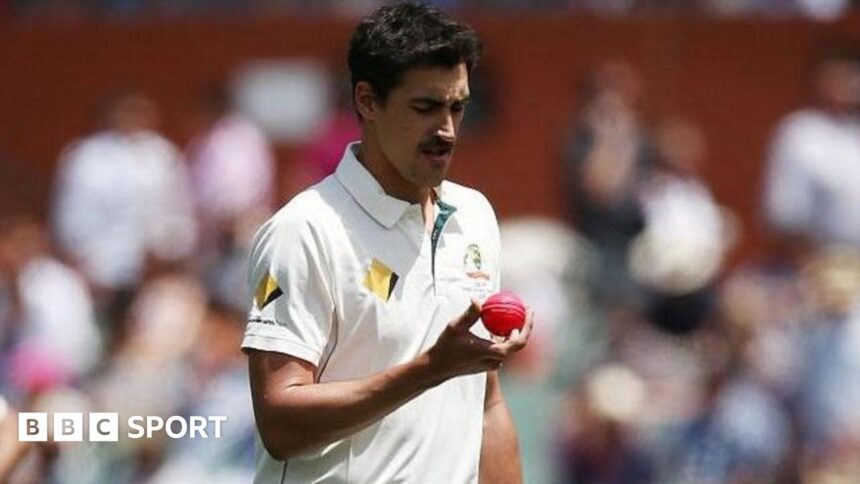
England’s Ashes Hopes Hinge on Pink-Ball Lottery, Warns Broad
The dust has barely settled on Australia’s emphatic eight-wicket victory in the first Ashes Test, but already the narrative is shifting from the red dust of the Gabba to the pink haze of a day-night spectacle. With England desperate to level the series, former bowler Stuart Broad has sounded a stark warning, labelling the upcoming second Test at Adelaide Oval a “lottery” and placing England’s fragile hopes at the mercy of the pink Kookaburra.
The Unpredictable Pink Ball: A Cricketing Gambit
What transforms a traditional Test match into a high-stakes gamble? The answer lies in the unique conditions of the day-night format. Unlike the conventional red-ball game, the pink-ball Test sees each day start in natural light and conclude under the intense glare of floodlights. This shift, combined with the use of a pink ball designed for better visibility, creates a dramatic and often unpredictable contest between bat and ball.
The ball behaves differently throughout the day. Under the bright afternoon sun, it can be relatively docile, offering batsmen a chance to build an innings. However, as twilight descends and the lights take full effect, the game transforms. The pink ball can begin to swing prodigiously, and seam movement can become exaggerated, creating a nightmare for batters and a paradise for skilled pace bowlers. It is this period, the so-called “night session,” that often decides the fate of the match.
Stuart Broad, a veteran of 152 Tests, articulated the collective anxiety surrounding the format. “We know the pink-ball Test, having played a few ourselves, is a bit of a lottery,” he stated on the For The Love of Cricket podcast. This isn’t just an excuse; it’s a reflection of a format where winning the toss and navigating that critical twilight hour can be more influential than days of meticulous planning.
The Starc Factor: Australia’s Pink-Ball Prodigy
If the pink-ball Test is a lottery, then Australia holds the winning ticket in the form of Mitchell Starc. The left-arm quick is not just a participant in day-night Tests; he is their undisputed master. The statistics are not just impressive; they are terrifying for any opposition, especially an England side fresh off a batting collapse.
- Leading Wicket-Taker: Mitchell Starc is the most prolific bowler in pink-ball Test history.
- 81 Wickets: He has taken a staggering 81 wickets in day-night matches.
- Average of 17.08: His average in these games is a miserly 17.08, a figure that underscores his dominance.
Starc’s slingy action, express pace, and ability to swing the pink ball at high velocity make him a devastating force under lights. For England’s top order, particularly the likes of Haseeb Hameed and Rory Burns who will be low on confidence, the prospect of facing Starc with a new pink ball in the Adelaide twilight is the ultimate Ashes examination. His presence alone tilts the “lottery” significantly in Australia’s favour before a ball has even been bowled.
England’s Uphill Battle: Strategy and Selection Conundrums
Broad’s comments, while stark, are a candid admission of the challenge England faces. To overcome the pink-ball lottery, they must execute a flawless game plan. This starts at the toss. Batting first and building a massive total, thereby minimizing the impact of batting under lights in the fourth innings, is the textbook strategy. However, England’s batting frailties, so ruthlessly exposed in Brisbane, make that a monumental task.
Team selection will be paramount. The absence of Broad himself in the first Test was a major talking point, and his experience with the pink ball—both for England and in the Big Bash League—could be invaluable in Adelaide. His ability to bowl a relentless, probing line and length could be the perfect foil to the express pace of Mark Wood and the swing of James Anderson.
Furthermore, England’s batsmen must find a way to survive the Starc onslaught and the twilight period. This requires immense concentration, a watertight technique, and a mental fortitude that was conspicuously absent at the Gabba. Players like Joe Root and Ben Stokes will need to lead from the front, grafting through the difficult sessions to allow the more flamboyant Jonny Bairstow or Jos Buttler to capitalise later.
Prediction: Can England Defy the Odds?
So, can England roll the dice and win the pink-ball lottery? The path to victory is narrow, but it exists. It requires a perfect storm of events:
- Winning the Toss: It is almost non-negotiable. England must bat first and put up a total in excess of 400.
- Neutralizing Starc: Their top order must find a way to see off his new-ball spell, particularly in the first evening.
- Seam Bowling Discipline: England’s own attack must exploit the conditions with the same ruthlessness as Australia’s.
However, the weight of evidence and history is against them. Australia has never lost a day-night Test. They are playing at home, with a confident and settled side, and possess the most potent pink-ball bowler in the world. England, meanwhile, are wounded, facing intense scrutiny, and battling the psychological blow of a heavy defeat.
The prediction, therefore, leans heavily towards the hosts. Australia are favourites to win the second Test and take a commanding 2-0 series lead. For England to level the series, they will need to produce a performance that defies not only their recent form but the very nature of the pink-ball “lottery” that Stuart Broad so accurately described.
Conclusion: A Test of Nerve Under the Lights
The Adelaide day-night Test is set to be more than a game of cricket; it is a test of nerve, strategy, and survival. Stuart Broad’s “lottery” analogy is a perfect encapsulation of the high-risk, high-reward nature of this modern format. For England, the stakes could not be higher. A loss here effectively ends the Ashes after just two Tests.
All eyes will be on the Adelaide Oval as day turns to night. Can England’s batsmen conquer the twilight and Mitchell Starc’s menace? Can their bowlers master the pink Kookaburra? The answers will determine whether they can cash in their lottery ticket or see their Ashes dreams disappear into the dark southern sky.
Source: Based on news from BBC Sport.
Image: Source – Original Article