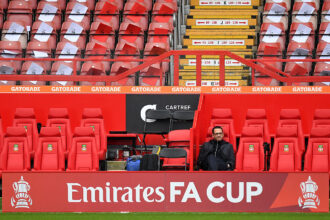
Giants Bench Carter Again: A Puzzling Pattern Emerges in Monday Night Loss
The bright lights of Monday Night Football were supposed to be a showcase for the NFL’s next generation of stars. For New York Giants first-round pick Abdul Carter, however, they served only to illuminate his place on the sidelines. In a pivotal Week 2 matchup against the New England Patriots, Carter was once again a healthy scratch from the starting lineup, a “coach’s decision” that has quickly morphed from a curious week-one footnote into a full-blown organizational mystery. As the Giants stumbled to a 17-10 loss, the absence of their top defensive draft pick from the early game plan was not just a subplot; it was a glaring question mark hanging over a team struggling to find its identity.
- The Benchmark: A Recurring Theme for the Rookie
- Decoding the “Coach’s Decision”: Potential Rationales and Fan Frustration
- The Ripple Effect: On Carter, the Defense, and the Front Office
- Looking Ahead: Predictions for Carter’s Role and the Giants’ Season
- Conclusion: A Test of Philosophy in the Giants’ Fog of War
The Benchmark: A Recurring Theme for the Rookie
For the second consecutive week, Head Coach Brian Daboll and Defensive Coordinator Don “Wink” Martindale opted to open the game without Carter on the field. This wasn’t a last-minute injury designation or a disciplinary measure—it was a calculated football decision. The rookie linebacker watched as veterans and lower-drafted players assumed the roles he was drafted to fill. The Patriots, capitalizing on a Giants defense that at times seemed a step slow in pursuit, methodically moved the ball, particularly in the first half. While the defense had moments of resilience, the repeated choice to leave a player of Carter’s elite athleticism and pass-rush pedigree in a reserve role is a strategy that demands scrutiny. It signals a profound disconnect between the draft capital invested and the immediate trust bestowed by the coaching staff.
Decoding the “Coach’s Decision”: Potential Rationales and Fan Frustration
The phrase “coach’s decision” is a classic NFL veil, obscuring a multitude of potential truths. Let’s break down the possible reasons behind Carter’s benching, each carrying significant implications for his and the team’s future:
- Scheme Complexity and Mental Errors: Martindale’s defense is notoriously complex, reliant on disguised pressures and precise pre-snap adjustments. If Carter is struggling to grasp the playbook or consistently align correctly in practice, the coaches may see him as a liability they cannot risk in prime time.
- Veteran Preference and Run Defense Concerns: Carter entered the league celebrated for his explosive pass-rush ability. His prowess in run defense, however, was a noted area for development. The coaches may trust more experienced, assignment-sure linebackers to set the edge against a physical Patriots ground game, prioritizing gap integrity over splash plays.
- Protecting the Asset: A more controversial theory is that the Giants are deliberately bringing Carter along slowly, hoping to avoid shattering the confidence of a young player or exposing a raw skill set too early. In a win-now league, this approach is a hard sell for a fanbase watching a stagnant offense and a 0-2 start.
The frustration among the Giants faithful is palpable. Drafting a player 7th overall typically comes with the expectation of a day-one impact player. Instead, they are witnessing a cautionary approach that feels out of sync with the team’s urgent needs. Every third-down pressure that doesn’t materialize invites the question: “What if Carter was in?”
The Ripple Effect: On Carter, the Defense, and the Front Office
This handling of Abdul Carter sends waves through the entire organization. For the player, it’s a test of professionalism and patience. How he responds in practice meetings, and in his limited snaps, will define his early career trajectory. For the defense, it creates a potential leadership vacuum and a missing piece in the pass-rush puzzle. While Kayvon Thibodeaux demands attention, Carter’s presence on the opposite side is supposed to be the counter-punch that elevates the entire unit.
Most intriguingly, this situation puts a spotlight on the alignment between the front office and the coaching staff. Did General Manager Joe Schoen draft a player the coaches didn’t fully believe in? Or are the coaches simply implementing a development plan the front office endorsed? The longer Carter watches from the sidelines, the louder these internal questions will become. The Giants’ defensive identity remains incomplete, and their most dynamic rookie is a spectator to its struggles.
Looking Ahead: Predictions for Carter’s Role and the Giants’ Season
The path forward for Abdul Carter and the Giants is now one of the most compelling stories of their young season. Here is what to expect:
- A Gradual, But Necessary, Integration: The pressure to play Carter will become irresistible. Look for his snap count to increase steadily over the next few weeks, likely in clear pass-rushing situations initially. The coaches must find a role, however specialized, for his unique talent.
- The “Spark” Narrative: When Carter does finally make a impactful play—a strip-sack, a key third-down stop—the narrative will instantly shift to why he wasn’t playing sooner. The benchings will be used as a motivator in post-game press conferences.
- A Defining Crossroads: If Carter remains a non-factor by mid-season, it will be labeled a significant early setback for the Schoen/Daboll regime. Conversely, if he blossoms into a defensive playmaker, these early benchings will be remembered as a masterclass in patient development. There is very little middle ground.
For the Giants’ season, the stakes are even higher. An 0-2 hole in a competitive NFC East is deep. Every loss increases the urgency to play your best players, and the court of public opinion has already ruled that Carter qualifies. The coaching staff’s credibility is now tied to this decision. If the defense excels, they are geniuses. If it flounders while their blue-chip rookie watches, they will face intense criticism.
Conclusion: A Test of Philosophy in the Giants’ Fog of War
The New York Giants did not lose to the New England Patriots solely because Abdul Carter was on the bench. The issues run deeper, spanning offensive line play and quarterback decision-making. However, Carter’s repeated benching is a symptom of a larger philosophical tension within the organization. It is a clash between the immediate desperation to win games and the long-term project of building a player. In the fog of a losing season, patience is the first virtue to evaporate.
Brian Daboll and his staff are betting on their process, believing that easing Carter into the NFL fire will produce a better player in the long run. But the NFL is a results-oriented business where the long run is a luxury rarely afforded. The Giants drafted Abdul Carter to be a game-wrecker, a cornerstone. Right now, he is a puzzle. How quickly the coaches choose to solve it will be a defining chapter for this regime and a pivotal factor in whether the Giants’ season can be salvaged. The bench is no place for a first-round pick’s potential, and on Monday Night, that potential remained frustratingly, conspicuously untapped.
Source: Based on news from ESPN.