Salah’s Bench Role Reveals Slot’s New Liverpool Blueprint: A Test of Professionalism and Power
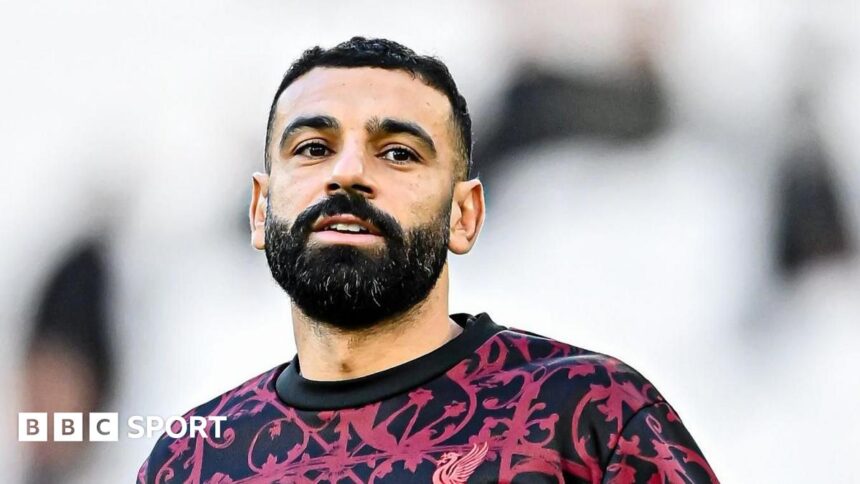
The sight was jarring, a fixture of the footballing landscape suddenly shifted. As Liverpool’s teamsheet dropped ahead of their crucial trip to the London Stadium, one name was conspicuously absent from the starting XI: Mohamed Salah. For the first time in 53 consecutive Premier League matches, the Egyptian King was named among the substitutes. In the aftermath of a commanding 2-0 victory that steadied a listing ship, however, the narrative wasn’t one of rebellion or rift, but of resilience. New manager Arne Slot, facing down the most daunting selection decision of his nascent Anfield tenure, framed it not as a demotion, but as a testament to character, labelling Salah a “top professional” for his response. This single act has opened a compelling new chapter, probing the balance between individual legacy and collective evolution at Liverpool.
The Unthinkable Becomes Tactical Necessity
Mohamed Salah’s iron-clad status as an automatic starter has been one of the Premier League’s few certainties. Since being dropped in the league since April 2024 under Jurgen Klopp—a blink-and-you-missed-it moment—Salah had been an ever-present, the throbbing heart of Liverpool’s attack. Yet, football is a relentless meritocracy, and even the most radiant stars are subject to its cold logic. The numbers painted a stark picture. Amid a grueling run of nine defeats in 12 games across all competitions, Salah’s personal output had dwindled to just four league goals this season, a stark contrast to the Golden Boot winner with 29 goals he was mere months ago.
For Arne Slot, the decision was a calculated gamble born from necessity, not malice. “It is never easy to leave a player of Mo’s quality out,” Slot admitted post-match. “But we have to think about the team, about managing moments, and about the long season.” The move was a clear signal: no player, regardless of pedigree, is exempt from the demands of the team’s form. Slot’s system, with its intense pressing triggers and specific positional rotations, requires relentless physical and tactical execution. The evidence suggested that Liverpool, and perhaps Salah himself, needed a reset.
Slot’s “Top Professional” Praise: More Than Just Platitudes
When a superstar is benched, the manager’s subsequent comments are often dissected for hidden barbs or strained diplomacy. Slot’s description of Salah, however, felt pointedly authentic. “His reaction on the training ground after the decision, and his impact when he came on, was exactly what you want,” said Slot. “He is a top professional. He understood, he worked, and he was ready.” This public praise serves multiple crucial purposes in the Liverpool manager Arne Slot era:
- It validates a difficult decision: By highlighting Salah’s mature response, Slot justifies the drop as a footballing choice that a true professional understands.
- It sets a cultural standard: For the entire squad, especially new and younger players, it broadcasts that ego is subordinate to the collective. If Salah can react this way, everyone must.
- It protects a vital asset: It prevents media narratives of a fallout, maintaining Salah’s value and dignity while acknowledging a temporary dip in form.
This management of a high-profile player is a critical test for any coach following an icon like Klopp. Slot’s handling suggests a quiet authority and emotional intelligence, focusing on the player’s professionalism rather than the controversy of the omission itself.
Analysis: A Crossroads for Salah and Liverpool’s Attack
This moment represents more than a one-off lineup change; it is a potential inflection point. At 32, Salah is in the latter stage of his peak years. The physical demands of playing every minute of every high-intensity game are unsustainable. Slot’s decision could be the first step in a managed evolution of Salah’s role at Liverpool.
Expert analysis suggests several potential pathways forward. Salah could transition into a more impactful “finisher” role, spared the defensive rigors of the full 90 minutes to focus his explosive energy in decisive moments—a role he played effectively upon coming on against West Ham. Alternatively, this could ignite a fierce response, a determined reassertion of his undisputed starting status through goals and assists. The structure of Liverpool’s win without him also offers Slot a valuable tactical blueprint. The fluidity and pressing from the likes of Diogo Jota and Luis Diaz provided a different, perhaps more cohesive, defensive from the front.
The key question now is one of sustainability. Can Liverpool build a more robust, less Salah-dependent attacking model while still leveraging his unparalleled goal threat? The answer will define their season.
Predictions: What’s Next for the Egyptian King?
The fallout from the West Ham decision will ripple through the coming weeks. Here are the likely scenarios and implications:
- Short-Term Fireworks: History shows elite competitors like Salah use such moments as fuel. A return to the starting lineup, likely imminently, could trigger a burst of goal-scoring form as he plays with a point to prove.
- Managed Minutes: Expect to see Salah’s game time managed more strategically, especially in congested fixture periods or against deeper-lying defenses where fresh legs are crucial. His 53 Premier League matches in a row streak may remain a record untouched for years.
- Contractual Crossroads: With Salah’s contract situation perennially in the background, this episode subtly shifts the power dynamic. It demonstrates the club’s willingness to plan for a future that isn’t entirely centered on him, potentially influencing negotiations.
- System Success is Key: The ultimate success of this decision hinges on Liverpool’s results. If the team continues to win with Salah in a rotated role, the policy will be vindicated. Any drop-off, however, will lead to intense scrutiny and pressure to restore him as the perpetual focal point.
Conclusion: A Necessary Evolution, Not a Decline
Arne Slot’s decision to bench Mohamed Salah was not an act of disrespect, but one of modern, pragmatic management. In labelling the Egyptian a “top professional”, Slot accomplished something vital: he separated the player’s form from his foundational value to the club’s culture. This moment is less about Salah’s decline and more about Liverpool’s necessary evolution under a new architect. The greatest teams and players adapt. If Salah embraces this new chapter—whether as a relentless starter fighting for his place or a devastating strategic weapon—it could prolong his elite influence and propel Liverpool into a new, sustainable cycle of success. The bench at West Ham was not an end, but a fascinating new beginning for both a legend and his club. The professionalism has been acknowledged; the footballing response is what the world watches for next.
Source: Based on news from BBC Sport.
Image: Source – Original Article