


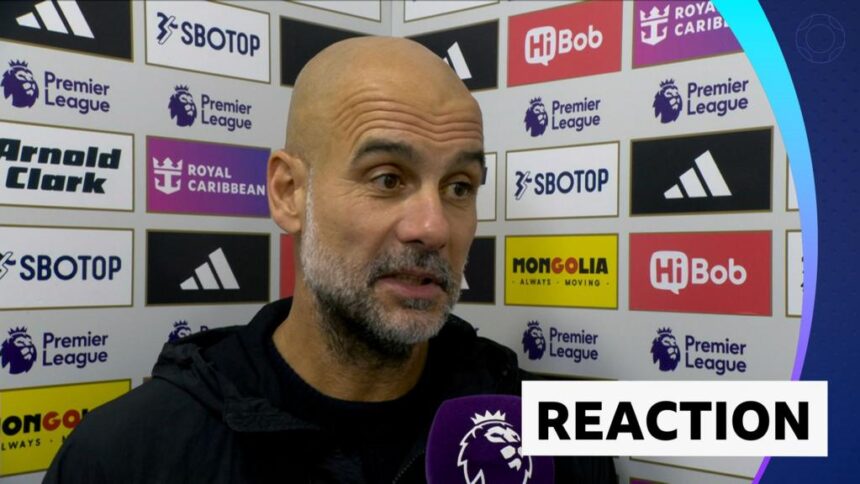
Guardiola’s Age Jibe Masks Deeper Concerns After City’s Nine-Goal Thriller
In the aftermath of a preposterous, logic-defying 5-4 victory over Fulham, the football world expected tactical dissection from Pep Guardiola. Instead, it received a masterclass in deflection, delivered with a wry smile and a self-deprecating twinkle. The Manchester City manager, having watched his side nearly surrender a four-goal lead in a chaotic second half, leaned into the microphone and offered a diagnosis that was as humorous as it was revealing. “I’m so old my players don’t respect me!” he quipped. The line got the intended laugh, a perfect soundbite for the headlines. But behind the joke lies a more complex truth about a relentless machine showing rare, and alarming, signs of wear.
A Masterpiece Unraveled: From Domination to Desperation
The match at Craven Cottage unfolded in two starkly contrasting acts. The first was a symphony of the Guardiola ethos, a 45-minute exhibition of suffocating dominance. City, with Kevin De Bruyne pulling the strings and Erling Haaland a perpetual menace, were transcendent. The movement was fluid, the passing incisive, the finishing clinical. By the halftime whistle, they led 4-0, and the narrative was one of inevitable, crushing superiority. The contest, for all intents and purposes, appeared dead.
Then came the second act. Fulham, to their immense credit, refused to be a footnote. A quickfire double after the restart injected belief into the London air and anxiety into City’s veins. What followed was a stunning collapse of defensive structure and game management. City’s midfield, usually a metronome of control, became porous. The defensive line, marshalled by the usually unflappable Ruben Dias, lost all shape and composure. Fulham’s third and fourth goals transformed a procession into a panic, with City clinging on through a combination of last-ditch blocks and sheer fortune. The final whistle brought relief, not celebration.
- First-Half City: A cohesive, ruthless unit executing a perfect game plan.
- Second-Half Fragility: A disjointed team losing defensive discipline and midfield control.
- Key Moment: Fulham’s two quick goals after halftime shattered City’s psychological comfort.
Decoding the “No Respect” Quip: Psychology Over Tactics
Guardiola’s post-match “old” comment is a fascinating psychological tool, not a literal admission. The Catalan is a proven master of messaging, using the media to send carefully calibrated signals to his squad. By framing the collapse as a matter of respect rather than ability, he accomplishes several things at once.
First, it protects his players from direct, harsh public criticism, maintaining squad morale. Second, and more importantly, it places the onus squarely on them. It’s a challenge disguised as a joke: “Prove you still listen to me. Prove you still value the principles we built this empire on.” He is questioning their focus, their professionalism, and their hunger—all while smiling for the cameras. This is classic Guardiola. After a defeat or a poor performance, he often takes tactical blame. After a win littered with errors, he questions mentality. It’s a way to ignite a response without creating a public rift.
The underlying issues, however, are tactical and physical. The drop in intensity after gaining a big lead is a recurring theme this season. There’s a casualness that creeps in, a sense that the job is done. This, against the relentless demands of a Guardiola side, is the ultimate sin. The “respect” he jokingly laments is the respect for the process—the non-negotiable requirement to dominate every minute of every game, regardless of the scoreline.
The Systemic Cracks: Fatigue, Complacency, and the Chase
While Guardiola’s quip steals the spotlight, the performance exposed tangible concerns. Manchester City’s squad, while deep, is navigating an unprecedented schedule. The physical and mental toll of consecutive seasons fighting on all fronts is visible. Defensive lapses that were once anomalies are becoming frequent. The midfield, without a true anchor like Fernandinho, can be bypassed too easily when pressure is applied. John Stones’ hybrid role, so revolutionary last season, is being targeted and disrupted.
Furthermore, a new dynamic is at play: the pressure of the hunter, not the hunted. For years, City set the pace. Now, looking up at the likes of Arsenal and Liverpool in a ferocious title race, there is a palpable tension in their play. The desperation to close the gap may be contributing to the game-state mismanagement seen at Fulham—an inability to shift gears and control a game they had already won. The swagger of invincibility has momentarily faded.
Key Areas of Concern:
- Game Management: Inability to control matches after establishing a commanding lead.
- Defensive Concentration: Individual errors and collective disorganization under pressure.
- Midfield Control: Vulnerability in transition without the ball.
- Psychological Edge: Shifting from being the relentless front-runner to a chasing pack contender.
Predictions: A Wake-Up Call or a Sign of Decline?
So, does the Fulham epic represent a critical wake-up call or the first true sign of a cyclical decline? The evidence points strongly to the former. Guardiola has historically used these moments of vulnerability to galvanize his teams. The joke about his age and his players’ respect is the first seed of that galvanization. He has the international break to drill his message home, to restore the defensive rigour, and to re-assert the standards.
Predicting City’s demise has always been a fool’s errand. They have the best squad in world football, the most innovative coach, and a proven track record of relentless consistency. This result, bizarre as it was, came in a victory. The attacking firepower, led by the irrepressible Haaland, remains terrifying. The title race will be tighter than ever, and rivals will take heart from City’s fragility. But write them off at your peril. The likely outcome is a refreshed, refocused City emerging after the break, with Guardiola’s “old man” joke ringing in their ears as a pointed reminder of what is expected.
Conclusion: The Joke That Isn’t a Joke
Pep Guardiola’s post-match levity was a strategic masterpiece, a velvet glove hiding an iron fist. “I’m so old the players don’t respect me” will be remembered as the headline from a nine-goal classic. But the real story is what happens next. The statement was a mirror held up to his squad, reflecting a performance of two halves: one of majestic authority, the other of alarming vulnerability. In the high-stakes poker game of a Premier League title race, showing your cards so carelessly is a dangerous habit. Guardiola, the eternal perfectionist, knows this better than anyone. His age isn’t the issue; his players’ momentary loss of the insatiable hunger he instilled in them is. The joke is now over. The work to restore the fear, the respect, and the unshakeable identity of Manchester City begins anew.
Source: Based on news from BBC Sport.
Image: Source – Original Article





