Eleven and Hell: The Crushing Cost of Newcastle’s Dropped Points
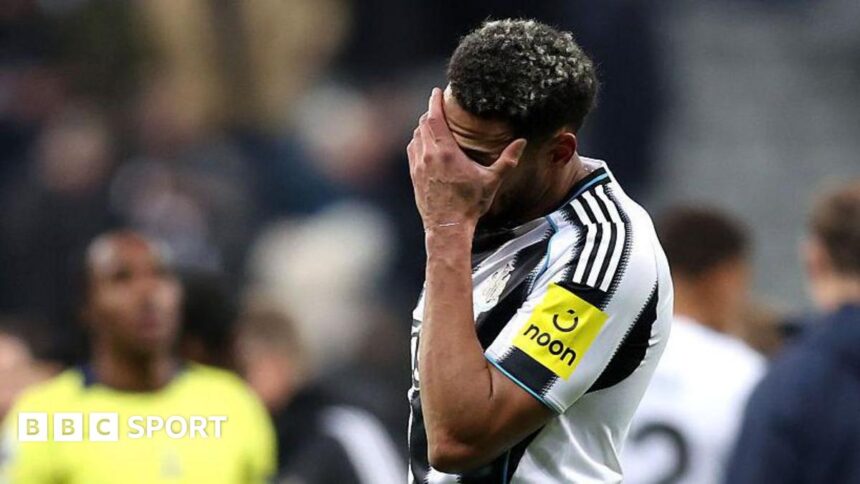
The air at St James’ Park is a unique compound. On nights like Tuesday, it fuses Geordie hope with a raw, historic defiance. When Anthony Gordon slotted home in the 81st minute, that air became pure, unadulterated belief. “It’s happening again!” the roar echoed, a taunt and a celebration rolled into one, directed at a Tottenham side familiar with misery on this turf. History, after all, was on the cusp of repeating. Yet, by the 95th minute, that same air was sucked from the stadium, replaced by a familiar, gut-wrenching void. Cristian Romero’s spectacular overhead kick wasn’t just a late equalizer; it was a stark symbol of a costly, recurring theme for Eddie Howe’s Newcastle United: the inability to close.
A Pattern of Pain: The Elusive Three-Win Streak
Since a blistering run in April, a simple yet significant milestone has eluded Newcastle: three consecutive Premier League victories. In the ruthless arithmetic of the top-flight, consistency is currency, and Newcastle are living hand-to-mouth. The draw with Spurs was a masterpiece in self-inflicted frustration. Having brilliantly dismantled Tottenham in a 4-0 away win earlier in December and followed it with a hard-fought victory over Nottingham Forest, the stage was set. The narrative wrote itself: exorcise past demons, build momentum, and storm into the European places.
Instead, a new, painful chapter was authored. This wasn’t a smash-and-grab by Tottenham; it was a prize left on the doorstep. Newcastle, after Gordon’s goal, retreated. The proactive, intense press that defines them at their best evaporated, replaced by a deep, nervous containment. The game management in the final ten minutes plus stoppage time was, in a word, flawed.
- Passive Posture: Instead of seeking a third goal to kill the game, Newcastle dropped deeper, inviting pressure onto a tiring defense.
- Midfield Bypassed: Spurs found it too easy to play long, direct balls into the mixer, negating Newcastle’s midfield strength.
- Set-Piece Vulnerability: The equalizer, inevitably, came from a second-phase set-piece, an area that has been a persistent issue.
The psychological weight of that elusive third win seemed to grow heavier with each passing minute, culminating in Romero’s moment of acrobatic quality. The history they hoped to repeat became a different kind of history: another two points dropped from a winning position.
St James’ Park: Fortress with a Fault Line
For years, Newcastle have spoken of making St James’ Park a fortress. Under Eddie Howe, they largely have. Yet, the very foundations of that fortress have shown a hairline crack in crucial moments this season. The home advantage, so often a tidal wave of noise pushing the team on, can sometimes morph into a cage of anxiety when leads are narrow and the clock ticks down. The connection between fans and players, typically a monumental strength, becomes a shared, palpable tension.
This isn’t about blame on the supporters—their role is unquestioned. It’s about the team’s collective mentality in harnessing that energy to see games out. Against Spurs, the shift was visible. The bold, front-foot football that put them ahead was replaced by hopeful clearances. The defensive resilience that characterized last season’s top-four charge looked fragmented, with players caught between holding a line and engaging individual threats.
This late collapse follows a disconcerting pattern. Dropped points from winning positions have directly cost Newcastle a place in the current top six. Each instance—whether against Luton, Bournemouth, or now Spurs—carries a cumulative cost, not just in league table points, but in psychological capital. The fear of “here we go again” can become a self-fulfilling prophecy.
Expert Analysis: Where Does the Responsibility Lie?
Dissecting this recurring issue requires a multi-layered view. First, the injury crisis cannot be ignored. The lack of a consistent, settled back four has severely disrupted defensive understanding. Key midfield enforcers have been absent, depriving the team of control in the engine room when it matters most.
However, beyond injuries, tactical and personnel questions emerge. Eddie Howe’s philosophy is inherently aggressive. Is there a need for a more pragmatic, controlled mode in the final stages of tight games? Should substitutions be made earlier to freshen the midfield and provide an outlet to hold the ball? The decision-making in the technical area is under scrutiny as much as the execution on the pitch.
Secondly, there’s the matter of leadership on the pitch. In the absence of the vocal Sven Botman and the commanding Nick Pope, who is the organizer in those frantic final moments? Who takes the heat out of the game? Kieran Trippier, a natural leader, has endured a dip in form. The need for multiple players to step up and manage high-pressure situations is critical.
Set-piece defense remains a glaring weakness. Romero’s goal is merely the latest in a line of concessions from dead-ball situations. This is a coachable, drill-specific element that continues to undermine otherwise solid performances. It is a direct leakage of points that the coaching staff must urgently stem.
The Road Ahead: Predictions and the Price of Failure
The immediate fallout from this draw is a significant opportunity missed. The gap to the European places widened, while the chasing pack gained ground. The psychological blow of conceding so late may be more damaging than the single lost point. How the team responds in their next fixture will be telling.
Looking ahead, the cost of these dropped points could be severe. The Premier League’s middle and upper-middle class is more competitive than ever. Aston Villa, Brighton, West Ham, and Manchester United are all flawed but capable of putting runs together. Newcastle’s margin for error in the race for Europe has virtually disappeared. The prediction is stark: if they cannot fix their game management and find a way to secure that elusive third, fourth, and fifth consecutive win, they will face another season of what-ifs and a likely finish in the congested, unsatisfactory mid-table.
The January transfer window offered some reinforcement, but the core issue is not solely about personnel; it’s about mentality and tactical execution. The run-in will demand cold-blooded efficiency. Games against direct rivals become literal six-point affairs, where late equalizers transform from disappointments to catastrophes.
Conclusion: More Than Just Two Points
Cristian Romero’s bicycle kick did more than ripple the net in the 95th minute; it exposed a recurring flaw in Newcastle’s ambitious project. The journey from plucky contenders to consistent top-six fixtures is paved with the ability to grind out ugly 2-1 wins, not surrender them to glorious draws. The “Eleven and Hell” referenced by fans—a longing for that winning streak—remains just out of reach, not because of a lack of quality or heart, but because of a critical, repeated lapse in game intelligence and defensive steel at the death.
For Eddie Howe and his squad, the lesson is brutal but clear. The Premier League forgives little and forgets nothing. The cost of these dropped points is measured not just in league positions, but in momentum, in belief, and in the very trajectory of a club with grand ambitions. Until they learn to slam the door shut with the clock ticking, heaven will have to wait. The purgatory of missed opportunity, for now, remains their reality.
Source: Based on news from BBC Sport.
Image: Source – Original Article