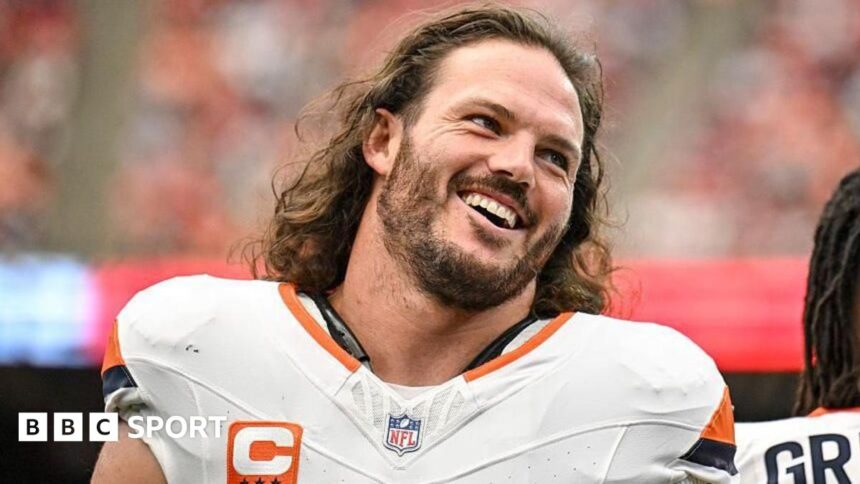
The Positive Test: How a Failed Drug Screen Saved an NFL Star’s Life
The narrative around a failed drug test in professional sports is almost universally one of disgrace. It’s a story of broken rules, shattered trust, and a career thrown into jeopardy. But for one NFL player, a routine, positive test became the most fortunate break of his life—a literal lifesaver that uncovered a silent, deadly enemy lurking within. This is not a story about performance enhancement, but about the profound and unexpected intersection of protocol, chance, and modern medicine that turned a potential scandal into a miracle.
A Routine Test Reveals an Unthinkable Truth
In the high-stakes world of the National Football League, the drug testing program is a non-negotiable pillar of the operation. Players are routinely screened for banned substances, a process viewed by many as a necessary intrusion. For a dedicated veteran, the notification of an atypical finding is a moment of sheer panic and confusion. How could this happen? The explanation, however, had nothing to do with a supplement or a mistake.
Advanced toxicology screens are incredibly sensitive, designed to detect molecular anomalies. In this player’s case, the “irregularity” flagged was not a synthetic steroid or a stimulant, but a biomarker indicative of a serious medical condition. Team physicians, acting with due diligence, ordered further tests. The resulting diagnosis was a shock: early-stage, asymptomatic cancer. A disease with no outward symptoms, yet discovered purely because of the league’s stringent anti-doping measures. The very system meant to police his body had instead become its guardian.
The Silent Threat: Asymptomatic Illness in Elite Athletes
This case throws a spotlight on a terrifying reality for athletes operating at the peak of human performance. Their bodies are finely tuned machines, often masking underlying health issues. The constant adrenaline, anti-inflammatory regimens, and sheer physical dominance can drown out the subtle whispers of disease.
Consider the player’s profile at the time of discovery:
- Elite Physical Condition: A top-tier linebacker, like Denver’s Alex Singleton, functioning at the highest level. Singleton, who at 31 leads one of the NFL’s most destructive defenses, exemplifies this—shining in a gritty 10-7 win, with no hint of impairment.
- Zero Symptoms: No pain, no fatigue beyond the norm, no weight loss. The cancer was completely silent, progressing undetected.
- Business as Usual: As reports noted after a Broncos win, it seemed “business as usual.” The team was winning, the player was performing. There was no reason to suspect a life-threatening condition.
Without the failed test, the cancer would likely have continued to develop, potentially reaching an advanced, less treatable stage by the time symptoms finally broke through the athlete’s formidable pain threshold. The preventative healthcare value of sports toxicology is an angle rarely considered, yet here it proved incalculable.
Beyond the Game: A New Perspective on Sports Medicine
This incident forces a recalibration of how we view health protocols in sports. While the primary goal of drug testing is integrity of competition, its secondary, unintended benefit as a comprehensive health monitoring system is profound. It provides a mandatory, regular biochemical check-up that most young, healthy men would never otherwise undergo.
Expert analysis suggests this could pave the way for more nuanced conversations. Could screening protocols be expanded or refined to actively look for such biomarkers, with player consent? The ethical and privacy considerations are complex, but the potential benefit is undeniable. This player’s story is a powerful anecdote that may inspire leagues and player associations to collaborate on enhanced preventative care initiatives that leverage existing testing frameworks. The goal shifts from purely punitive to genuinely protective.
Predictions: Ripples Across the League and Beyond
The ramifications of this story will extend far beyond a single locker room. We can anticipate several key developments:
- Increased Player Buy-in: While drug testing will never be popular, understanding its potential life-saving side benefit may lessen resentment and encourage greater transparency between players and medical staff.
- Off-Season Health Advocacy: Players, armed with this story, will likely become more proactive about their own health screenings during the off-season, going beyond standard team physicals.
- Focus on Early Detection: Sports media and team broadcasts may begin to integrate more messaging about early detection and silent illnesses, using the platform to raise public awareness.
- Contractual and Insurance Considerations: Could discoveries like this influence health guarantee language in contracts? It’s a possibility as teams recognize the value of early intervention for their star assets.
A Victory Greater Than Any Game
The true weight of this story is found not in a win-loss column, but in a second chance. Imagine the alternate timeline: the cancer grows, symptoms emerge mid-season, treatment is more aggressive, and a career ends abruptly with a fight for life. Instead, because of a protocol designed for fairness, a player received the gift of early intervention. He now faces a treatment prognosis that is overwhelmingly positive, with a high likelihood of full recovery and a return to the field he loves.
This narrative fundamentally rewrites the script. It transforms the drug test from a symbol of suspicion into a potential shield. It reminds us that beneath the armor, the fame, and the intense physicality, professional athletes are human, vulnerable to the same unseen threats as anyone else. As fans tune into the week’s action—whether watching the latest analysis on shows like *The Whole 10 Yards* or following live text commentary of Sunday’s games—they will now watch with a deepened perspective. The biggest play of this player’s career wasn’t a game-winning tackle or a crucial interception. It was walking into that test, unaware that it would become the most important snap of his life. In a league where we celebrate toughness and resilience, we now have a new definition of both: the courage to face a diagnosis head-on, thanks to the most unexpected assist imaginable.
Source: Based on news from BBC Sport.
Image: Source – Original Article