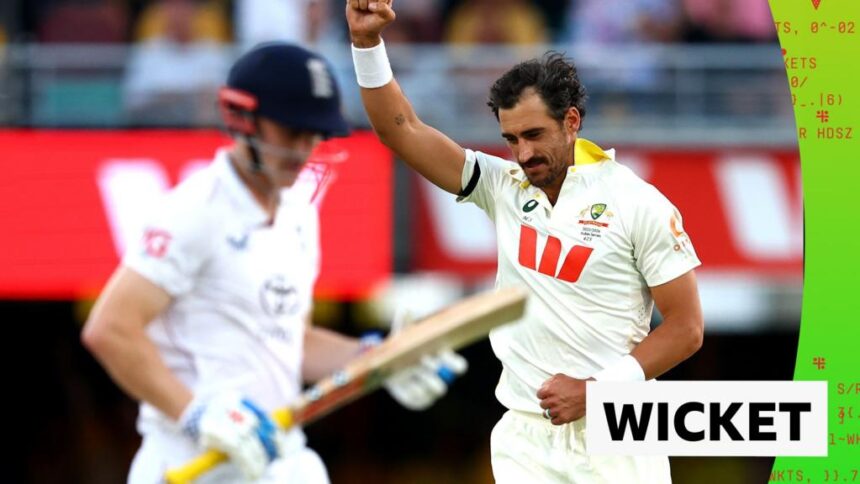
Gifted Australia a Wicket: Brook’s Rash Shot Shifts Momentum on Day One in Brisbane
The roar that erupted from the Gabba told the story. Not of a blistering yorker or an unplayable seam movement, but of a moment of self-inflicted carnage. Harry Brook, looking increasingly assured on 31, leaned into a wide, full delivery from Mitchell Starc that screamed “leave me.” He didn’t. The thick outside edge flew at a comfortable height to Steve Smith at second slip, and with a simple clasp, Australia had been handed a pivotal breakthrough. Brook’s dismissal, a classic case of a batter “gifting” his wicket, halted England’s burgeoning momentum stone dead, leaving them 176-4 and underscoring the fine line between aggression and profligacy that defines modern Ashes cricket.
The Context: A Fragile England Seeking a Foothold
Arriving in Brisbane 1-0 down in the series, England’s mission was clear: bat big, bat long, and exert scoreboard pressure on an Australian attack missing a key spinner. The early loss of Zak Crawley was a setback, but a determined partnership between Joe Root and Ollie Pope had begun to steady the ship. When Harry Brook walked in, the stage was set for the talented youngster to imprint himself on the series. For a time, he did just that. His intent was positive, his strokes crisp, finding the boundary with authority. Alongside his captain, he appeared to be navigating England into a position of strength, seeing off the new ball and forcing Pat Cummins to shuffle his resources. The tension was building, the Australian shoulders were beginning to slump, and the first session was there for the taking.
Key England Partnerships Before the Fall:
- Root and Pope: Provided crucial stability after the early wicket.
- Brook’s Initial Intent: Looked confident, playing straight and punishing width.
- Shifting Momentum: England’s run rate was healthy, forcing Australian defensive fields.
The Analysis: Dissecting a Costly Moment of Madness
Mitchell Starc, reintroduced into the attack, knew his role. With the ball losing its initial shine, his job was to probe, to tempt, and to create a moment of error. The delivery to Brook was not a jaffa. It was angled across the right-hander, full and wide—a classic “sucker ball” in the modern vernacular. The percentage play, the Test match play, was to shoulder arms or drive with meticulous care. Brook, perhaps with the adrenaline of the fight still pumping, opted for a booming, hard-handed drive with minimal foot movement. The gap between bat and pad was evident, the head position not fully forward, and the error was glaring.
This was more than just a poor shot; it was a tactical failure and a mental lapse. Steve Smith’s safe hands did the rest, but the work was done by the batter. Expert analysts in the commentary box immediately pinpointed the lack of discretion. In a session where England had worked so hard to seize control, Brook’s dismissal was a momentum killer that handed the initiative back to Australia on a platter. It validated Australia’s persistent, patient line outside off-stump and reinforced the age-old Ashes lesson: you cannot afford to give cheap wickets away at this level.
The Ripple Effect: Australia Pounces on the Opening
In Test cricket, one wicket often brings two. The psychological lift for Australia was immense. The previously quiet Gabba crowd found its voice, the bowlers straightened their backs, and the fielding intensity ratcheted up several notches. The dismissal of Brook exposed a new batter, Ben Stokes, before the lunch interval—a major win for the hosts. More devastatingly for England, it precipitated the fall of the key wicket of Joe Root just after the break, caught behind off Pat Cummins. From a promising 108-2, England had slumped to 155-4, their hard work unraveled in a flash.
The Crucial Post-Brook Collapse:
- Breakthrough for Cummins: The captain removed Root, exploiting the fresh pressure.
- Stokes Under Immediate Pressure: Forced to rebuild from ball one in a crisis.
- Nathan Lyon’s Entry Point: The collapse allowed Australia to attack with their spinner against unsettled batters.
This sequence perfectly illustrated how a single gifted wicket can transform the complexion of a day’s play. Australia, professional and ruthless, did not need a second invitation.
Looking Ahead: Implications for the Series and Brook’s Legacy
As day one continues, England’s task is now one of recovery. The focus shifts to Ben Stokes and the lower order to post a total near 300 that keeps them competitive. For Harry Brook, this will be a moment that stings. He is a player of undeniable world-class talent, but Ashes history is littered with talented players whose legacies were defined by their ability to suppress the impulsive shot at the critical hour.
This dismissal will be a key learning moment. Does he tighten his game, marry his explosive talent with greater situational awareness, and come back stronger in the second innings? Or does it reveal a potential vulnerability that Australia will mercilessly target for the remainder of the series? For Australia, the lesson is one of persistence. They stuck to their plans, remained disciplined, and were rewarded for waiting for the batter to make a mistake—a cornerstone of their successful Test philosophy.
Predictions for the Rest of the Test:
- Australia will look to wrap up the England innings for under 280, viewing anything over 320 as a defeat.
- England’s bowlers will need to show immense discipline to exploit any Brisbane pitch variable.
- Harry Brook’s second-innings approach will be one of the most scrutinized aspects of the match.
Conclusion: The Unforgiving Nature of the Ashes Arena
The Ashes does not gift opportunities. It must be won through relentless skill, iron discipline, and mental fortitude. Harry Brook’s dismissal was a stark reminder of this eternal truth. In the cauldron of the Gabba, against a world-class attack, there is no room for charity. That one expansive drive, that momentary lapse in judgment, didn’t just cost Brook 30-odd more runs; it cost England a dominant position and handed Australia a psychological and tactical advantage on the opening day. As the shadows lengthen in Brisbane, England is left to rue what might have been, while Australia knows a precious wicket, gratefully received, can be the foundation upon which an Ashes Test—and perhaps a series—is won.
Source: Based on news from BBC Sport.
Image: Source – Original Article