‘Bring It On’: Clarke’s Scotland Embrace Nostalgia & New Horizons in World Cup Draw
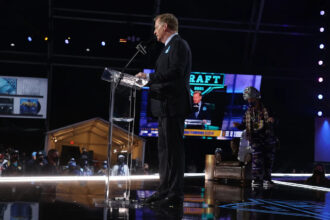
The draw for the 2026 FIFA World Cup has delivered a potent cocktail of nostalgia, daunting challenge, and unbridled opportunity for Scotland. Ending a 28-year exile from the men’s global showpiece, Steve Clarke’s squad learned their fate: a Group D reunion with giants Brazil and Morocco from their 1998 campaign, alongside the tantalizing unknown of CONCACAF’s Haiti. Clarke’s immediate reaction, a defiant and optimistic “Bring it on,” set the tone for a nation ready to write a new chapter on the grandest stage.
A Bridge Across 28 Years: From France ’98 to USA 2026
For Scottish fans of a certain generation, the names Brazil and Morocco evoke a specific, bittersweet memory. In the summer of 1998, a Scotland side containing the likes of Colin Hendry and John Collins opened their World Cup against the mighty Brazil—the eventual runners-up—in Paris. A gallant 2-1 defeat, featuring a famous Tom Boyd own-goal, was followed by a hard-fought 1-1 draw with Morocco. A win against Norway wasn’t enough, and Scotland exited on goal difference. That narrative of brave, narrow failure became part of the national team’s fabric.
Now, nearly three decades later, the circle is complete. Scotland’s first World Cup appearance for 28 years will be defined by confronting these old foes once more. But this is not 1998. This Scotland, forged in the pragmatic and resilient image of Steve Clarke, carries a different aura. They are no longer plucky underdogs by default; they are a consistently qualified tournament team, having reached back-to-back European Championships. The psychological weight of ending the long absence is gone, replaced by the pressure of performance. Clarke will use the history not as a burden, but as a lesson and a motivator. The question is no longer “can we get there?” but “what can we do now that we are?”
Decoding Group D: The Tactical Battles Ahead
Steve Clarke’s proclamation that Scotland can “bring a little bit of magic” to the tournament is more than just hopeful rhetoric; it’s a statement of intent about how they plan to navigate this formidable group. Each opponent presents a unique and starkly different challenge.
The Haitian Hurricane: The tournament opener against Haiti is arguably the most critical match in Scotland’s modern history. As Clarke confirmed, they will open against Haiti on Saturday 13 June in Boston or New York. Facing a dynamic, physically imposing, and emotionally charged Haitian side—making only their second World Cup appearance—is a monumental task. Haiti will play with the freedom and passion of a nation, and Scotland must match that intensity. Clarke’s side must impose their structured, possession-based game, leveraging the technical quality of midfielders like John McGinn and Scott McTominay to control the tempo. Three points here are non-negotiable for any knockout stage aspirations.
The Moroccan Morass: The middle fixture, against Morocco on Friday 19 June in Boston or Philadelphia, is a fascinating tactical duel. The Atlas Lions, semi-finalists in 2022, are Africa’s premier side, blending European discipline with breathtaking individual flair. This is a far cry from the 1998 Moroccan team. Scotland’s defensive organization, the bedrock of Clarke’s success, will be tested to its absolute limit by the likes of Achraf Hakimi and Sofyan Amrabat. The key will be disciplined pressing and exploiting any transition moments, likely relying on the pace of attackers like Che Adams or Lewis Ferguson.
The Brazilian Carnival: The group finale, likely against the already-qualified Brazil in either Atlanta or Miami on Wednesday 24 June, is the glamour tie. Facing the five-time World Cup winners is a reward in itself. By this stage, the calculus could vary wildly—Scotland might need a result, or they might be playing for pride. Either way, it’s a free hit against a squad of global superstars. Clarke will demand defensive rigor and look to exploit any Brazilian complacency. A repeat of the spirited 1998 performance would be a monumental achievement for this squad and a perfect showcase for their “little bit of magic.”
Predictions & The Path to the Knockouts
Navigating this group will require a masterclass in tournament management from Steve Clarke and peak performances from his players. The path to the last 32, which expands to include the top two from each group, is perilous but clear.
- Key to Success: Defeat Haiti. Anything less than victory in the opener puts unbearable pressure on the remaining fixtures.
- Pivotal Moment: The Morocco match. A point or three here could be the decisive factor in qualification, setting up a dramatic finale against Brazil.
- X-Factor: Scotland’s squad depth and health. The 2026 tournament will feature larger squads, and Scotland’s ability to manage the intense travel and climate across U.S. venues will be crucial.
A realistic and optimistic prediction sees Scotland securing a historic result. A win against Haiti and a dogged draw against Morocco could see them reach four points, which has often been the benchmark for advancement. Even a narrow loss to Brazil with a positive goal difference could be enough. The dream scenario is finishing second behind Brazil. The nightmare is a slow start against Haiti, unraveling the campaign before it truly begins.
Conclusion: More Than Just a Return, It’s a Statement
This draw has gifted Scottish football a narrative rich with history, danger, and glorious possibility. When Steve Clarke says “Bring it on,” he speaks for a nation that has waited a generation for this moment. This is not merely a happy-to-be-here participation. It is a deliberate step into the arena, ready to test themselves against the very best, to exorcise the ghosts of 1998, and to prove their modern worth.
The journey from the despair of near-misses to the euphoria of qualification culminates on the fields of North America. In facing Brazil and Morocco, they honor their past. In confronting Haiti, they control their future. For Scotland, the 2026 World Cup is already a triumph of perseverance. But under Steve Clarke’s steady hand, with a squad brimming with belief, they travel not just to make up the numbers, but to make history. The message is clear, and it echoes from the training pitches to the tartan-clad stands: Bring. It. On.
Source: Based on news from BBC Sport.
Image: CC licensed via www.state.gov