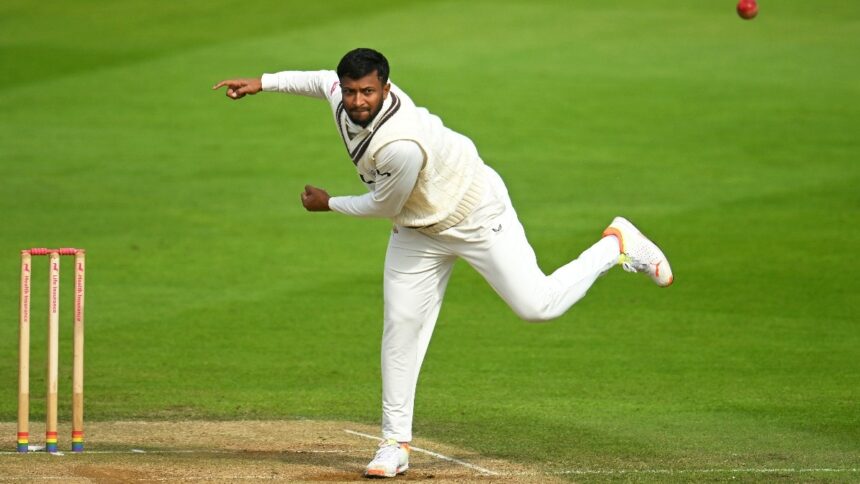
Shakib Al Hasan’s Shocking Admission: The Intentional Illegal Action That Rocked Cricket
The world of cricket is no stranger to controversies surrounding bowling actions, often mired in biomechanical complexities and accusations of unfair advantage. Rarely, however, does a player step forward to admit a degree of intentionality behind an illegal action. In a stunning revelation on the Beard Before Wicket podcast, Bangladesh’s iconic all-rounder Shakib Al Hasan has done exactly that, pulling back the curtain on the physical and mental toll of the modern cricketing calendar and the extraordinary events that led to his suspension during his 2024 stint with Surrey.
The Taunton Turning Point: A Workload Beyond Limits
The scene was set at the County Ground in Taunton during a County Championship match between Surrey and Somerset. Shakib Al Hasan, fresh off a demanding international tour, was thrust into the relentless grind of English county cricket. What transpired was a bowling marathon that pushed his body to its absolute brink. In a single match, the left-arm spinner delivered a staggering 63.2 overs—a workload he had never before shouldered in his illustrious career.
“I never bowled 70 overs in my career in a Test match,” Shakib confessed, highlighting the unprecedented physical demand. This exertion came on the back of a grueling schedule: back-to-back Test matches in Pakistan followed immediately by his Surrey debut. The result was a perfect storm of fatigue, leading to an action that caught the umpires’ eyes and would ultimately see him reported for a suspect action.
- Unprecedented Workload: 33.5 overs in the first innings, followed by 29.3 overs in the second.
- Schedule Congestion: Direct transition from international to first-class cricket without adequate physical recovery.
- The Breaking Point: Shakib’s admission that the extreme fatigue directly altered his biomechanics.
“A Little Bit Intentional”: Shakib’s Candid Confession
This is where Shakib’s story diverges from the typical narrative of an accidental technical flaw. In his own words, the alteration to his action was, in part, deliberate. “I think I was doing it a little bit intentionally because I bowled more than 70 overs in one match… I was exhausted,” he stated. This revelation is seismic. It shifts the discussion from one of pure illegality to a complex interplay of survival instinct, athlete management, and the ethics of pushing a player beyond sustainable limits.
Shakib’s rationale points to a cricketer in pure survival mode. Faced with a body screaming in protest, he subconsciously—or consciously—adjusted his action to find a way to keep bowling, to fulfill his role for his team. He accepted the umpires’ decision without complaint, acknowledging the rules, though he hinted that a warning could have been a more pragmatic first step given the extraordinary circumstances. This admission forces us to ask: when does a player’s adaptation to physical duress become a punishable offense?
Expert Analysis: From a sports science perspective, Shakib’s scenario is a textbook case of neuromuscular fatigue. Under extreme load, the body’s stabilizing muscles fail, leading to compromised joint angles and technique. What Shakib describes as “intentional” could be interpreted as the body’s last-ditch effort to generate force through alternative, and in this case illegal, kinetic chains. The independent assessment at Loughborough University that later confirmed his action as illegal provided the scientific verdict, but Shakib’s confession adds a crucial human layer to the data.
The Fallout and the Road to Redemption
The consequences were swift and far-reaching. The Loughborough assessment triggered an automatic suspension from all ECB competitions. Crucially, under ICC regulations, this ban extended to international cricket, sidelining one of Bangladesh’s most vital players. The pathway back was neither simple nor guaranteed. It required dedicated remedial training, technical overhaul, and rigorous re-testing to prove his action was once again within the legal limits.
Shakib’s successful clearance after this process underscores a critical, often overlooked, aspect of such sagas: the distinction between a chronic illegal action and one born of acute, context-specific fatigue. His ability to correct his action through training suggests the core flaw was not ingrained but was a situational breakdown—a vital differentiation for both his career and the broader conversation on action policing.
Key Takeaways from the Suspension:
- Automatic Enforcement: Highlights the stringent, no-tolerance protocol of modern cricket boards and the ICC.
- Physical vs. Chronic: Differentiates between fatigue-induced actions and permanent biomechanical issues.
- Systemic Pressure: Raises questions about the player management systems that allowed such a workload to occur.
Broader Implications for Cricket’s Future
Shakib Al Hasan’s experience is not an isolated incident but a symptom of a larger crisis in international cricket: the unsustainable gruelling international schedule. His story is a stark warning bell. When a player of his caliber and experience is driven to a point of intentional technical compromise simply to get through a match, the system is failing its greatest assets.
This episode forces administrators, coaches, and physios to re-examine workload management, especially in the era of franchise leagues and packed FTP calendars. Should there be more nuanced protocols for players transitioning between formats and continents? Could “fatigue testing” become as routine as fitness tests to preempt such scenarios?
Predictions and Pathways Forward: We are likely to see:
- Increased Scrutiny on Workloads: Boards and counties will face pressure to implement stricter mandatory rest periods.
- Evolution of Reporting Protocols: Umpires may be encouraged to consider context, such as extreme over-counts, potentially initiating a “fatigue inquiry” alongside an action report.
- Player Advocacy: Shakib’s honesty may empower other players to speak up about unsustainable physical demands before reaching a breaking point.
Conclusion: More Than a Ban, A Wake-Up Call
Shakib Al Hasan’s revelation transcends a simple story of a banned action. It is a raw, human account of an athlete pushed beyond his limits. His admission of intentionality is less a confession of malfeasance and more a desperate indictment of a cricketing ecosystem that values output over well-being. While the rules were rightly applied, and Shakib has navigated the path to reinstatement, the true lesson lies in prevention. Cricket must listen to the warning embedded in this saga. Protecting the technical integrity of the sport is inseparable from protecting the physical integrity of its players. Shakib’s ordeal in Taunton should be remembered not just for a suspension, but as the moment the sport was forced to confront the very real human cost of its unrelenting schedule.
Source: Based on news from India Today Sport.
Image: Source – Original Article