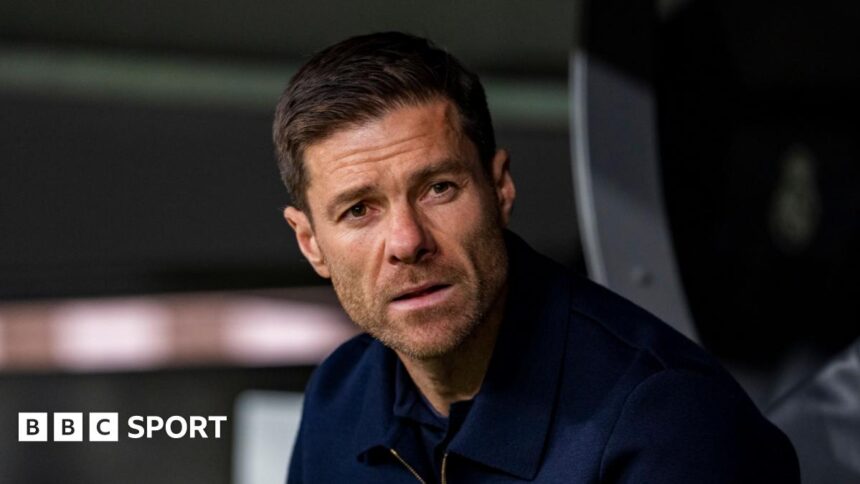
The Inevitable End: Why Xabi Alonso’s Time at Real Madrid is Running Out
The Santiago Bernabéu, a stadium that has witnessed the coronation of legends and the swift dismissal of pretenders, turned its voice against one of its own on Sunday. The boos that rained down after a listless 2-0 defeat to Celta Vigo were not just a reaction to a poor result; they were the sounding of a death knell for a project that has lost its way. As Real Madrid’s hierarchy convened for an emergency meeting, the focus was singular: the fate of Xabi Alonso. While no official decision has been made, the air in the Spanish capital is thick with finality. The Champions League clash against Manchester City is being framed as a potential last stand, but the truth is, Alonso’s chances of survival at Real Madrid have dwindled to almost nothing. This isn’t just about a slump in form; it’s a fundamental clash of ideology at a club where patience is a virtue afforded only to winners.
A Modern Vision Meets a Traditionalist Wall
When Xabi Alonso arrived last summer, he was heralded as the architect of a new era. After a storied playing career at the club, he returned with a modern, systematic approach honed in the crucibles of German and Spanish coaching. The promise was a structured, possession-based identity—a clear departure from the more pragmatic or chaotic moments of recent years. This was to be a step into a new, sustainable future.
However, Real Madrid’s DNA has proven to be an immovable object. The club’s identity is intrinsically linked to moments of individual brilliance, relentless verticality, and a certain controlled chaos. Alonso’s more methodical system, while sound in theory, has often looked restrictive on the pitch. The team appears caught between two ideas: executing a coach’s detailed plan and unleashing the instinctive flair that defines them. This tension has resulted in a side that is less than the sum of its galactico parts. The modern approach promised evolution, but the institution, from its president to its fanbase, is showing a deep-seated resistance to the kind of change that compromises its legendary, victory-at-all-costs character.
The Slump That Broke the Camel’s Back
Statistics rarely lie, and the numbers painting Alonso’s recent reign are damning. The dramatic slump since the high of beating Barcelona in October has been both severe and revealing.
- Just one win in the last five La Liga matches.
- A four-point deficit to a resurgent Barcelona, with the title slipping away.
- Performances lacking intensity, creativity, and the famous *Madridista* fight.
This isn’t a minor blip; it’s a systemic failure. The Celta Vigo defeat was particularly symbolic—a team with far less individual quality outworked and outthought Real Madrid at the Bernabéu. For a fanbase that accepts losing only if their team leaves everything on the pitch, the apparent lack of spirit was an unforgivable sin. The emergency meeting following the boos wasn’t just about points; it was about perceiving a loss of the club’s soul under Alonso’s watch. When the connection with the stands is severed, recovery is a rare feat.
Florentino Perez: The Unconvinced Patron
At the heart of Alonso’s precarious position sits President Florentino Perez. The key fact, often overlooked, is that Perez has never fully believed in this kind of philosophical overhaul. His presidency has been built on star power, blockbuster signings, and a results-oriented mandate that prioritizes immediate glory over long-term process. The appointments of Rafa Benitez, Julien Lopetegui, and now Xabi Alonso represent attempts by other voices within the club to steer toward a more contemporary, coach-driven model.
Yet, each experiment has ended in a similar fashion: friction and failure. Perez ultimately reverts to type, seeking a “galactico” manager or a proven firefighter who aligns with a less rigid, more player-empowering style. Alonso, for all his tactical intelligence, is the latest casualty of this cycle. The president’s patience for a project that isn’t yielding results—and isn’t entertaining in the process—is historically thin. The current crisis has likely only confirmed Perez’s initial skepticism, making Alonso’s position untenable without a near-miraculous and immediate turnaround.
The Manchester City Ultimatum: A Bridge Too Far?
Wednesday’s Champions League quarter-final against Manchester City is being cast as Alonso’s final audition. In the cauldron of the Bernabéu, against the continent’s most formidable machine, a heroic victory could theoretically buy him time. But this is a double-edged sword. The reality is that Pep Guardiola’s City represent the zenith of the very modern, systematic football Alonso aspires to implement—but executed with years of investment and harmony. A heavy or tactically outclassed defeat would starkly highlight the gap between Alonso’s vision and its current reality at Madrid, making his dismissal not just likely but instantaneous.
Even a valiant draw or narrow win may only postpone the inevitable. The deep-seated issues in La Liga won’t be erased by one European night. The Champions League game is less a lifeline and more a final judgment. The club’s hierarchy is already discussing his future; a poor result simply makes their decision embarrassingly easy.
Conclusion: A Sad but Inevitable Divorce
Xabi Alonso’s return to Real Madrid was a narrative of homecoming and hope. It is ending as a lesson in the club’s unyielding nature. His chances of survival are slim not because he is a poor coach, but because he represents a philosophy that, at this moment in time, is incompatible with the relentless demands and deeply ingrained culture of the institution. The resistance from the stands, the skepticism from the presidency, and the alarming dip in results have created a perfect storm.
Prediction: Barring a stunning and sustained revival that includes conquering Manchester City and clawing back the La Liga title—a scenario that seems fantastical—Xabi Alonso will not be Real Madrid’s manager next season. The emergency meeting has already set the wheels in motion. His tenure will likely be remembered as another well-intentioned but failed step in a new direction, a proof of concept that at Real Madrid, the concept must always be winning, immediately and on its own terms. The Bernabéu demands not just victories, but a certain kind of glory. Alonso, tragically for a club legend, has been unable to provide it.
Source: Based on news from BBC Sport.