
Uefa’s Iron Fist: Multi-Club Ownership Crackdown Threatens European Dreams
The glittering promise of European football, with its anthems, nights under the lights, and financial windfalls, is facing a new era of stringent governance. In a move that has sent shockwaves through boardrooms from Manchester to Milan, Uefa has decisively slammed the door on speculation it would soften its stance on multi-club ownership (MCO). The governing body’s recent, unequivocal circular to clubs isn’t just a reminder of the rules—it’s a declaration of war on perceived conflicts of interest, with the expulsion from European competitions as its ultimate weapon. Following the precedent-setting demotion of Crystal Palace, the continent’s football landscape is braced for a wave of unprecedented turmoil.
The Palace Precedent: A Blueprint for Expulsion
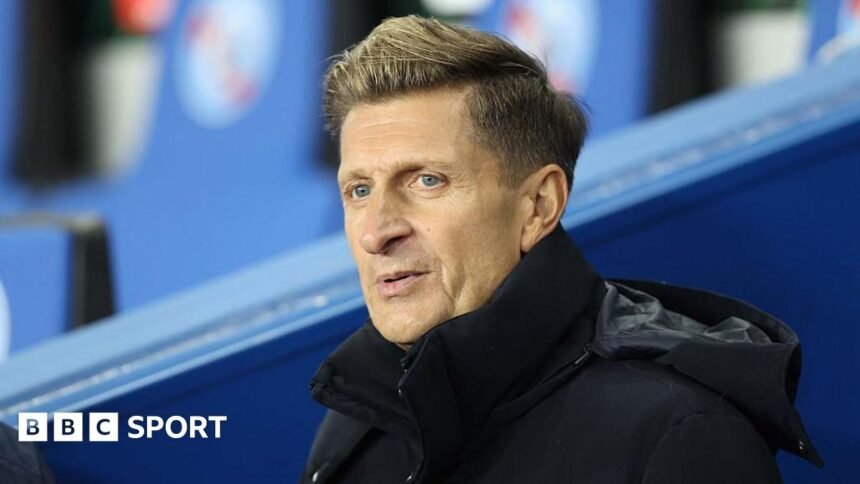
The case of Crystal Palace is no longer a mere footnote; it is the foundational text for Uefa’s coming crackdown. Chairman Steve Parish’s attempt to convince authorities that Palace were not “directly linked” to French giants Lyon—both under the umbrella of American investor John Textor’s Eagle Football Holdings—was resoundingly rejected. The subsequent, controversial demotion from the Europa League to the Conference League was a seismic warning. However, the true hammer blow came from the Court of Arbitration for Sport (CAS).
CAS didn’t just uphold the decision; it provided a detailed, legally robust ruling that has fundamentally emboldened Uefa. The court’s endorsement validated Uefa’s core concern: that the integrity of its competitions is compromised when clubs under common ownership could potentially meet, or influence each other’s fortunes. This legal victory has transformed Uefa’s position from defensive to aggressively proactive.
The key takeaway for other multi-club networks was stark: structural and legal arguments separating ownership will be scrutinized under a microscope, and sentimental appeals to “footballing independence” hold little weight.
March Madness: The Point of No Return
In its Monday circular, Uefa didn’t just reiterate its rules—it set a hard, immovable line in the sand. 1 March is now the most critical date in the calendar for clubs with entangled ownership structures dreaming of European football. This is the strict deadline for compliance, with Uefa insisting there will be no extension and no special dispensation.
This deadline creates a frantic five-month window for complex, high-stakes corporate restructuring. Clubs must, in essence, prove they are not “directly or indirectly controlled” by the same entity or person as another club in the same Uefa competition. The solutions are painful and limited:
- Divestment: Forced sale of stakes in one of the clubs.
- Dilution of Control: Radically reducing voting rights and influence to a level Uefa deems acceptable.
- Sacrifice: One club voluntarily forgoing its European qualification.
The speculation that rules might be relaxed, perhaps to accommodate the rapidly growing multi-club model, has been extinguished. Uefa, armed with the CAS ruling, is demonstrating an ironclad commitment to its principles, regardless of the commercial empires involved.
Clubs in the Crosshairs: Who Could Be Next?
The immediate question is: which European hopefuls are now sweating over their 2024/25 continental status? The multi-club model is not a niche concern; it’s a defining feature of modern football investment. Several high-profile networks could be forced into drastic action before March.
The City Football Group (CFG) is the most prominent example. With Manchester City consistently in the Champions League and Girona performing a fairy-tale La Liga campaign, a direct conflict looms. CFG’s 47% stake in Girona will face intense scrutiny. While CFG has long-prepared governance structures to demonstrate separation, the “Palace precedent” raises the bar significantly.
Similarly, Red Bull’s network (featuring Leipzig and Salzburg) has navigated these rules before by carefully diluting formal links. However, the renewed vigor of Uefa’s enforcement may demand further, tangible distance. The same applies to AC Milan and Toulouse (both under RedBird Capital), and Aston Villa and Vitoria de Guimaraes (under V Sports), should both clubs qualify.
The potential for chaos is immense. Imagine a scenario where Girona finishes a historic second in La Liga, only to be barred from the Champions League weeks before the draw. The sporting, financial, and legal repercussions would be monumental.
Analysis: The Battle for Football’s Soul
This is more than a regulatory tweak; it’s a philosophical battle for the soul of European football. On one side sits the modern, globalized investment model that views clubs as synergistic assets in a portfolio. On the other stands Uefa’s traditionalist view of club football, where each entity must be a distinct, competitive rival, free from any underlying collusion.
Uefa’s hard-line position is a gamble. It risks legal battles with powerful, litigious owners and could be portrayed as anti-investment. However, it is also a desperate bid to protect the credibility of its product. The spectacle of competition is neutered if fans believe results could be influenced by boardroom connections.
Expert voices are divided. Some see this as necessary protectionism. “Uefa is drawing a line to prevent its competitions from becoming de facto internal tournaments for a handful of global funds,” argues one leading sports lawyer. Others believe it’s a losing battle against an irreversible trend. “The model is too entrenched. Uefa will eventually be forced to regulate coexistence, not prohibit it,” counters a football finance analyst.
Predictions and Consequences: A Summer of Fireworks
The road to the 2024/25 European competitions will be paved with unprecedented drama. We can expect:
- A Frenzy of Restructuring: A race against the March deadline will trigger fire-sale negotiations and complex corporate manoeuvres.
- Legal Challenges: Clubs facing expulsion will likely mount fierce legal appeals, potentially to civil courts, arguing restraint of trade or disproportionate punishment.
- Qualification Chaos: League tables could become secondary; the “fit and proper” ownership test may become the decisive factor for European spots.
- Investor Chill: The ruling may cool enthusiasm for multi-club investments, or conversely, push investors to seek dominance in single clubs instead.
The ultimate consequence may be a forced evolution of the multi-club model itself, pushing networks to spread clubs across different continents (outside Uefa’s jurisdiction) or to create even more opaque, yet Uefa-compliant, separation layers.
Conclusion: Integrity Versus Investment
Uefa has lit a fuse with its unequivocal March deadline. The Crystal Palace demotion was not an isolated incident but the opening salvo in a continent-wide conflict. By leveraging the powerful CAS ruling, Uefa has signaled that the era of gentle warnings and negotiated solutions is over. The message is clear: adapt or be excluded.
This showdown will define the next decade of European football. It pits the uncompromising pursuit of sporting integrity against the relentless force of global capital and portfolio investment. As the March deadline approaches, the football world will watch as billion-dollar empires are forced to reshape themselves at the behest of sporting regulators. One thing is certain: the path to next season’s Champions League anthem will be played out not just on the pitch, but in the courtroom and the boardroom.
Source: Based on news from BBC Sport.