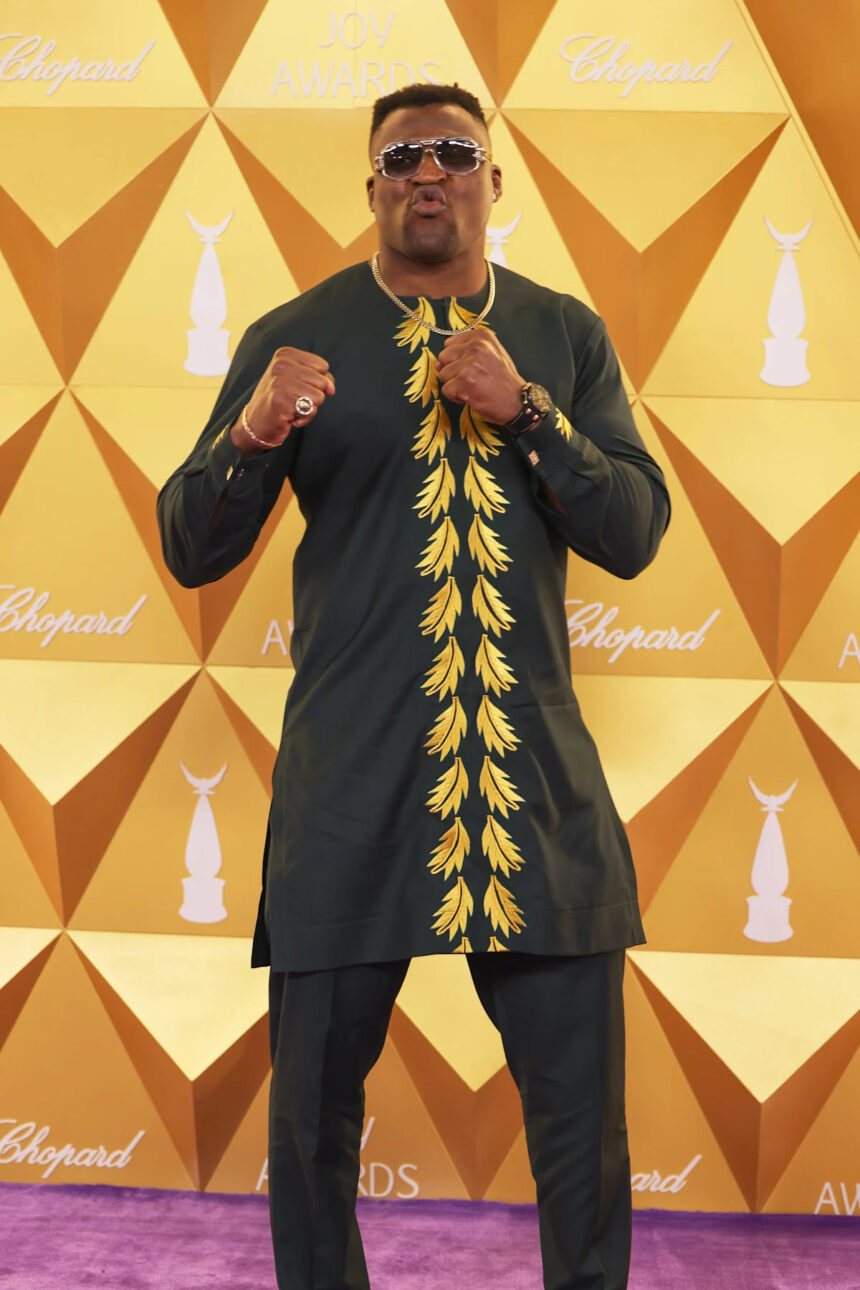
The Unanswered Question: Francis Ngannou’s Evasion on Dana White’s Physical Altercation Claim
The world of combat sports thrives on conflict, but the most compelling battles often occur outside the cage. The long-simmering feud between former UFC heavyweight champion Francis Ngannou and UFC CEO Dana White has entered a startling new chapter, one shrouded in silence and implication. After White’s explosive claim that Ngannou once got physically confrontational, the fighting world waited for a rebuttal, a denial, or an admission. What they got from Ngannou was a masterclass in evasion, a strategic silence that speaks louder than any punch ever could.
A Bombshell Allegation in a Bitter War of Words
The animosity between Francis Ngannou and the UFC brass is well-documented. Ngannou’s principled exit as champion, his fight for fighter benefits and creative freedom, and his subsequent lucrative move to the PFL have been framed by White as a series of misguided decisions. Their war has been fought through press conferences and media soundbites. That changed last month when White escalated the narrative beyond mere trash talk.
In a candid moment, White alleged that during a tense meeting in his office years ago, Ngannou’s frustration boiled over. The UFC CEO claimed that the heavyweight grabbed both him and UFC chief business officer Hunter Campbell by the shirt in a hostile manner. For an organization that markets controlled violence, the allegation of an uncontrolled physical altercation in its own executive suite was a seismic claim. The combat sports media sphere erupted, awaiting Ngannou’s response. It was an accusation that demanded a direct answer.
The Art of the Non-Answer: Ngannou’s Calculated Silence
When Francis Ngannou finally sat down with Ariel Helwani for his first interview since the allegation, the moment of reckoning had arrived. Helwani, as expected, went straight to the heart of the matter. The question was simple and direct: Did you grab Dana White?
Ngannou’s response was neither simple nor direct. “I think the best person to answer that question is Dana White,” Ngannou stated, deflecting the query back to his accuser. When Helwani pressed further, asking explicitly if he ever put his hands on him, Ngannou again sidestepped, offering neither confirmation nor denial.
This was a deliberate and tactical move. Let’s break down what this silence potentially means:
- Strategic Ambiguity: By not denying it, Ngannou avoids a “he-said, he-said” public argument that often diminishes both parties. He controls the narrative by refusing to engage on White’s terms.
- Maintaining Leverage: An unconfirmed allegation hangs in the air, a permanent asterisk on the story. It becomes part of the Ngannou mythology—the man so intimidating he allegedly manhandled the most powerful executive in the sport.
- Shifting the Focus: His response implicitly questions White’s motives for revealing this now, shifting focus from the act itself to the timing and purpose of the accusation.
In the court of public opinion, Ngannou’s evasion is a plea of “no contest.” It doesn’t admit guilt, but it certainly doesn’t proclaim innocence in a way that would definitively end the story.
Expert Analysis: Reading Between the Lines of a Feud
From a media and conflict analysis perspective, this episode is fascinating. Dana White’s decision to reveal the alleged incident does several things. It personalizes the business dispute, painting Ngannou as emotionally volatile. It also serves as a potent piece of counter-programming, attempting to overshadow Ngannou’s successful transition to boxing and the PFL by attaching a controversial personal narrative to him.
Ngannou’s non-response, however, may be the more powerful play. In combat sports, a fighter’s aura is part of his currency. The image of Ngannou as an unstoppable force, so formidable that even a boardroom confrontation turned physical, arguably enhances his “Baddest Man on the Planet” mystique. It frames his dispute with the UFC not as a contract negotiation, but as a literal clash of titans where he refused to be intimidated.
Furthermore, by not directly calling White a liar, Ngannou avoids potentially litigious territory and maintains a higher ground. His message is clear: I am no longer playing in your ecosystem or by your rules. I will not be drawn into defending myself against stories from the past. My future, in boxing and the PFL, is my focus.
Predictions: Where Does This Saga Go From Here?
The path forward for this feud is as murky as the details of the alleged office encounter. However, we can make some educated predictions based on the current trajectory.
- The Story Will Fester: Without a clear denial, White’s claim will become an accepted part of combat sports lore. It will be rehashed in every documentary and biography about either man, always with the caveat that Ngannou neither confirmed nor denied it.
- No Legal Repercussions: The fact that White told the story publicly, years after the alleged event, with no prior legal action, suggests this will remain a war of words. It is highly unlikely any formal charges or lawsuits will emerge from this.
- Fuel for a Fantasy Fight: This personal layer adds unimaginable hype to the already massive dream matchup: Francis Ngannou vs. Jon Jones. A fight against Jones, White’s longtime flagship heavyweight, would now be framed not just as a sporting contest, but as Ngannou’s chance to symbolically defeat the entire UFC system that he clashed with.
- Permanent Estrangement: Any remote chance of an amicable relationship or a UFC return is now utterly extinct. This feud is permanently personal, cemented by an allegation that will forever stand unanswered.
Conclusion: The Power of the Unsaid
In the end, Francis Ngannou’s evasiveness is a powerful statement. In a sport and a culture that demands definitive answers—knockout or submission, win or loss—he has chosen the ambiguous middle ground. He has understood that in the modern media landscape, a provocative question left hanging can be more impactful than a simple answer.
The allegation of a physical confrontation marks the point of no return in one of combat sports’ most significant divorces. Dana White used a story to define Ngannou in a certain light. Ngannou, by refusing to acknowledge the story on its terms, has redefined the power dynamic. He is no longer the UFC heavyweight champion asked to explain himself. He is Francis Ngannou, a global free agent, whose past with the UFC is a closed book—one with a particularly explosive, yet unwritten, final chapter. The silence isn’t weakness; it’s a strategic retreat from a battlefield he no longer has any interest in fighting on. The real fight, for Ngannou, is firmly in the future.
Source: Based on news from Yahoo Sports.