Lakers Ditch Slippery NBA Cup Court, Opt for Standard Floor for Spurs Quarterfinal
In a move prioritizing player safety and competitive integrity over spectacle, the Los Angeles Lakers will host the San Antonio Spurs in Wednesday night’s NBA In-Season Tournament quarterfinal on their traditional home court, sources confirmed to ESPN. The decision sidelines the team’s much-discussed, bright yellow “Cup court,” which had become a focal point for player complaints regarding its dangerously slick surface. This last-minute pivot, just days before a high-stakes elimination game, underscores the unforeseen challenges of the NBA’s ambitious new tournament and raises immediate questions about the future of these specially designed playing surfaces.
The “Slippery Slope”: Player Safety Trumps Tournament Aesthetics
The NBA’s rollout of unique, city-specific courts for the In-Season Tournament was a bold branding play, instantly making tournament games visually distinct on television and social media. The Lakers’ vibrant “Los Angeles Gold” court, however, quickly drew criticism. Following the team’s tournament game against the Memphis Grizzlies on November 14th, players from both sides were vocal about the court’s conditions. LeBron James explicitly called the floor “slippery,” a sentiment echoed by others who noted a lack of traction, especially when sweat accumulated on the surface.
This created a significant dilemma for the Lakers’ organization and the league. The tournament’s knockout stage carries higher stakes, with the quarterfinal being a single-elimination contest. The potential for a game—or a team’s championship hopes—to be altered by an avoidable injury due to court conditions is a risk no one was willing to take. By reverting to their standard hardwood, the Lakers are sending a clear message: player safety is non-negotiable, even at the expense of tournament-specific pageantry.
The issue appears isolated to certain painted courts, where the application process or type of paint may have compromised the wood’s grip. It’s a stark reminder that innovation in sports presentation must always be balanced with the fundamental necessities of the game itself.
Strategic Implications: Does the Court Change Favor the Lakers?
Beyond safety, the switch back to the familiar court carries subtle but meaningful basketball implications. For a Lakers team that has struggled with consistency, especially on the defensive end, removing an unpredictable variable is a win.
- Defensive Stability: The Lakers’ defensive identity is built on aggressive close-outs, lateral movement, and leveraging the length of players like Anthony Davis. A reliable surface is paramount for this. Players can plant and cut with confidence, which is crucial for a team that ranks among the league’s best in defensive rating when engaged.
- Shooting Confidence: While shooters often speak of “feel,” a consistent takeoff and landing spot matters. Lakers like Taurean Prince and D’Angelo Russell, who are vital floor spacers, won’t have a second thought about their footing on catch-and-shoot opportunities.
- Psychological Comfort: Playing on their day-to-day court eliminates a mental hurdle. For the veteran-laden Lakers, routine and comfort are valuable commodities. Facing a young, rebuilding Spurs team, the Lakers need zero distractions in a must-win scenario.
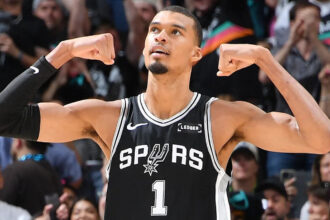
For the Spurs, particularly rookie sensation Victor Wembanyama, the standard court is likely a welcome change as well. A player of his unique size and movement patterns requires the utmost trust in the playing surface to avoid catastrophic injury. While it negates any potential “equalizing” effect a tricky court might have had, it ensures the game is decided purely by play.
A Tournament at a Crossroads: The Future of Specialty Courts
This incident forces a necessary evaluation of the NBA In-Season Tournament’s aesthetic centerpiece. The courts succeeded in generating buzz and visual identity, but at what cost? The league now faces a critical offseason decision.
Possible paths forward include:
- Technical Reevaluation: A deep dive into paint materials and application techniques with court manufacturers to ensure future specialty floors meet the exact same traction standards as regular courts. This is the most likely first step.
- Design Moderation: Perhaps the solution is less paint, not different paint. Courts could feature tournament logos and subtle color accents in the key or along the sidelines rather than full, saturated court-wide designs.
- Phased Introduction: The league could limit the full custom courts to the group stage, reverting to standard floors with decals for the knockout rounds, where the stakes—and liability—are highest.
- Complete Abandonment: While unlikely given the marketing investment, if a reliable technical solution cannot be found, the league may have to scrap the concept entirely to protect its players and the tournament’s credibility.
The “court controversy” is the first major growing pain for the otherwise successful In-Season Tournament. How the NBA responds will signal its priorities and shape the event’s look and feel for years to come.
Prediction: Lakers Advance on Familiar Ground
With the court variable removed, this quarterfinal matchup crystallizes into a clear test of talent and execution. The Spurs, with Wembanyama, are a fascinating future prospect but remain one of the league’s most inexperienced and offensively challenged teams. The Lakers, when focused, are a defensive juggernaut built for high-stakes games.
Expect the Lakers to aggressively exploit their advantages:
- Anthony Davis should dominate the interior against a thin Spurs front line.
- LeBron James will control the tempo, targeting San Antonio’s young guards in isolation and in the post.
- The Lakers’ defense will swarm Wembanyama, forcing other Spurs to make plays—a strategy that has consistently proven effective.
The slippery court was a potential wild card that could have slowed the Lakers’ defensive aggression and introduced an element of chaos. On their reliable home floor, their experience, defensive pedigree, and star power should prove overwhelming in a single-elimination setting. The prediction here is a comfortable Lakers victory, advancing them to the semifinals in Las Vegas, where all teams will play on a neutral, and one hopes, thoroughly tested court.
Conclusion: A Necessary Retreat for the Greater Good
The Los Angeles Lakers’ decision to ditch their flashy NBA Cup court is a small but significant moment in the young history of the In-Season Tournament. It is a pragmatic, responsible choice that places the well-being of the athletes above all else. While the vibrant yellow floor made for great visuals, the fundamental covenant of sports is to provide a safe and fair arena for competition. That covenant was breached, and the Lakers and the league have rightly corrected course.
This episode should not diminish the overwhelming success of the tournament, which has delivered intense, meaningful basketball in November and December. Instead, it offers a valuable lesson: innovation must be built on a foundation of safety. As the NBA Cup evolves, its identity will now be forged not just by colorful courts, but by the league’s willingness to listen to its players and adapt. The move to the standard court for Wednesday’s quarterfinal isn’t a step back for the tournament; it’s a mature step forward, ensuring that the legacy of this new competition is defined by unforgettable plays, not preventable injuries.
Source: Based on news from ESPN.
Image: CC licensed via www.hippopx.com