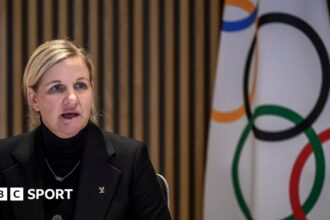
From Rehab to Royalty: The Meteoric Rise of Ireland’s Captain Erin King
The journey to the pinnacle of international sport is rarely a straight line. For most, it is a grueling marathon of incremental progress, setbacks, and hard-earned milestones. For Erin King, Ireland’s new rugby captain, it has been a vertiginous ascent from the depths of career-threatening despair to the summit of leadership, all within a dizzying twelve-month period. At just 22 years old, with only six caps to her name and fresh from a year-long battle with a devastating knee injury, King’s appointment by head coach Scott Bemand was not just a surprise—it was a revolutionary statement of faith. This is the story of resilience, a unique leadership quality, and the making of a monarch in Irish rugby.
The Crucible of Adversity: A Knee, a Question, and a Career Reborn
Every athlete fears the phone call with scan results. For Erin King, that call contained a prognosis that strikes terror into the heart of any player: she was told she might never run again. A serious knee injury, the kind that rewrites career trajectories, had sidelined her for a full year. The life of an elite athlete, once defined by collective striving and visceral competition, suddenly narrows to the solitary, painful grind of rehabilitation. The psychological battle often outweighs the physical. “You’re confronted with the very real possibility that your dream is over,” one sports psychologist we spoke to noted. “It’s in that crucible that character is forged—not in the glory of the try line.”
King’s return to fitness was a triumph in itself. Yet, her first major summons post-recovery was not to a team meeting, but to the head coach’s office. A universal bolt of anxiety strikes any player in that scenario. “I genuinely thought I was in trouble,” King later admitted. Instead, Scott Bemand posed a question that would redefine her life: would she captain Ireland in the upcoming Six Nations? The audacity of the move cannot be overstated. In an era often obsessed with cap counts and veteran savvy, Bemand looked beyond the ledger. He saw not a player defined by her limited international experience, but one sculpted by unparalleled adversity. This was leadership potential recognized in resilience, not just in on-field pedigree.
Anatomy of a Captain: Why King’s Selection is a Masterstroke
On paper, the decision seemed a gamble. Dig deeper, and the strategic genius becomes clear. Bemand, steering an Irish team in a period of transition, isn’t just building a team for the next match; he’s building a culture for the next decade. King represents a clean break, a leader untainted by past cycles and empowered by a fresh perspective. Her authority is not derived from seniority, but from earned respect. “What she has overcome commands instant credibility in the dressing room,” a former Ireland international told us. “When she speaks about commitment, sacrifice, or battling through the final quarter, she does so with an authenticity that resonates profoundly.”
Her leadership style, from early observations, appears to be a powerful blend of the following traits:
- Empathetic Connection: Forged in the loneliness of rehab, she likely possesses a unique understanding of individual player struggles, both physical and mental.
- Fearless Communication: Having faced the worst-case scenario, she plays and leads without the fear of failure that can constrain others.
- Lead-by-Example Tenacity: Every training session and match is a bonus she once thought she’d never have. This translates into an infectious, undeniable work ethic.
- Tactical Maturity: As a back-row forward, she operates at the strategic heart of the game, a position that demands constant reading of play and decision-making.
This appointment signals a new era for Irish women’s rugby, one that values mental fortitude and modern leadership as highly as technical skill.
The Captain’s Pet Peeves and Forging a New Culture
Every leader stamps their tenure with unique emphases. While strategic goals are paramount, the “pet peeves”—those non-negotiable standards of behavior and attitude—often reveal the true cultural shift a captain seeks to implement. For a young captain like King, establishing these is crucial. While specific details of her list remain in the sanctity of the team room, we can extrapolate from her journey the kind of standards she will demand.
Expect a zero-tolerance policy for any hint of complacency. After fighting to merely step onto the pitch again, she will demand that every player treats their place in the jersey with the utmost reverence. A lack of collective effort in defense, or a failure to support a teammate in a moment of error, likely conflicts directly with her core belief in unity forged through shared struggle. Furthermore, negative body language—a slumped shoulder after a missed tackle, a frustrated sigh—is the antithesis of the resilient mindset she embodies. In the King era, the response to adversity will be a collective clenching of fists, not a dispersal of blame. These “pet peeves” are the building blocks of the resilient identity she personifies.
The Road Ahead: Predictions for the King Dynasty
The immediate challenge is the Six Nations, a tournament that will test the mettle of this new captain-coach alliance. Success may not be measured solely in the championship table, but in the visible establishment of a new, indomitable spirit. We predict that under King’s captaincy, Ireland will become a notoriously difficult team to break down—a side that thrives in the pressure moments, mirroring their captain’s journey through the ultimate pressure cooker.
Long-term, the implications are vast. King’s story and her premature ascendancy provide a powerful narrative for the next generation. It shouts that leadership is about character, not just chronology. Her partnership with Bemand could be the foundational axis upon which Ireland builds its next golden generation. If she can translate her personal resilience into a team-wide philosophy, Ireland will not just have a talented squad; they will have a band of believers, hardened by the standards of a captain who knows the price of the jersey better than most.
Conclusion: A Crown Earned, Not Given
Erin King’s captaincy is a testament to the idea that the most profound leadership qualities are often honed in darkness, not in the spotlight. The knee injury that threatened to end her career did not break her; it became the anvil upon which her leadership was shaped. Scott Bemand’s decision was a bold recognition of that alchemy. He didn’t just appoint a captain; he anointed a symbol of a new mindset for Irish rugby. King now carries the weight of a nation’s hopes, but it is a weight she is uniquely equipped to bear. Her reign begins not with a legacy of past glory, but with the potent promise of a future forged in resilience. Ireland’s king has her crown, and her kingdom is ready to fight for every inch.
Source: Based on news from BBC Sport.