Is Mohamed Salah Right to Feel ‘Thrown Under the Bus’ by Liverpool?
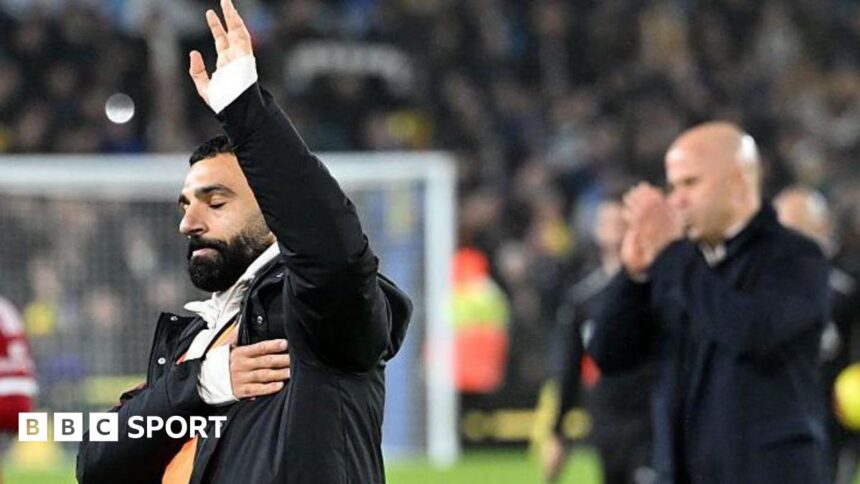
The image was jarring, a stark juxtaposition of legacy and looming conflict. At Elland Road, Mohamed Salah, Liverpool’s modern icon, offered a warm wave to the travelling Kop. Hours later, that same figure launched a public, incendiary attack on head coach Arne Slot and the club’s hierarchy. The catalyst? Being named on the bench for a third successive Premier League game. At the heart of Salah’s fiery interview was a phrase that echoed with the weight of betrayal: he felt he had been thrown under the bus. For a player with 250 goals, a statue-worthy legacy, and all major prizes in the cabinet, this was no minor grumble. It was a seismic declaration of war, fracturing the unity Arne Slot desperately needs. But in the cold light of analysis, stripped of emotion, is Salah’s claim justified, or is it the last stand of a fading superstar?
A Legacy Unassailable, A Present Tense Problem
To understand the gravity of Salah’s accusation, one must first acknowledge the unimpeachable credit he has in the bank. Since 2017, he has been the relentless heartbeat of Liverpool’s success. His numbers border on the absurd: third on the club’s all-time scorers list behind only Ian Rush and Roger Hunt, a haul of major trophies including the Premier League and Champions League, and a global stature that made him the face of the club’s modern era. This is not a player on the fringe; this is a legend. When such a figure speaks of being scapegoated, it demands attention.
However, football is ruthlessly present-tense. The context Salah’s interview omitted is the disastrous form that precipitated Slot’s selection dilemma. Liverpool’s season was unraveling in a spectacular, nine-defeats-in-12-games collapse. The team looked physically drained and tactically porous. Salah himself, returning from a serious hamstring injury sustained at the Africa Cup of Nations, had struggled to recapture his electrifying best. His performances were marked by uncharacteristic heavy touches, missed chances, and a noticeable reduction in explosive threat. From Slot’s perspective, dropping a underperforming star—legacy or not—to try and stem the tide was a defensible, if brutal, coaching decision.
The “Bus” in Question: Scapegoat or Necessary Rotation?
Salah’s core grievance hinges on intent and perception. To be “thrown under the bus” implies a conscious act by management to deflect blame for collective failure onto a single, high-profile individual. It’s a charge of bad faith. So, did Slot make Salah the fall guy?
Analysis of the timeline suggests a more nuanced picture. Slot’s decisions came amid an unprecedented injury crisis and a squad running on empty. His changes were widespread, not singularly focused on Salah. The Egyptian’s benchings coincided with experiments in system and personnel as the Dutch coach scrambled for a winning formula. The public narrative from Slot, until the outburst, was consistently respectful, citing Salah’s need to regain sharpness and the requirement for fresh legs.
Yet, the psychology of management is key. For a competitor of Salah’s caliber, being omitted in the season’s crucial finale feels like a public demotion, a signal that he is now part of the problem. The perceived lack of private communication or reassurance from Slot likely fueled the fire. When a legend feels disrespected, the fallout is never quiet. The critical question is whether this was a tactical calculation gone wrong or a deliberate strategy to shift focus—the evidence leans toward the former, but the perception for Salah was undoubtedly the latter.
Key Factors in the Standoff:
- Form vs. Reputation: Slot prioritized current form over historical contribution, a classic manager-player conflict point.
- Communication Breakdown: The public nature of the spat suggests a severe failure in private dialogue between coach and star.
- Contractual Tension: With Salah entering the final year of his deal, his future is the club’s biggest off-field headache, adding a layer of commercial and strategic pressure.
- The New Manager Dynamic: Slot, establishing his authority, may have misjudged the fallout from marginalizing a cultural icon.
Fallout and Future: An Irreparable Rift?
The immediate aftermath of Salah’s interview is a lose-lose situation for Liverpool. Slot’s authority has been directly challenged by the squad’s most influential player at the worst possible time. The dressing room dynamics are now fraught, with players inevitably taking sides. Furthermore, it has transformed a difficult sporting period into a full-blown institutional crisis, dominating headlines and destabilizing the club’s rebuild.
Looking ahead, the paths are limited and all carry risk:
1. Reconciliation and Renewal: This requires humble diplomacy from both sides. Slot must integrate Salah back as a central figure while managing his minutes smartly. Salah must retract or clarify his comments. A new contract would signal commitment, but at 33, the terms would be a major negotiation.
2. A Summer Sale: The nuclear option. Selling Salah would be a seismic cultural and sporting shift, freeing up funds but robbing the team of its most potent match-winner and commercial magnet. It would be a stark admission that the relationship is beyond repair.
3. Stalemate and a Slow Fade: The most likely, yet most dangerous, scenario. Salah sees out his contract, with tension simmering beneath the surface. His minutes are managed, his influence wanes, and the club risks losing a legend on a sour, unproductive note.
Verdict: A Justified Feeling, But a Damaging Reaction
So, is Mohamed Salah right to feel thrown under the bus? From his perspective, absolutely. For a player who has carried the club’s ambitions for seven years, to be sidelined at the moment of crisis—regardless of form—feels like a profound betrayal of loyalty and service. His emotional response, while professionally damaging, is humanly understandable.
However, is his claim objectively justified in the context of team management? Here, the evidence is less clear-cut. Arne Slot’s primary duty was to stop the rot, and his selection choices, however harsh, were a scattergun attempt to fix multiple issues, not a targeted sacrifice of Salah. The “bus” was a team bus hurtling off a cliff; Salah was not pushed, but he felt others jumped clear at his expense.
The tragedy of this saga is that it obscures Salah’s legacy and undermines Slot’s fresh start. Salah’s reaction, however justified in his mind, was a catastrophic error in timing and medium. It turned a sporting debate into a public war, weakening the very institution he claims to love. The greatest victims are Liverpool Football Club and its fans, who are now forced to watch an ugly divorce play out between a fading king and a new ruler struggling to command the throne. The bridge is burning. Whether it can be rebuilt will define the next era at Anfield.
Source: Based on news from BBC Sport.